Hojoen
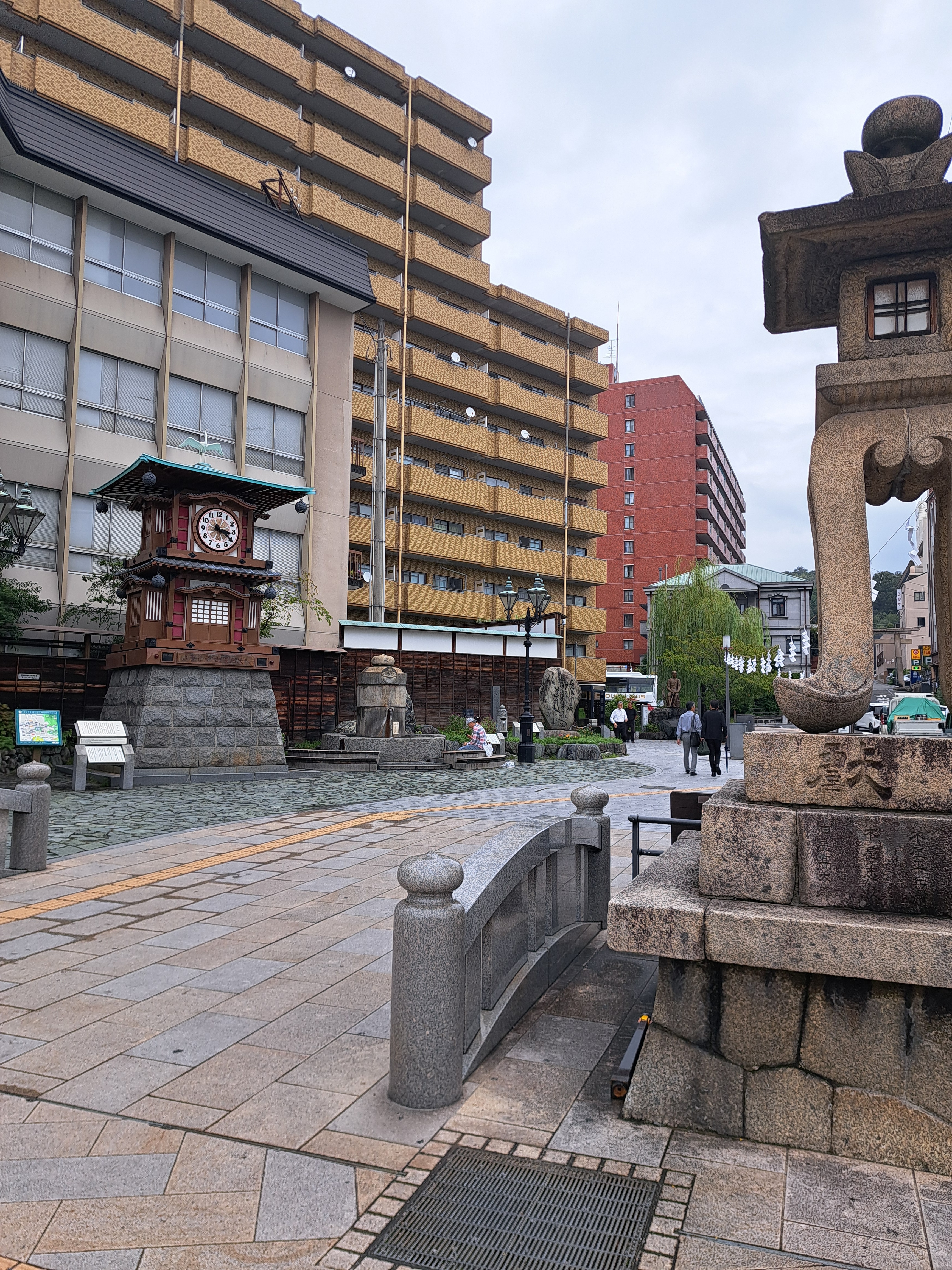
The plaza in front of Dogo Onsen Station. With the Botchan Karakuri Clock and a free foot bath that is easy to drop by, it is the starting point of a Dogo stroll.
Hojoen is a plaza located in front of Dogo Onsen Station, popular as a starting point for strolling around Dogo.
Attractions
In the plaza, there is the "Botchan Karakuri Clock," which was installed in 1994 to commemorate the 100th anniversary of the construction of Dogo Onsen Honkan. The mechanism moves according to the time, and puppets shaped like characters from Natsume Soseki's novel "Botchan" appear.
Foot Bath
Near the clock, a foot bath that can be used for free is set up. In the list of Dogo's hand baths and foot baths published by the Dogo Onsen Ryokan Cooperative Association, the usage hours for the Hojoen foot bath are stated as 8:00–22:00. There are nine hand bath and foot bath locations in Dogo, and Hojoen is located in the most accessible position in front of the station. Please bring your own towel.
Location
It is situated in a position connecting Iyotetsu Dogo Onsen Station with Dogo Onsen Honkan and Dogo Haikara-dori (shopping street), and is also used as a meeting and resting place. Located right outside Dogo Onsen Station, it serves as the starting point for Dogo sightseeing.
Source: Dogo Onsen Official Area Guide "Hand Baths and Foot Baths" https://www.dogo.or.jp/experience/teyuashiyu/ / "Dogo Onsen" Wikipedia (CC BY-SA) Last confirmed date: August 6, 2026
Articles that mention this place
歴史
A Complete History of Dogo Onsen: From the Hot Water of the Nihon Shoki to Botchan Yu
Tracing the history of Dogo Onsen, where imperial visits are recorded in the Nihon Shoki and the surviving fragments of the Iyo no Kuni Fudoki, alongside a chronological table from Prince Shotoku's visit in 596, the completion of the Honkan in 1894, and its Important Cultural Property designation in 1994, to the full reopening of the entire facility in 2024.
文学
Waters of Literature: The Dogo Walked by Masaoka Shiki and Natsume Soseki
Masaoka Shiki (1867–1902) and Natsume Soseki, who took a post at Matsuyama Middle School in 1895. This article covers Gudabutsu-an, the lodgings where the two lived together for 52 days (rebuilt in 2026/7), admission fees and opening hours at the Shiki Memorial Museum, and Isaniwa Yukiya, who rebuilt Dogo Onsen Honkan.
建築
The Architecture of Dogo Onsen Honkan, an Important Cultural Property: Four Wings and Conservation Repair While Open
Dogo Onsen Honkan is a connected building made up of four wings, from the Kami-no-Yu Honkan wing of 1894 (Meiji 27) to the South and Entrance wings of 1924 (Taisho 13). In 1994 it became the first public bath to be designated a national Important Cultural Property. This article covers the people who built it, the time drum at Shinrokaku, tours of Yushinden (500 yen for adults), and the conservation repair completed in 2024.
温泉文化
Dogo's three public baths and their water quality: Honkan, Tsubaki no Yu, and Asuka no Yu
Dogo's public baths are Dogo Onsen Honkan, Tsubaki no Yu, and Dogo Onsen Annex Asuka no Yu (also called Asuka no Yu). This article covers differences in prices, time limits, and amenities, access conditions for people who want to avoid steps and those traveling with young children, the water quality (alkaline simple hot spring), how water is distributed from the sources, and day-use bathing at lodgings.
伝説
The White Heron Legend and the Tama-no-Ishi: Two Origin Stories of Dogo Onsen
This article introduces the two stories told as the origins of Dogo Onsen: the White Heron legend and Tama-no-Ishi. Tama-no-Ishi is on the north side of the Honkan (to the left when facing the front). It is said that pouring hot water over it with a ladle and praying will grant a wish. The article also covers the Heron Stone at Hojoen and the Honkan private rooms named after the white heron.
寺社
Ishiteji Temple: Shikoku Pilgrimage Temple No. 51, a National Treasure Niomon Gate, and the Legend of Emon Saburo
Ishiteji Temple, Temple No. 51 of the Shikoku 88-temple pilgrimage, is about a 20-minute walk from Dogo Onsen. This article introduces how to get there on foot or via Iyotetsu Bus Route 8, the hours of the Nokyosho (temple stamp office) and treasure house, the National Treasure Niomon Gate, and the legend of Emon Saburo, based on official information from the temple and the pilgrimage association.
歴史
Botchan Ressha: The Meiji-Era Train Named by "Botchan"
The Botchan Ressha runs only on Saturdays, Sundays, and national holidays, with a one-way fare of 1,300 yen for adults. Numbered boarding tickets for same-day trips departing from Dogo Onsen Station are distributed starting at 8:30 in the morning. This article summarizes operating days, timetables, boarding stops, and history from its opening in 1888 (Meiji 21) to its restoration in the Heisei era.
まちの記憶
Dogo Onsen Station and Hojoen: The Gateway to the Hot-Spring Town, and the Mechanical Clock
The Botchan Karakuri Clock operates every hour from 8:00 to 22:00 (every 30 minutes on weekends, holidays, and throughout March, April, August, and November), and the Hojoen foot bath is open 6:00 to 23:00 for free. This article summarizes Dogo Onsen Station opened in 1895, the station building recreated in 1986, and features in Hojoen in front of the station.
温泉文化
Where Does Dogo Onsen's Water Come From? 19 Hot Springs and Four Distribution Stations
Twenty-nine hot-spring sources have been developed at Dogo Onsen, and 19 are registered with Ehime Prefecture. This article introduces the four distribution stations that blend the water to adjust its temperature, and the Fourth Distribution Station, where you can see the piping and a hand bath. It also covers its location from the station and what the viewing room offers.
街歩き
How to Enjoy Dogo Onsen Honkan and the Surrounding Area Without Taking a Bath
Even without bathing, you can enjoy the guided tour of Yushinden (500 yen for adults, reservation required), the free footbaths at Sora no Sanpomichi and Hojoen, and the DOGO ART light-up. If you are waiting for companions who are bathing, decide on a landmark such as Hojoen in advance to make meeting up easier.
実用
A sample route with walking distances and rest breaks for Dogo Onsen's three public baths
Dogo's three public baths (Dogo Onsen Honkan, Asuka no Yu, and Tsubaki no Yu) can each be entered 1 time with the 3-Bath Circuit Ticket (1,440 yen for adults, valid for 2 days: the day of purchase and the following day). The time limits are 60 minutes at the Honkan, 90 minutes at Asuka no Yu, and up to 1 hour at Tsubaki no Yu. This article covers the layout of the baths, suggested bathing times and rest breaks to prevent dizziness, and foot baths you can use between visits.
実用
Etiquette for Wearing Yukata and Using Yu-kago Baskets in the Dogo Onsen Town
This article clearly explains an example of the basic rules for collar wrapping (migimae / left over right) when strolling in a yukata at Dogo Onsen, the role and carrying methods of the "yu-kago" basket used to hold personal belongings, how to walk in geta clogs, seasonal temperature adjustment measures, and etiquette.
Getting around
Getting from Matsuyama Airport to the Dogo Onsen area: steps and estimated travel times
From Matsuyama Airport to Dogo Onsen Station, the Iyotetsu limousine bus takes about 40 minutes and costs 1,200 yen for adults (1,180 yen with a nationwide transport IC card). This guide also covers the airport's bus stops 4 and 5, how to pay, the last bus in the timetable starting October 25, the return bus, and how to use the 1-Day Ticket.
Practical
Steps and Precautions for Visiting the Dogo Onsen Area When Using the ALL SHIKOKU Rail Pass Steps and Precautions for Visiting the Dogo Onsen Area When Using the ALL SHIKOKU Rail Pass
This article explains the transfer steps from JR Matsuyama Station to the Dogo Onsen area when traveling using the ALL SHIKOKU Rail Pass and precautions regarding the pass coverage on streetcars.
Walking the town
An Example of a Model Walking Course Around Dogo Onsen Station with a 2-Hour Stay An Example of a Model Walking Course Around Dogo Onsen Station with a 2-Hour Stay
This guide outlines an example of a short walking route starting from Dogo Onsen Station and visiting the shopping street, the exterior of public bathhouses, and surrounding temples and shrines when the stay in the Dogo Onsen area is approximately 2 hours.
実用
Getting a Numbered Ticket and Finding Places to Wait at Dogo Onsen Honkan and Asuka no Yu When They Are Crowded
Numbered tickets for Dogo Onsen's public baths are issued only when the bathhouse is crowded. Your ticket becomes invalid if you do not arrive within 15 minutes of the call. The official crowd display is updated every 10 minutes. While you wait, you can visit Sora no Sanpomichi, the Hojoen footbath or the Karakuri Clock.
Onsen culture
Differences Between Japanese "Onsen" (Hot Springs) and "Sento" (Public Baths) and the Spring Quality/Form of Dogo Onsen
This article clarifies the institutional differences between onsen and sento in Japan, and explains Dogo Onsen's non-heated and non-diluted hot spring source supply system, procedures for using it as a public bath, and basic bathing etiquette.
Practical
Status of Multilingual Signs, Transportation Landscape Guidance, and Accessibility in the Dogo Onsen Area
For international travelers visiting Dogo Onsen, this article explains the status of multilingual information provided on official websites and at tourist information centers, as well as key points when exploring the local area.
Practical
Free foot baths in the Dogo Onsen area: locations and what to prepare
There are 2 free foot baths in Dogo: Hojoen in front of Dogo Onsen Station (6:00–23:00) and Sora no Sanpomichi on the high ground south of the Honkan (6:00–21:00). This guide also covers the hand bath at the 4th Distribution Station (24 hours), free foot baths and hand baths at lodgings, and where to get a towel if you forget one.
Walking the town
A sample 1-night, 2-day Dogo Onsen itinerary: timetable and how to visit the public baths
Dogo Onsen Station, Dogo Haikara Dori, Dogo Onsen Honkan, Enman-ji Temple, and Dogo Park are all within walking distance. Seeing only the exteriors and walking around town takes 2 hours; adding one public bath takes about 4 hours in the afternoon. There are 5 patterns, from a 4-hour airport layover to a 1-night, 2-day stay, and the time needed depends on whether you only see the exteriors or also bathe at a public bath.
Getting around
An Example of a Walking Route to Explore the Dogo Onsen Area During a 4-Hour Layover at Matsuyama Airport or Port
This is an example of a route to explore the Dogo Onsen area by utilizing a layover time of approximately 4 hours from Matsuyama Airport or Matsuyama Sightseeing Port. It explains the access procedures for the limousine bus, baggage storage, and how to walk around the town in a short period of time.
More spots in Central Dogo Onsen Area
See all in this area →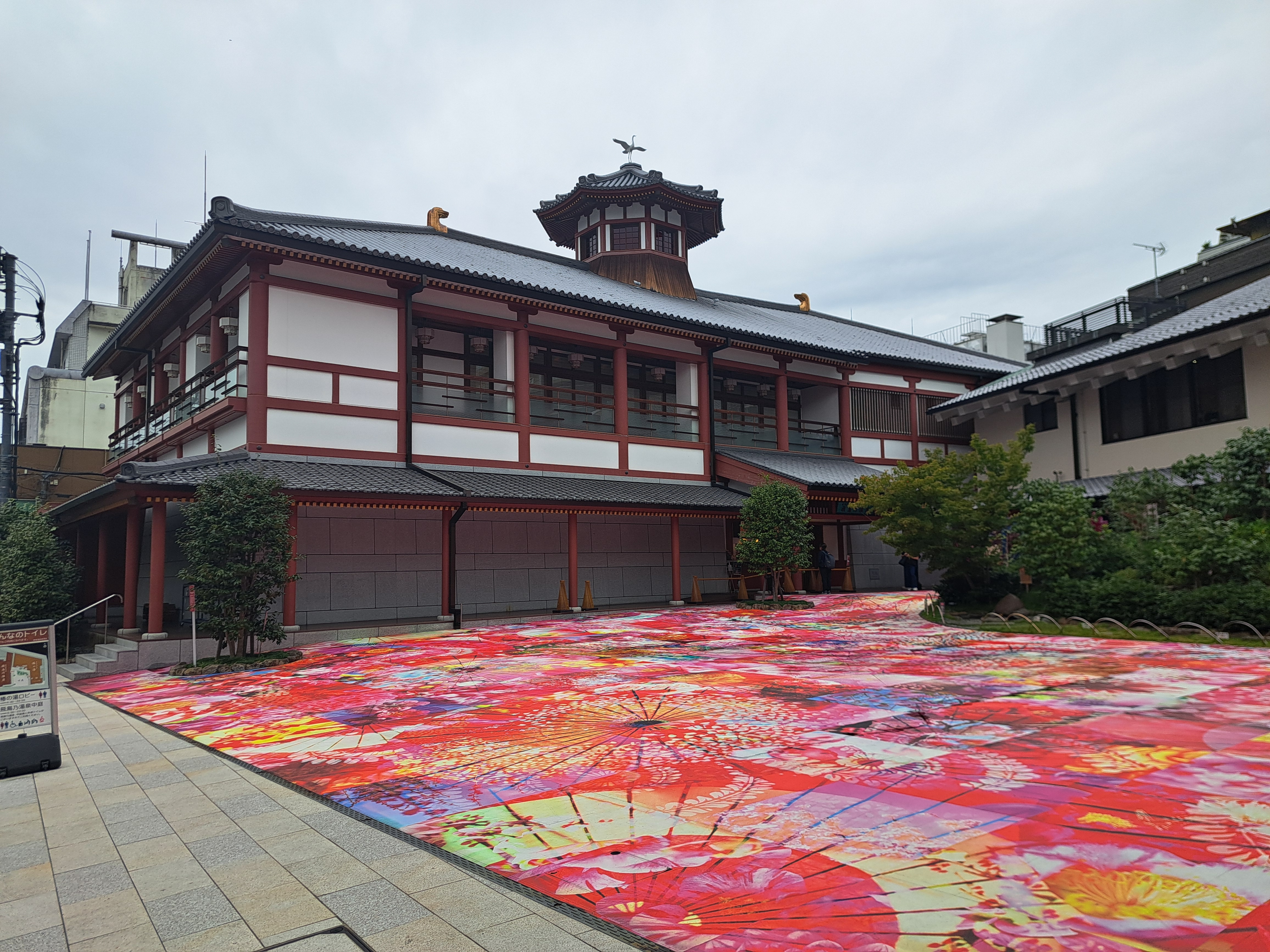
Dogo Onsen Annex Asuka-no-Yu
An annex of Dogo Onsen opened in 2017. A bathhouse incorporating the architectural style of the Asuka period, it features an open-air bath, a grand hall, and special bathrooms that recreate the Yushinden imperial bath chamber.
Yuzukiya
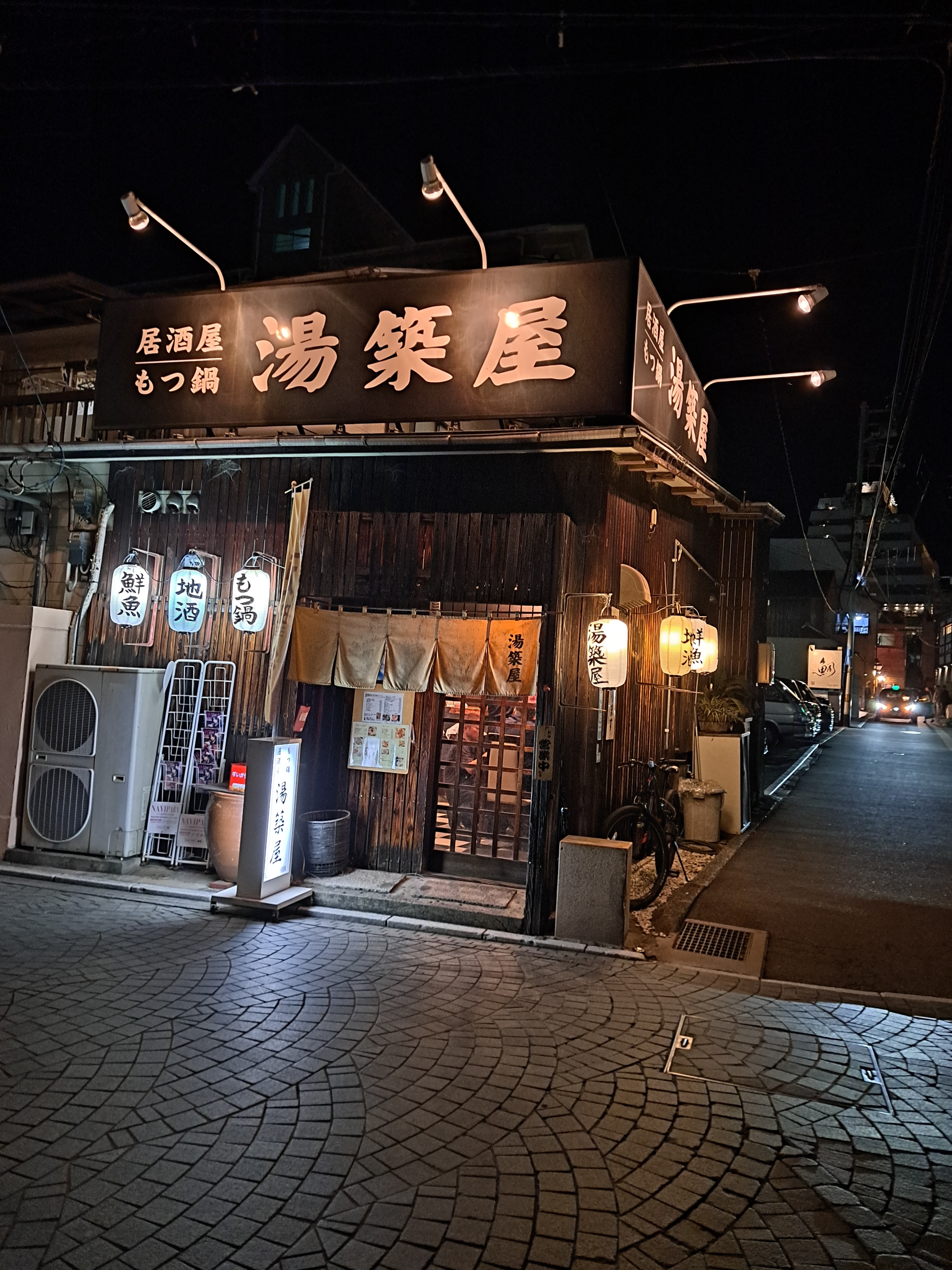
A motsunabe restaurant open in the evening, located in Dogo Yunomachi, a 2-minute walk from Dogo Onsen Station.
Croquette no Mitsuwa
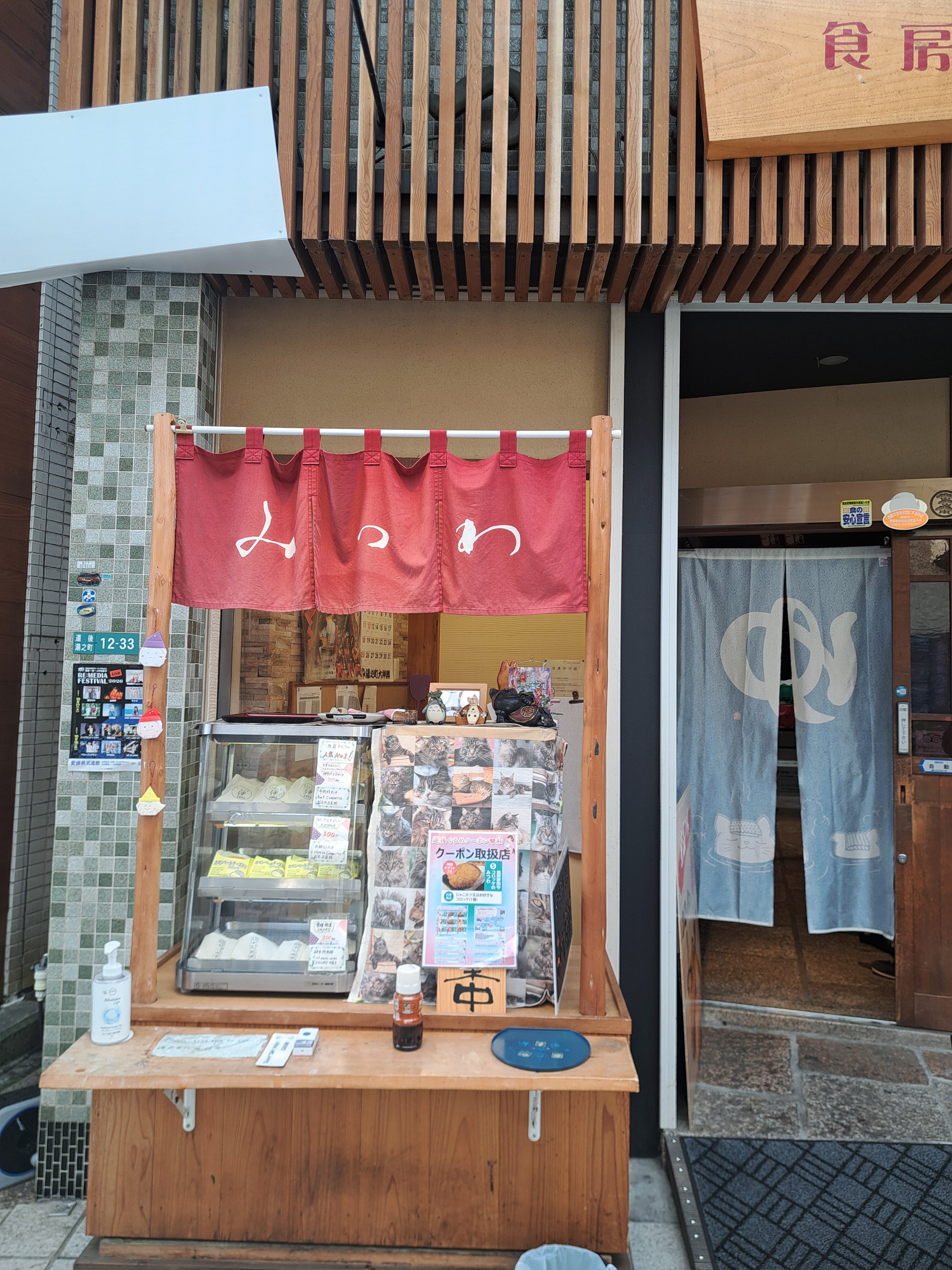
Croquette no Mitsuwa is a takeout shop in the Dogo Onsen district. It offers fried foods such as croquettes and jaco katsu for visitors to eat while walking.
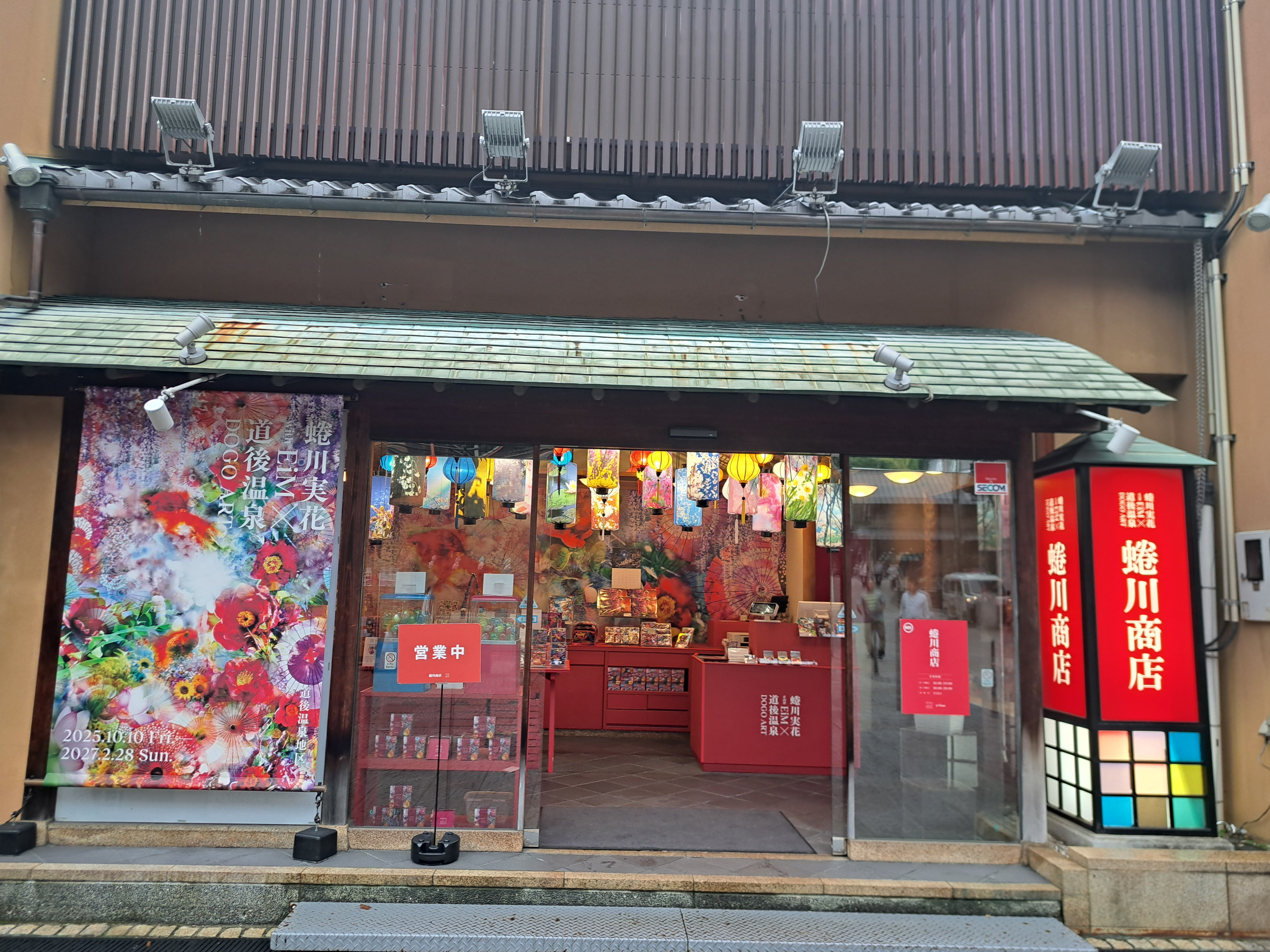
Ninagawa Shoten
The official shop for "Mika Ninagawa with EiM × Dogo Onsen DOGO ART." Located in front of Dogo Onsen Honkan, it offers Dogo Art collaboration merchandise and Mika Ninagawa original goods.

Sugi Bee Garden Dogo Onsen
A honey specialist in the Dogo Onsen district. It sells honey, royal jelly, and health and cosmetic products made with honey.
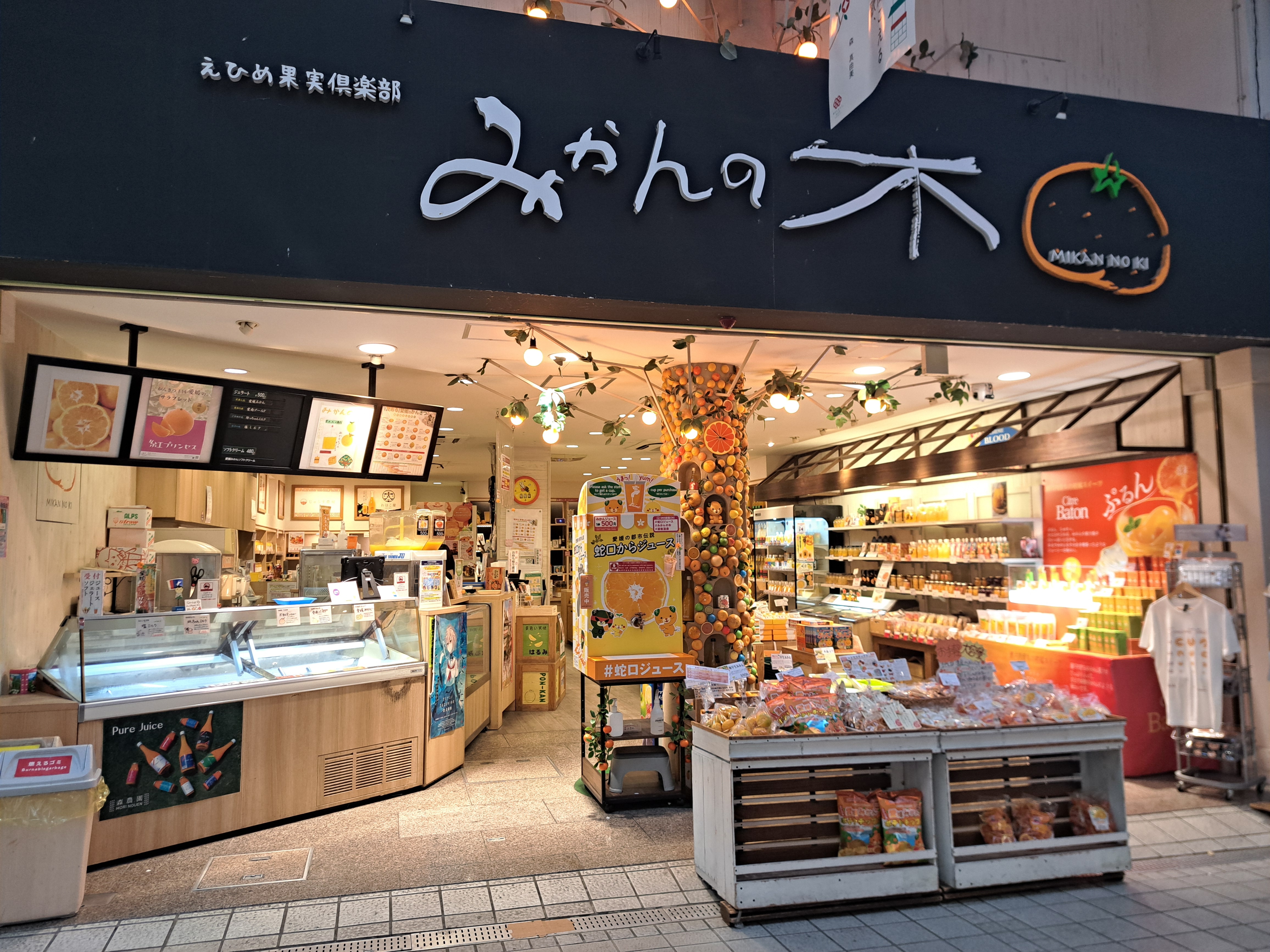
Ehime Kajitsu Club Mikannoki Honten
Ehime Kajitsu Club Mikannoki Honten is an Ehime citrus specialty store. It offers a variety of products including gelato, juice, and gifts.
Sosaku Ryori Hayama Saryo
A reservation-only restaurant within Dogo Yamanote Garden Place. It serves creative Japanese cooking and kaiseki using seasonal Seto Inland Sea produce and seasonings from long-established makers.
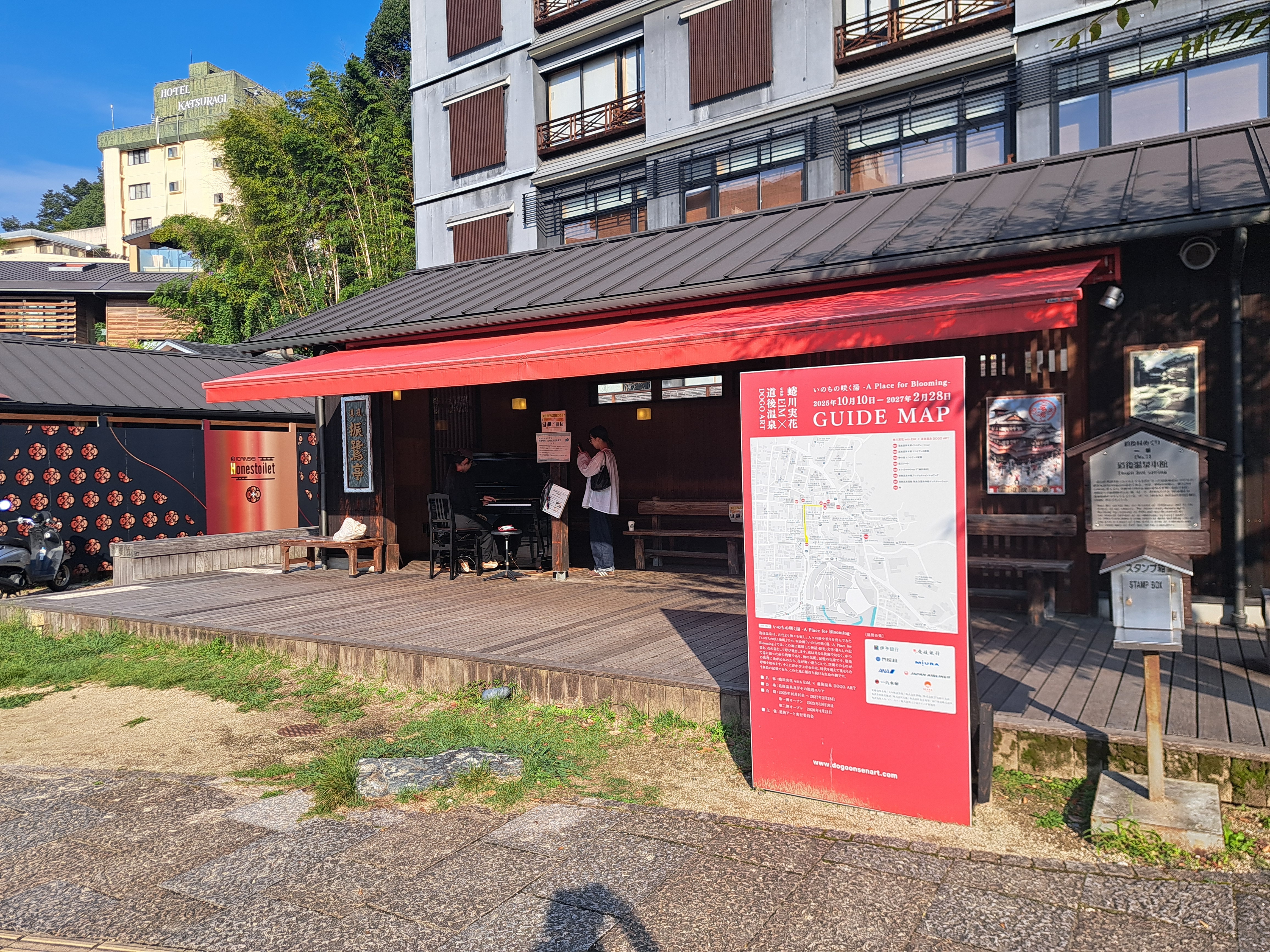
Shinrotei
A rest area on the east side of Dogo Onsen Honkan. A piano has been placed there since 2025.
More "Parks & Gardens" spots
See all in this category →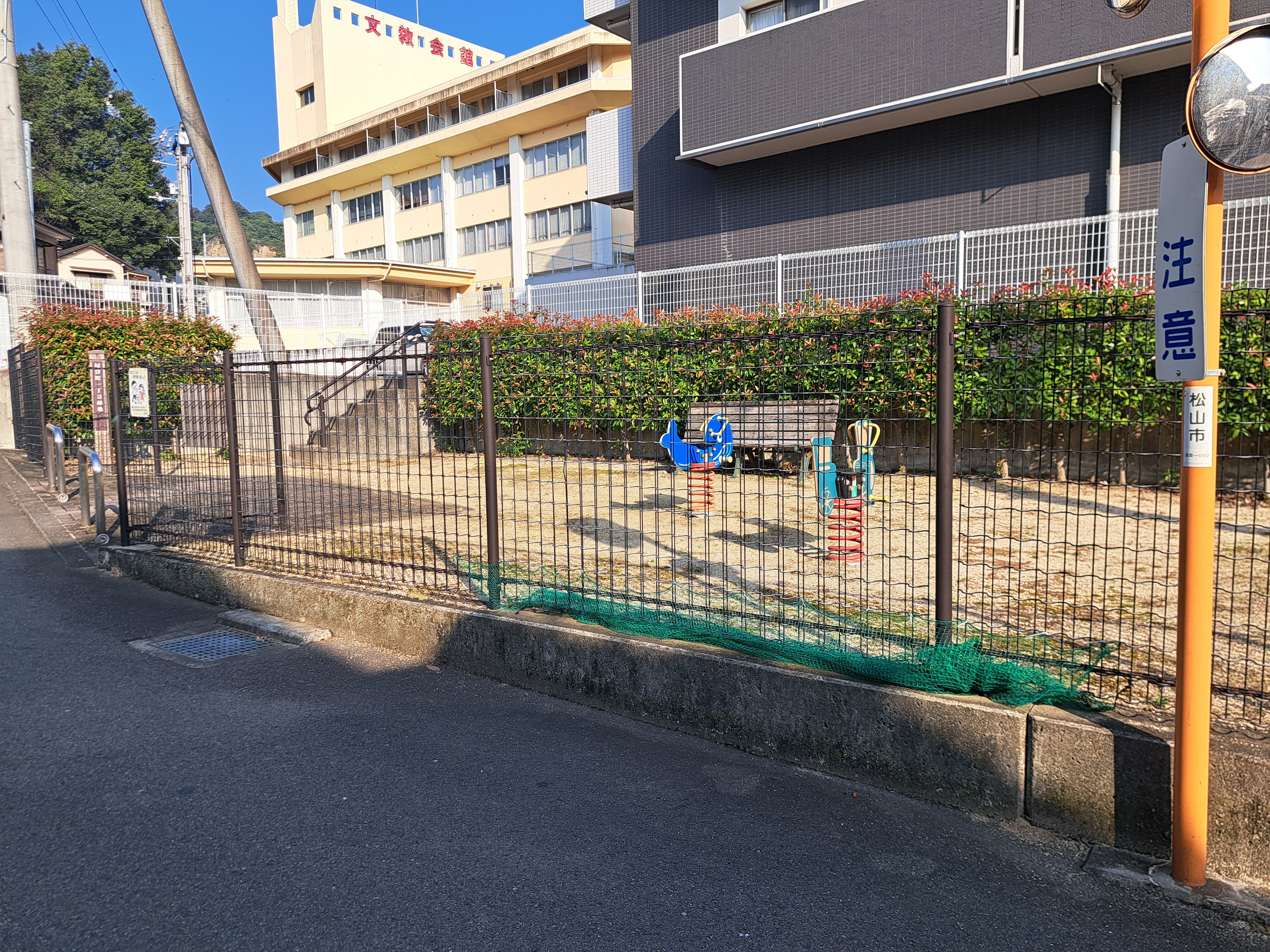
Iwaidani 1-chome Park
A small park ideal for a baby's or toddler's first park outing. It has a sandpit edged with urethane and spring-mounted playground rides shaped like a chick and a rabbit.
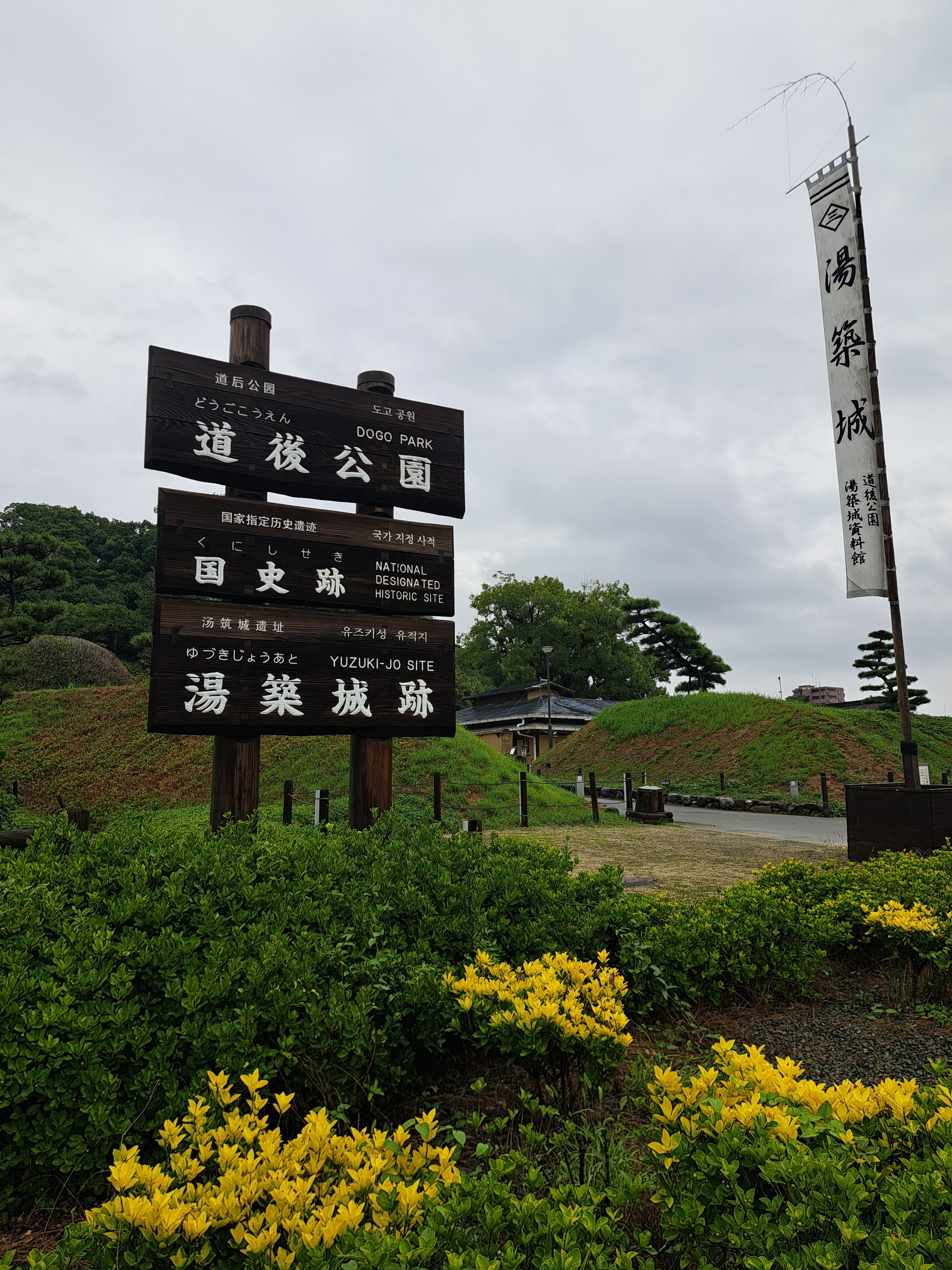
Dogo Park (Yuzuki Castle Ruins)
A park developed on the ruins of medieval Yuzuki Castle. It was the seat of the Kono clan, military governors of Iyo Province, and is designated a National Historic Site. It features reconstructed samurai residences and earthworks, a museum, and an observation deck.
Iwaidani Kita Park
A park for local residents in a quiet residential area. It has a combined play structure notable for its circular monkey bars, offering a calm, spacious place for children to play.
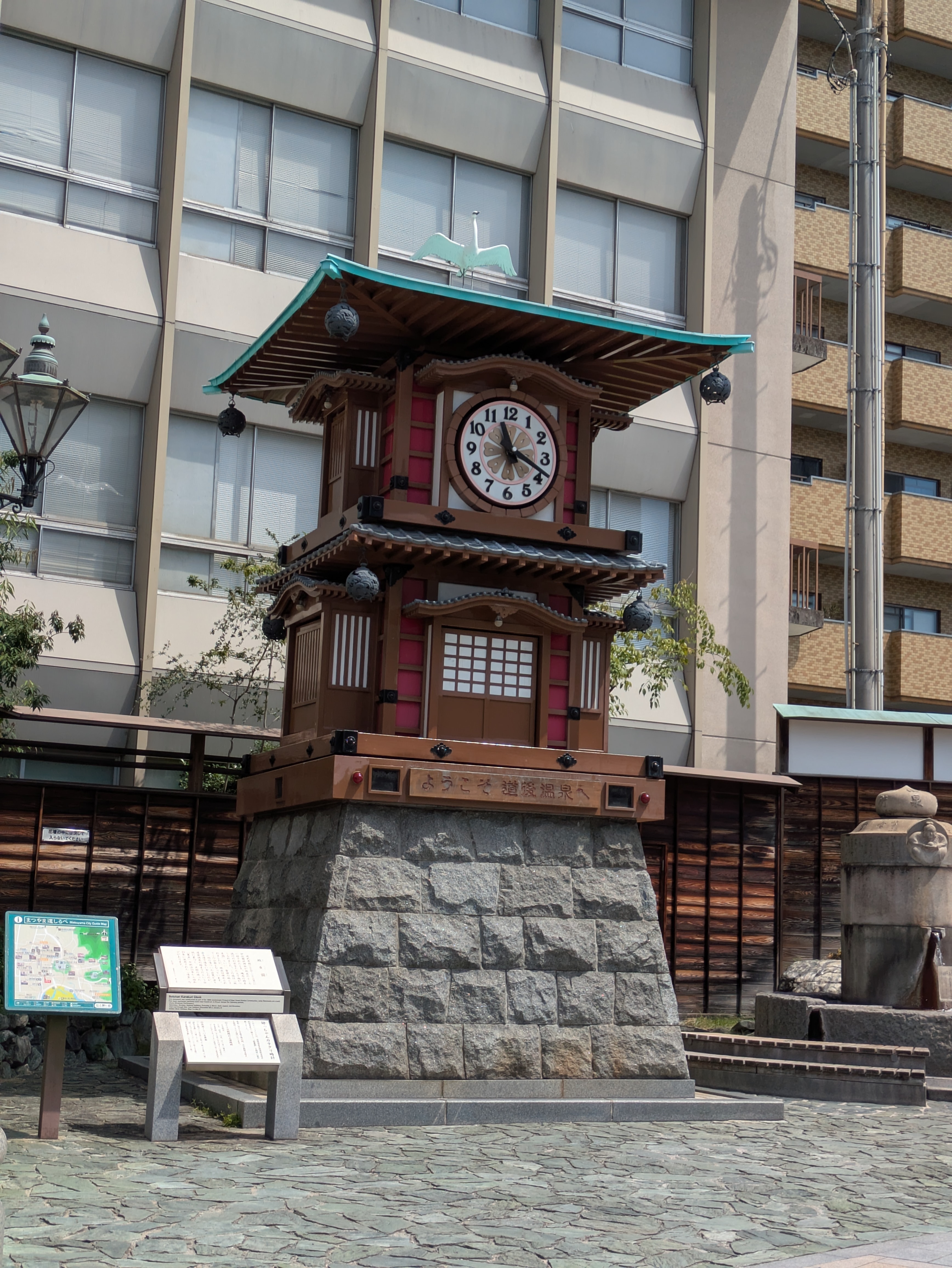
Botchan Karakuri Clock
A mechanical clock in Hojoen plaza in front of Dogo Onsen Station. Installed in 1994 to mark the 100th anniversary of the main building of Dogo Onsen, characters from the novel Botchan appear on the hour. A free foot bath sits beside it.
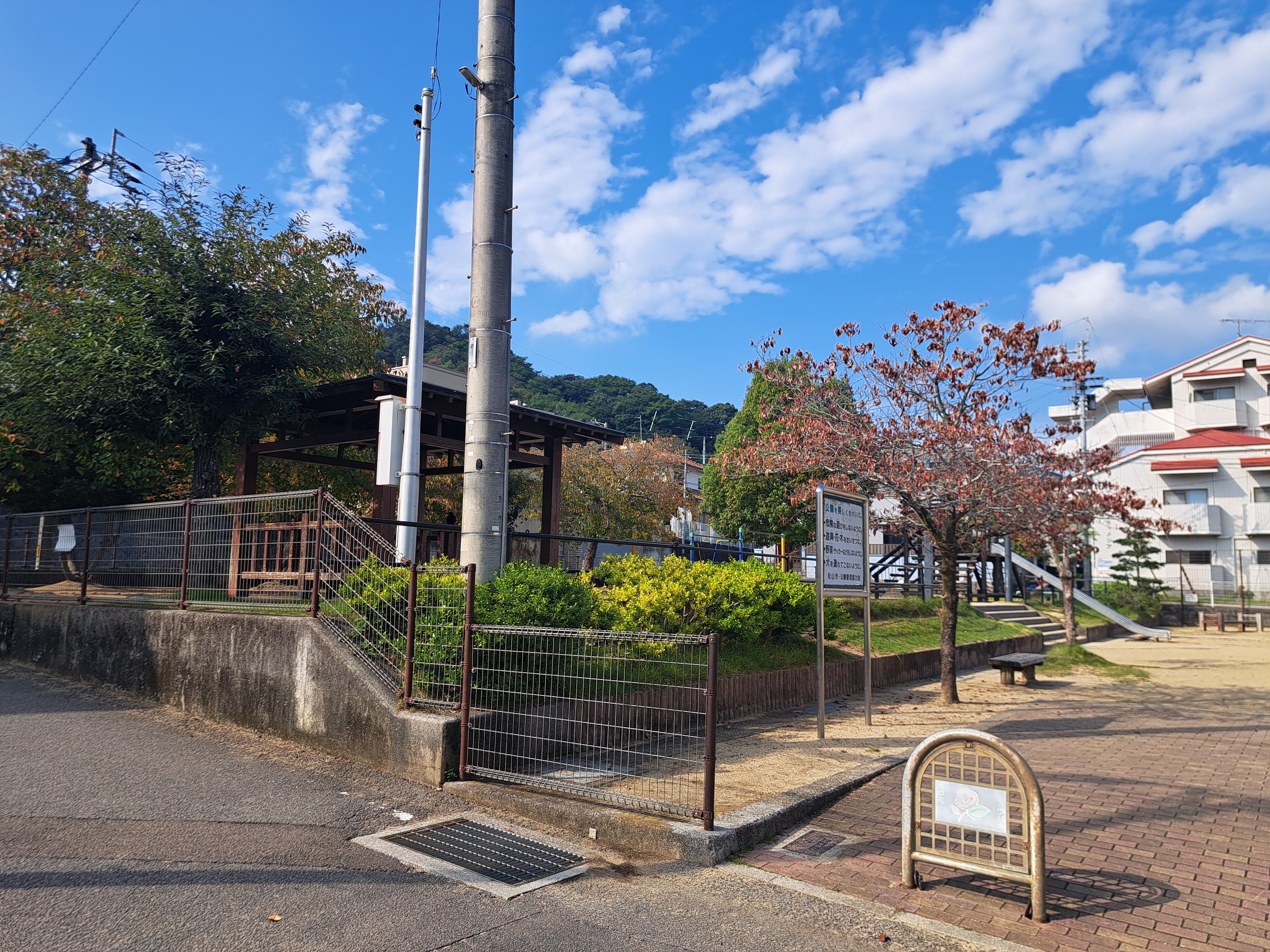
Iwaidani Park
A neighborhood park with fine views set within a residential area. The cherry blossoms are beautiful in spring, and it has a combined play structure with a swing, seesaw, and slide.
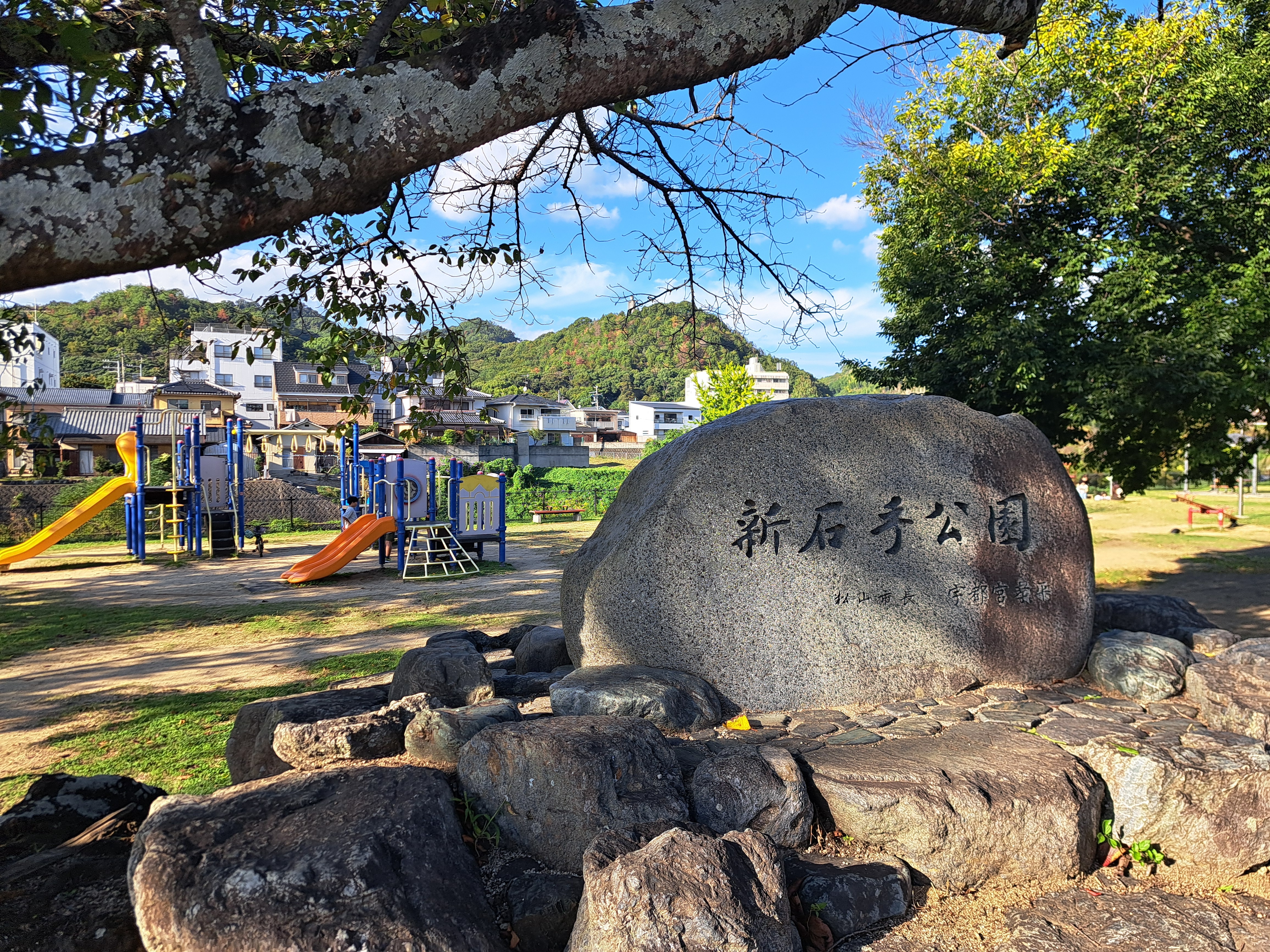
Shin-Ishite Park
A popular family park along the Ishite River. It has colorful combined playground equipment and a sandpit, and the restrooms are equipped with diaper-changing sheets.
Joshin-ji Temple
A Tendai Buddhist temple in Iwaidani-higashi-machi, Matsuyama. One of the four temples associated with the Hisamatsu-Matsudaira family, it was relocated to its present site in 1635 (Kan'ei 12) by Matsudaira Sadayuki. The grounds contain the mausoleum of Matsudaira Sadayuki, a designated Ehime Prefecture historic site.
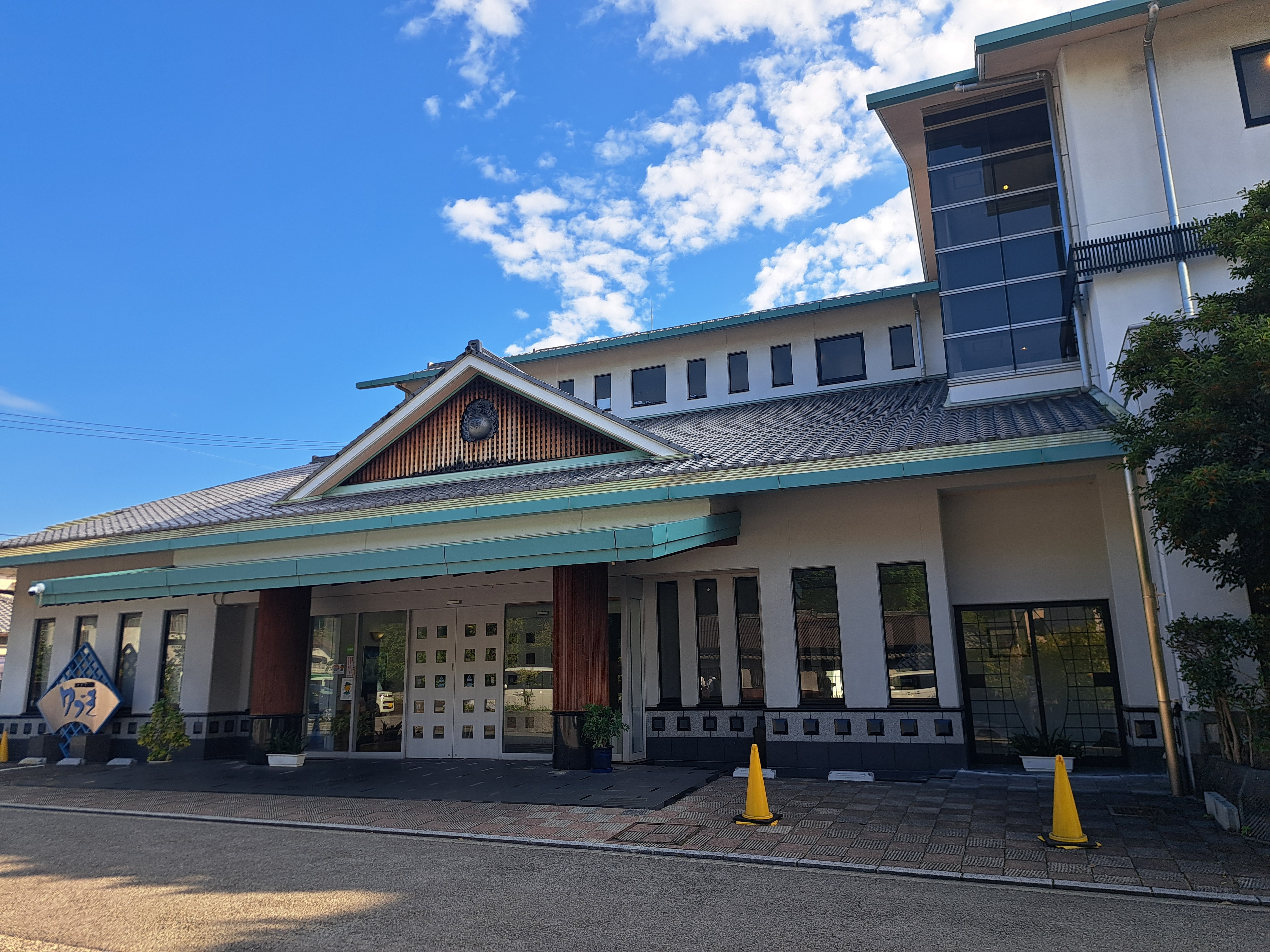
KKR Dogo Yuzuki
A lodging and banquet facility in Iwasaki-cho, Matsuyama. Close to the Dogo Onsen district, it is an inn where guests can enjoy hot springs and meals, and it is also open to the general public.