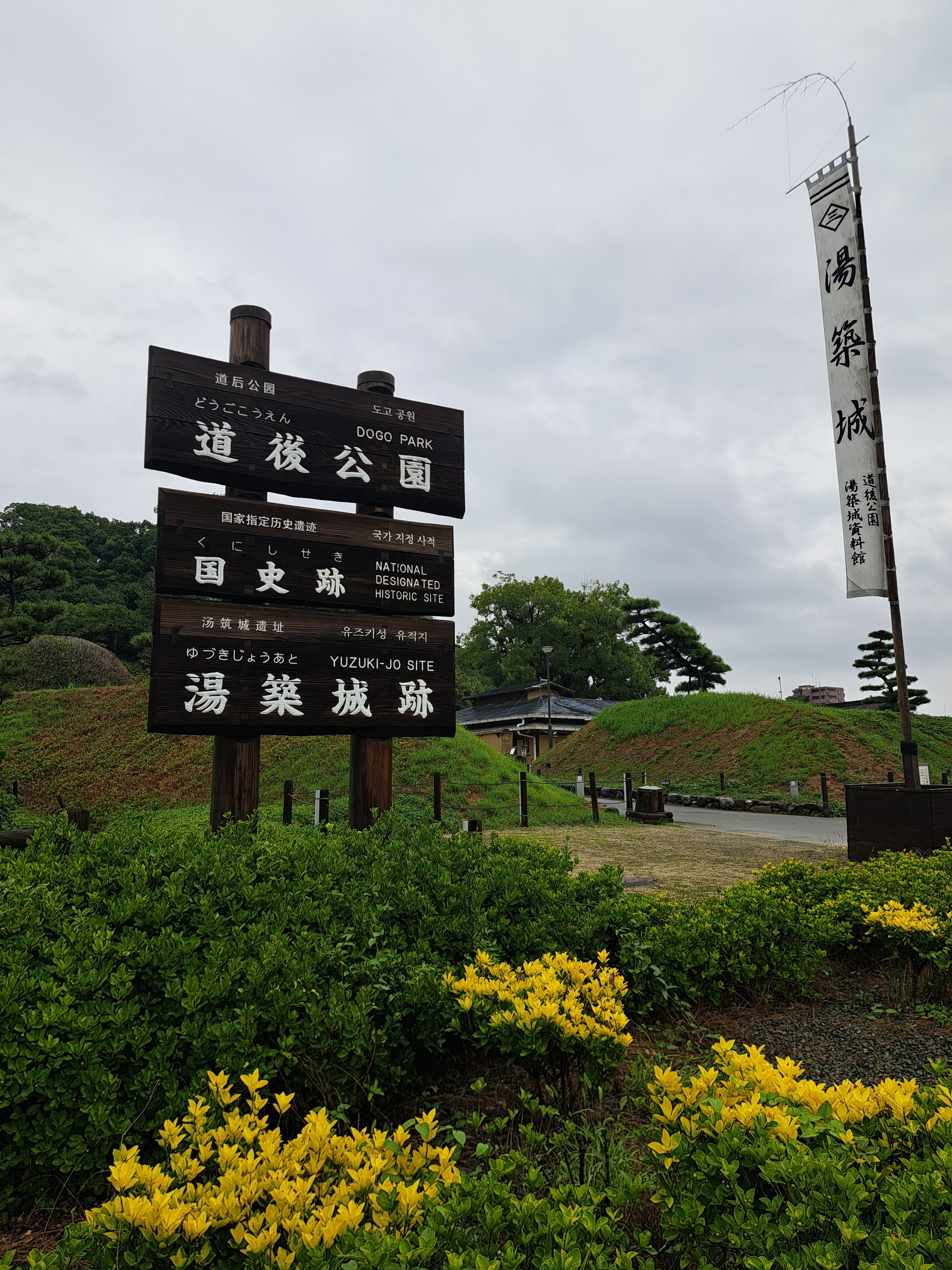
Dogo Park (Yuzuki Castle Ruins)
A park developed on the ruins of medieval Yuzuki Castle. It was the seat of the Kono clan, military governors of Iyo Province, and is designated a National Historic Site. It features reconstructed samurai residences and earthworks, a museum, and an observation deck.
Dogo Park is an urban park located in Dogo, Matsuyama City, developed on the site of Yuzuki Castle, a flatland mountain castle from the medieval period. The castle ruins are designated as a national Historic Site. It is within walking distance from Dogo Onsen Honkan, and the grounds are also known as a cherry blossom viewing spot.
Yuzuki Castle Ruins
These are the ruins of a castle that served as the base for the Kono clan, the Shugo of Iyo Province, for approximately 250 years from the first half of the 14th century until the castle was surrendered in 1585. The castle's history, walking guide, and parking information are summarized in the article "Visiting Dogo Park (Yuzuki Castle Ruins)."
Highlights in the Park
Based on the results of archaeological excavations, samurai residences, gardens, and cross-sections of earthen ramparts have been reconstructed and exhibited.
- Yuzuki Castle Museum: Introduces excavated artifacts and the history of the castle
- Samurai Residences (Restored): Recreates the lifestyle of samurai of the period
- Earthen Rampart Exhibition Room: Displays the internal structure of the earthen ramparts
- Observation Deck: Offers panoramic views of Matsuyama city and Dogo from atop the hill
Access and Visitor Guide
- Approximately 5 minutes on foot from Dogo Onsen Station
- Location: Dogo Koen, Matsuyama City
- Free admission (The museum and samurai residences are also free)
Source: "Yuzuki Castle" Wikipedia (CC BY-SA), Ehime Prefecture and Matsuyama City official information. Please check official sources for opening hours and closed days.
Last verified: July 2026
Articles that mention this place
歴史
A Complete History of Dogo Onsen: From the Hot Water of the Nihon Shoki to Botchan Yu
Tracing the history of Dogo Onsen, where imperial visits are recorded in the Nihon Shoki and the surviving fragments of the Iyo no Kuni Fudoki, alongside a chronological table from Prince Shotoku's visit in 596, the completion of the Honkan in 1894, and its Important Cultural Property designation in 1994, to the full reopening of the entire facility in 2024.
神社
Isaniwa Shrine, Guardian of Dogo: One of Three Hachiman-zukuri in Japan, and a Shrine of Sangaku
Isaniwa Shrine stands about 5 minutes on foot from Dogo Onsen Station, at the top of 135 stone steps. Visiting hours are 6:00–18:00 (longer in summer). The article covers the shrine's Hachiman-zukuri main hall (an Important Cultural Property), one of only three examples in Japan alongside Usa Jingu and Iwashimizu Hachimangu, its 22 sangaku tablets, and its annual events.
歴史
Yuzuki Castle and the Kono Clan: A Medieval Castle Sleeping in Dogo Park
The Yuzuki Castle ruins are Dogo Park itself; the park is open 24 hours for free, and the Yuzuki Castle Museum is open 9:00 to 17:00 with free admission (closed Mondays). This article summarizes the history from its construction as the base of the Kono clan ruling Iyo to its fall during Hideyoshi's Shikoku campaign, and the current castle ruins selected among Japan's Top 100 Castles.
実用
Parking Guide for Dogo Onsen: Free Parking and the Conditions for “1 Hour Free,” Plus Fees at the City Lots and Dogo Park
Dogo Onsen Honkan has no dedicated parking lot. Of the 2 city lots, the Iwaiya Higashimachi Parking Lot gives you the first hour free even if you do not use a facility. The Dogo Onsen Parking Lot gives you the first hour free if you use one of the public baths. The only places that are free all day are the Matsuyama Kanko Temporary Parking Lot (22-1 Dogo Himezuka, Matsuyama), which is open only on designated days, and bicycle parking.
Getting around
Do You Need a Rental Car for Dogo Onsen Sightseeing? A Guide to Exploring by Train and Bus Alone
How to get around Dogo Onsen and Matsuyama by streetcar, bus, and on foot, and the kinds of itineraries where a rental car is worth considering.
まちあるき
An Example of a Walking Model Course for a Day Trip Exploring Dogo Onsen and Dogo Park on Foot
For travelers visiting on a day trip from central Matsuyama City, this article explains an example of walking steps and precautions for efficiently touring the three public baths of Dogo Onsen and the area around Dogo Park on foot.
Walking the town
An Example of a Dogo Photo Spot Walking Route Targeting Early Morning and Sunset Hours An Example of a Dogo Photo Spot Walking Route Targeting Early Morning and Sunset Hours
For travelers who wish to take photos of historical buildings and streetscapes while avoiding crowds, this guide presents an example of a walking route to enjoy the light conditions and quiet atmosphere during the early morning and sunset hours.
Practical
Free foot baths in the Dogo Onsen area: locations and what to prepare
There are 2 free foot baths in Dogo: Hojoen in front of Dogo Onsen Station (6:00–23:00) and Sora no Sanpomichi on the high ground south of the Honkan (6:00–21:00). This guide also covers the hand bath at the 4th Distribution Station (24 hours), free foot baths and hand baths at lodgings, and where to get a towel if you forget one.
Walking the town
A sample 1-night, 2-day Dogo Onsen itinerary: timetable and how to visit the public baths
Dogo Onsen Station, Dogo Haikara Dori, Dogo Onsen Honkan, Enman-ji Temple, and Dogo Park are all within walking distance. Seeing only the exteriors and walking around town takes 2 hours; adding one public bath takes about 4 hours in the afternoon. There are 5 patterns, from a 4-hour airport layover to a 1-night, 2-day stay, and the time needed depends on whether you only see the exteriors or also bathe at a public bath.
散策
An Afternoon Walk Through Dogo Onsen and Its Surroundings After Arriving in Matsuyama
This is a sample itinerary for spending several hours in Dogo Onsen after arriving in Matsuyama and checking in at your
まちあるき
Visiting Dogo Park (Yuzuki Castle Ruins): Highlights, Hours, and Parking
A guide to Dogo Park (Yuzuki Castle Ruins): what to see, opening hours and closed days, how to get there from Dogo Onsen Station, and parking space counts and fees.
More spots in Dogo Park & Isaniwa Shrine Area
See all in this area →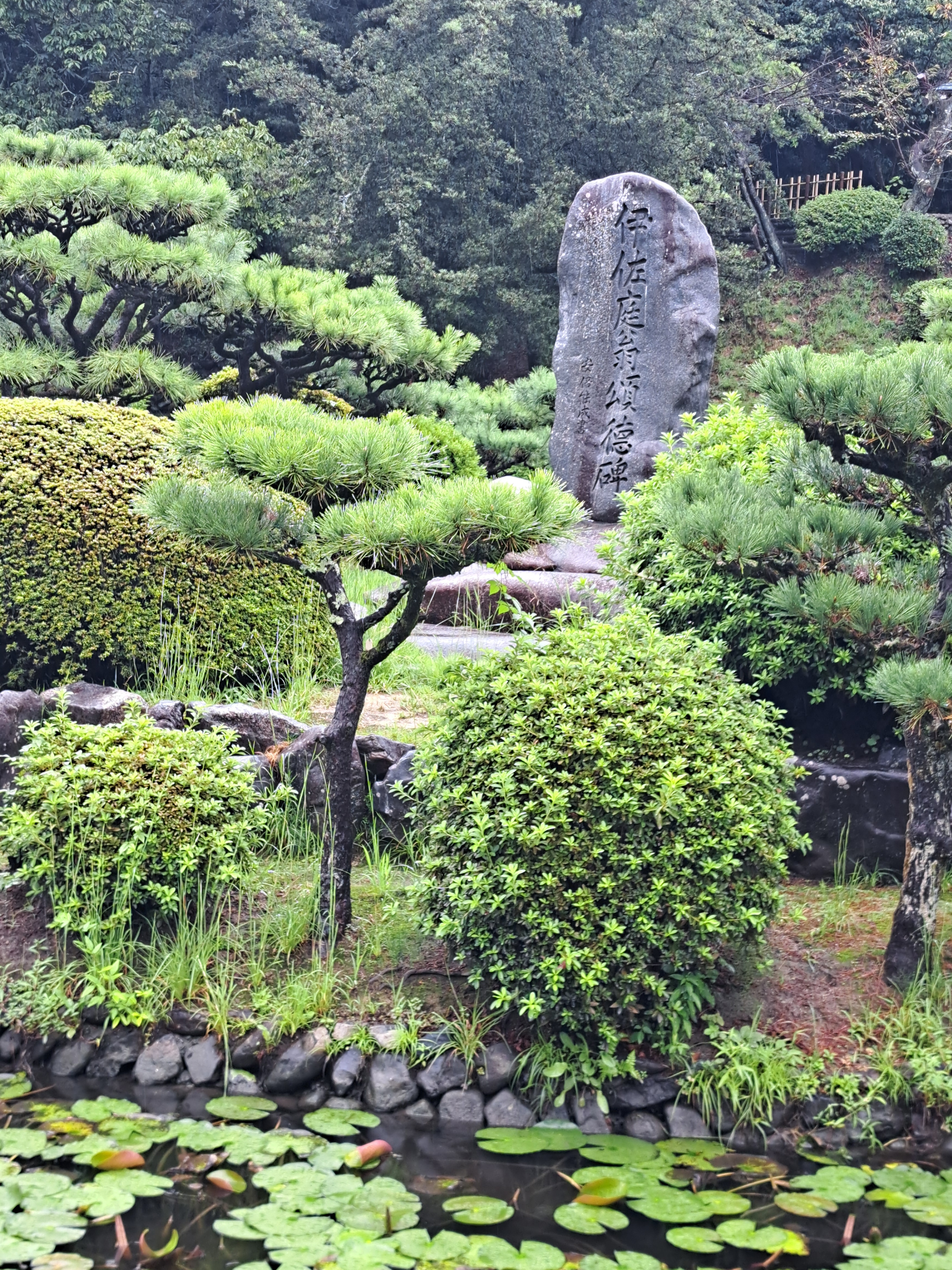
Monument to the Merits of Isaniwa
A monument in Dogo Park. It honours Isaniwa Yukiya, the first mayor of Dogo Yunomachi, who led the 1894 (Meiji 27) rebuilding of Dogo Onsen Honkan. The Honkan is a nationally designated Important Cultural Property.
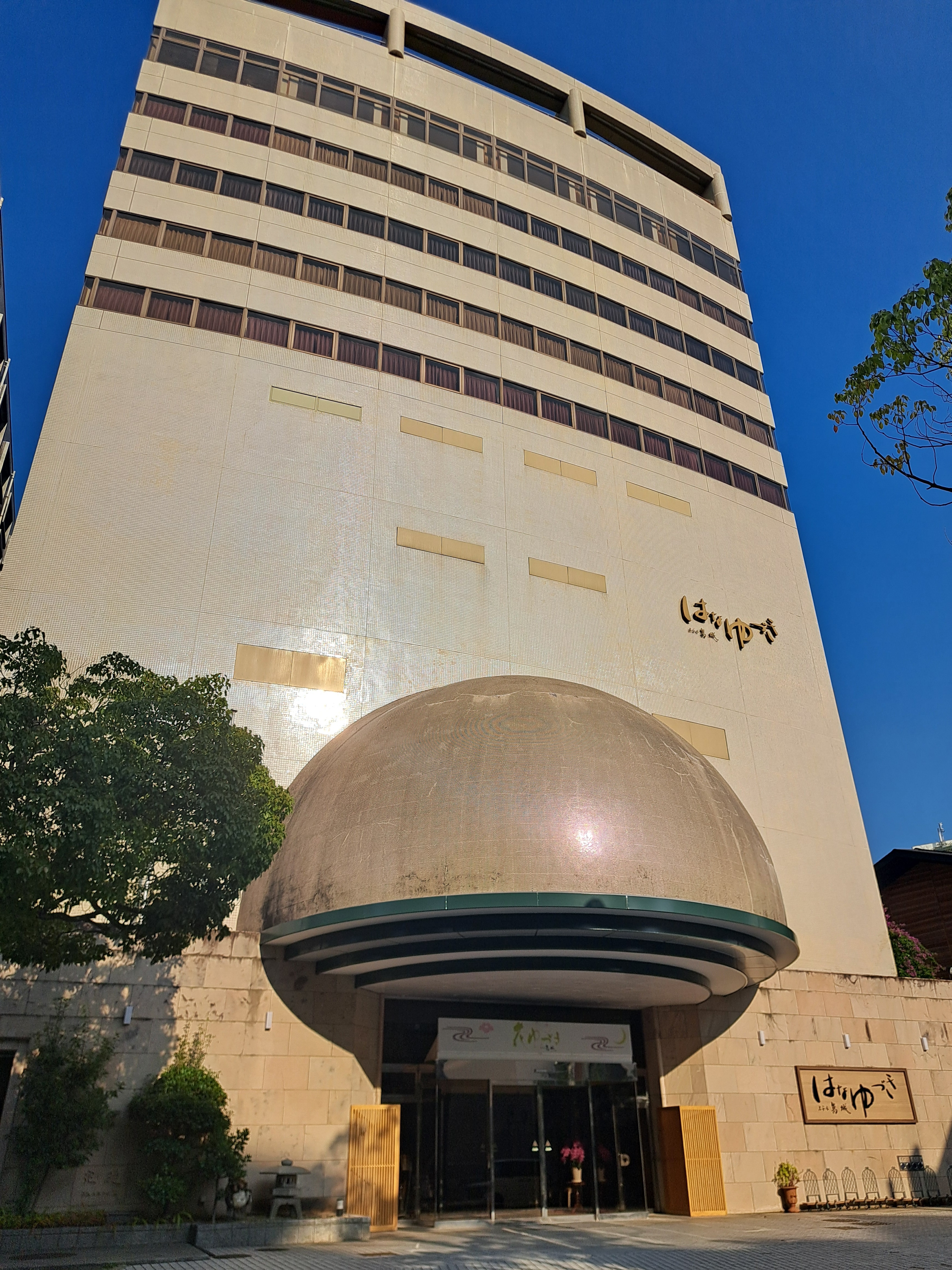
Dogo Onsen Hanayuzuki
A high-rise hot spring hotel about a 1-minute walk from Dogo Onsen Honkan. It has a rooftop open-air bath with views and serves local cuisine.
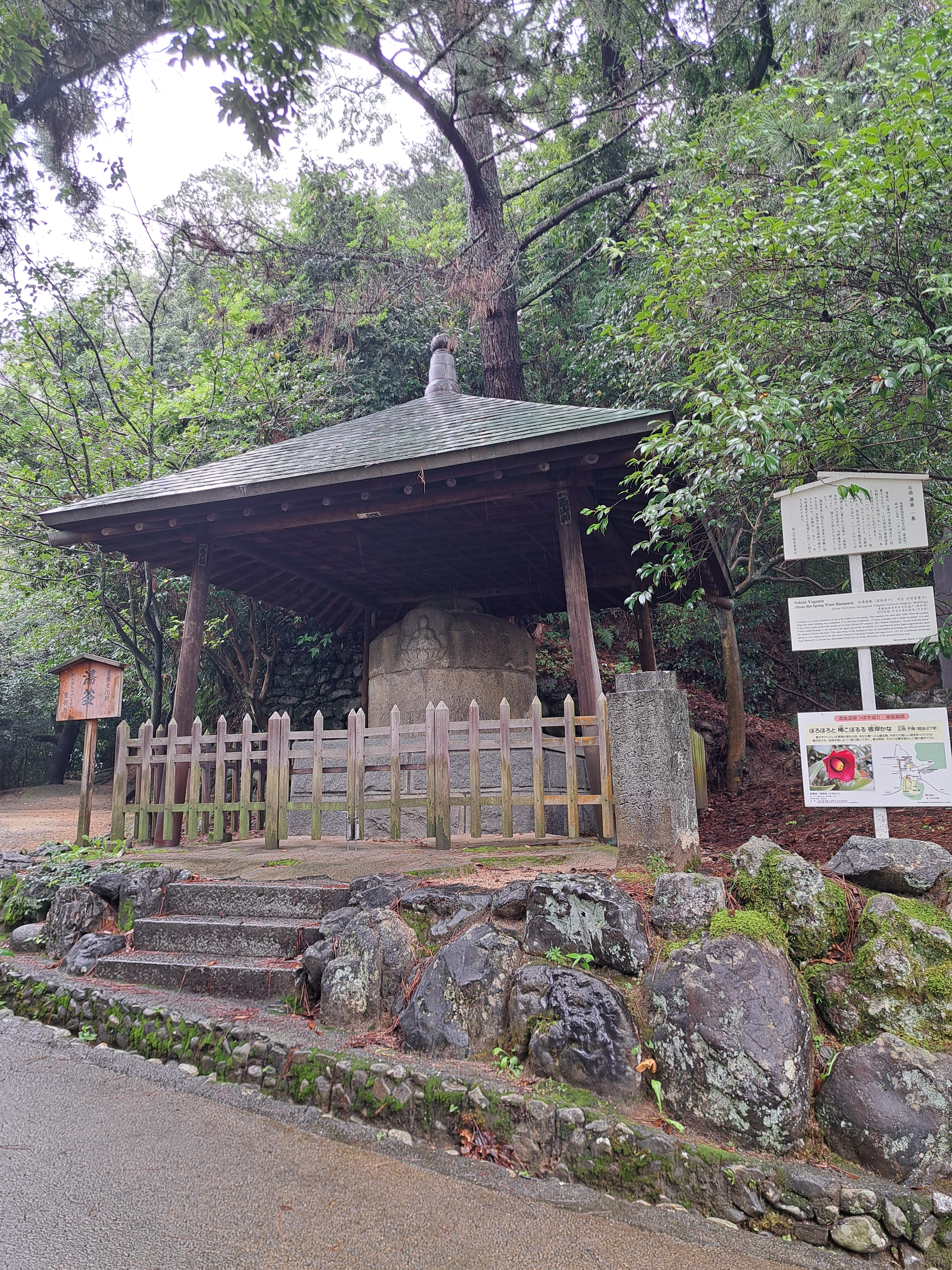
Yugama Yakushi
A stone yugama in Dogo Park. It is a cylindrical stone object that was once used as a hot spring outlet for Dogo Onsen, and is a Tangible Cultural Property designated by Ehime Prefecture.
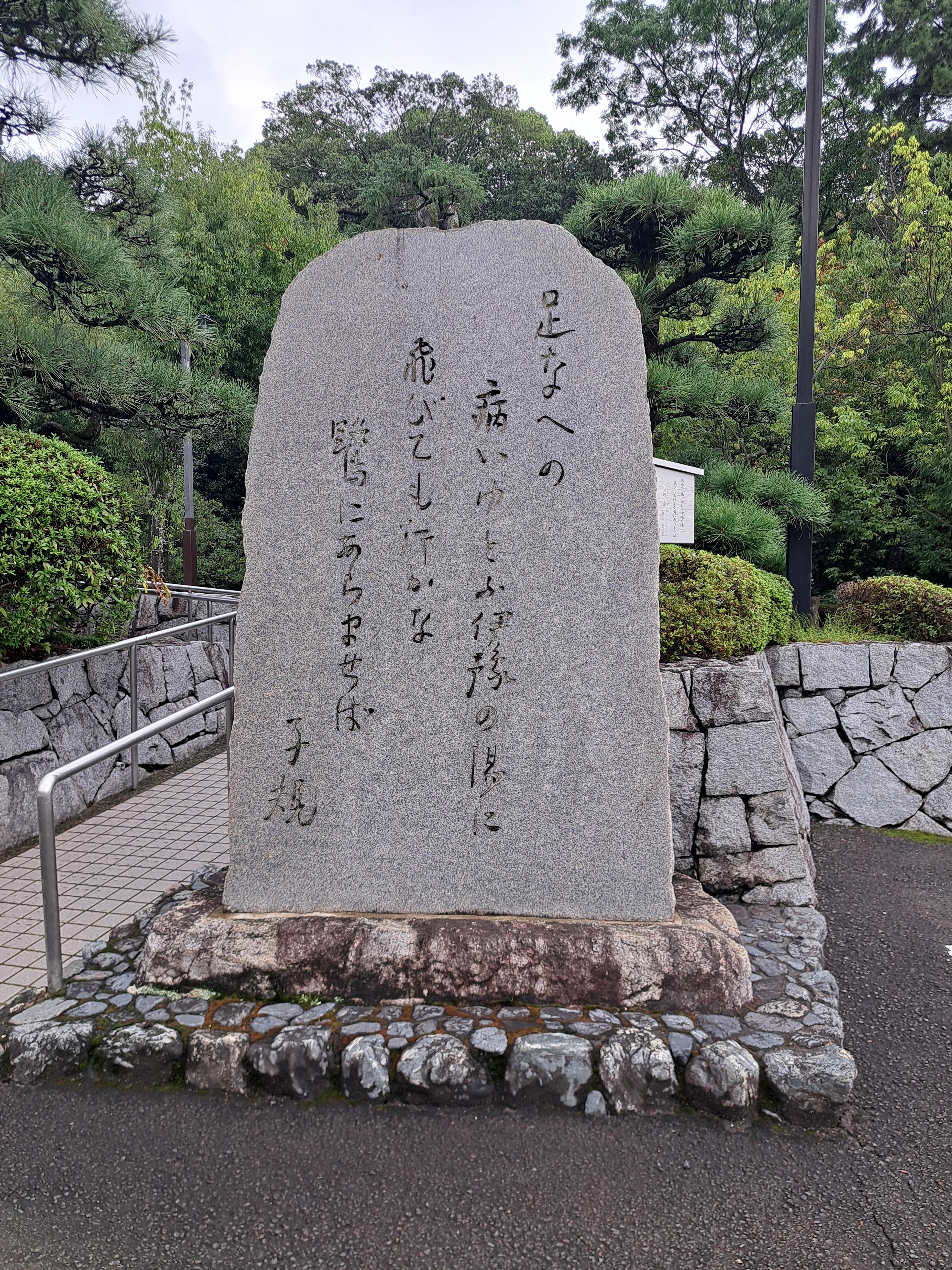
Masaoka Shiki Haiku Monument
A monument for Masaoka Shiki in Dogo Park, in front of the Shiki Memorial Museum. It is inscribed with the tanka "Ashinae no yamai iyu to fu Iyo no yu ni" and was erected for the 50th anniversary of Shiki's death in 1951 (Showa 26).
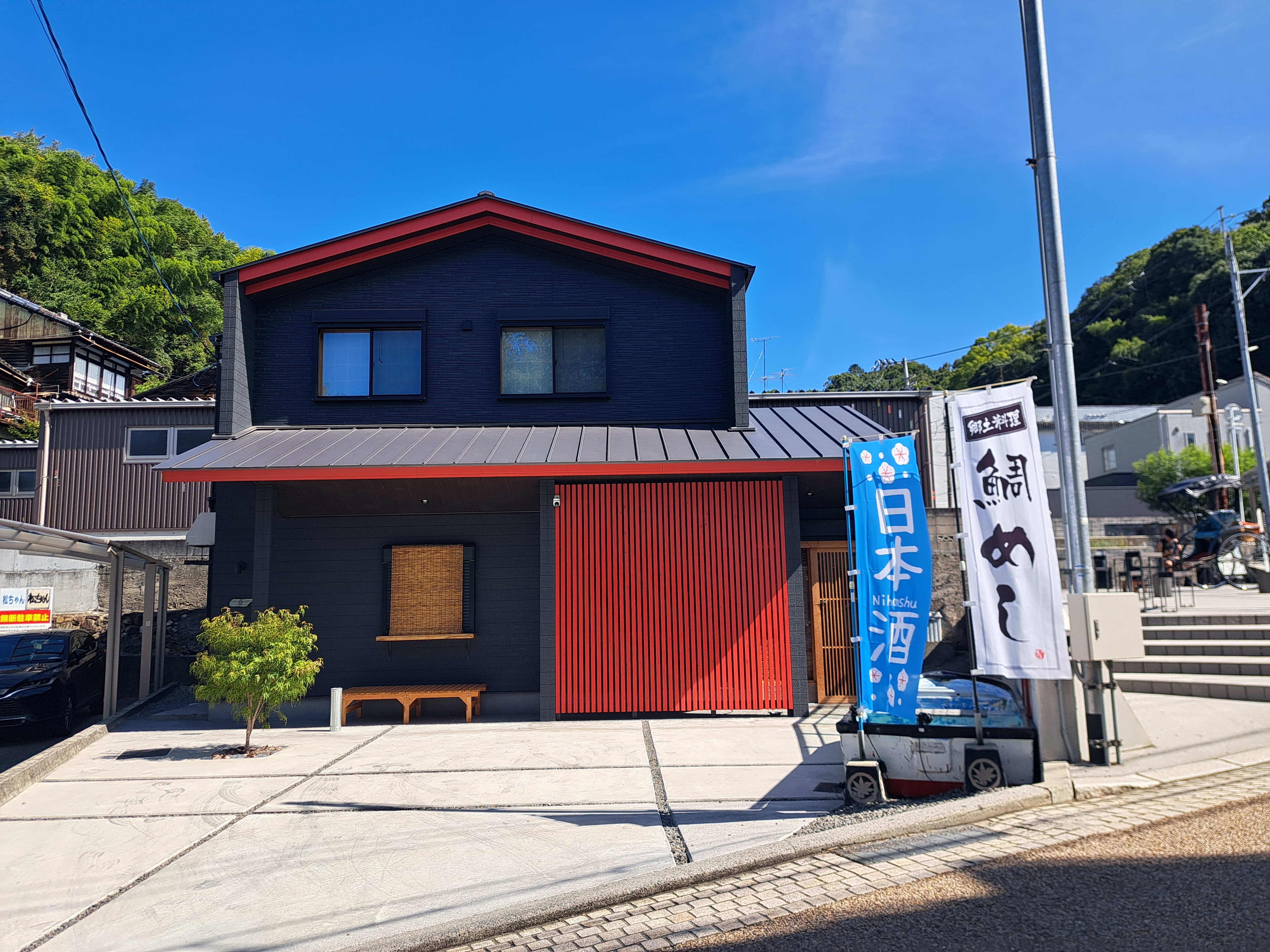
Doramomiji Red Yuzukicho
Doramomiji Red Yuzukicho is a seafood izakaya within a 1-minute walk from Dogo Onsen Honkan. It offers Setouchi sashimi, the owner’s catch, and local sake from across Japan selected by a sake sommelier.
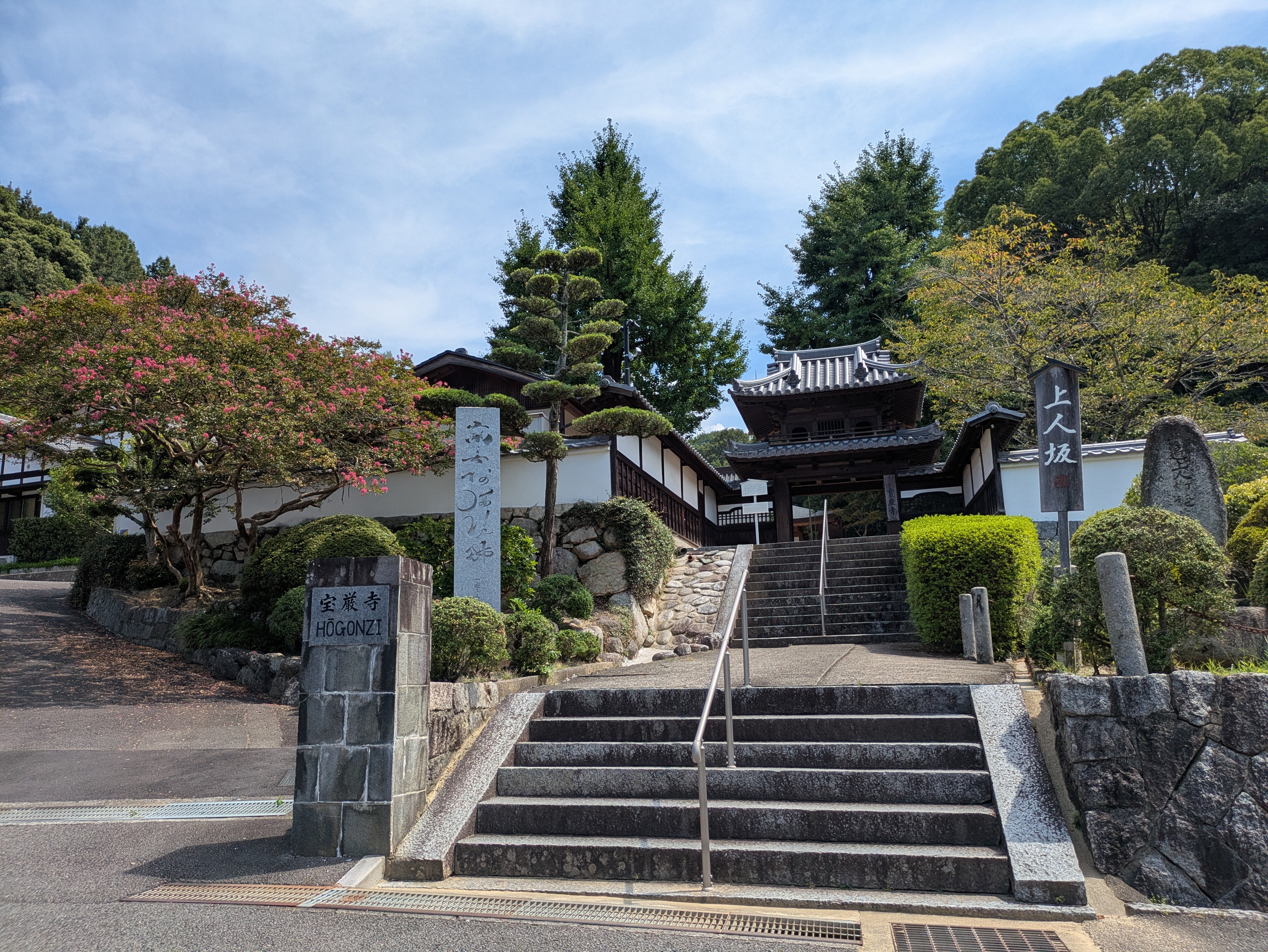
Hogon-ji Temple
A temple in Dogo said to be the birthplace of Ippen, founder of the Ji sect of Buddhism. The main hall was lost to fire in 2013 but was rebuilt in 2016.
CHAHARU Hanare, Dogo Yumekura
A seven-room ryokan standing immediately east of Dogo Onsen Honkan. Each room has an indoor bath fed by piped hot spring water, and Ehime crafts such as Tobe ware and Imabari towels are used throughout.
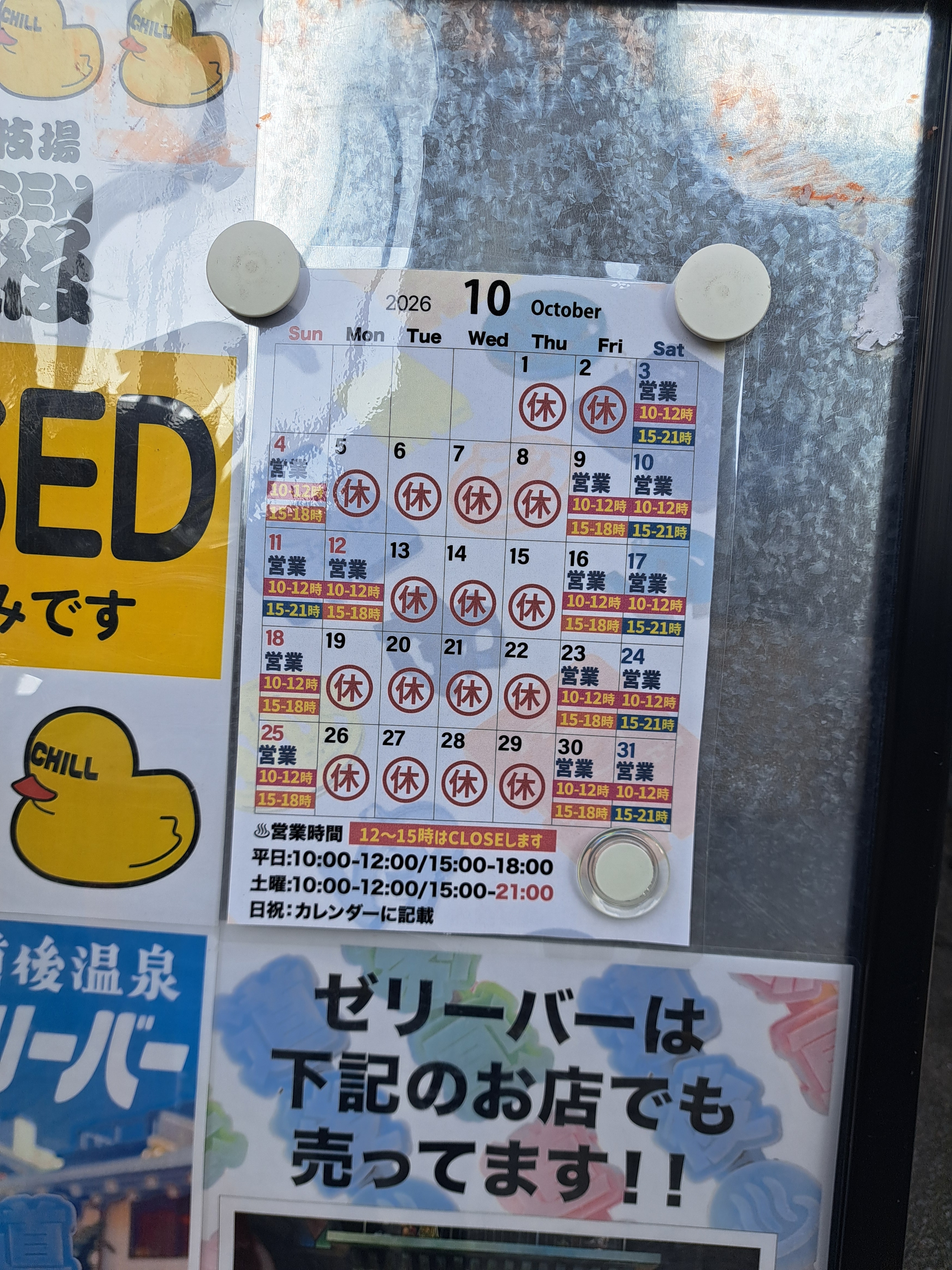
Ura Dogo
A neo-retro amusement arcade opened in 2023. Enjoy shooting games, local capsule-toy machines, and photogenic jelly ice cream.
More "Parks & Gardens" spots
See all in this category →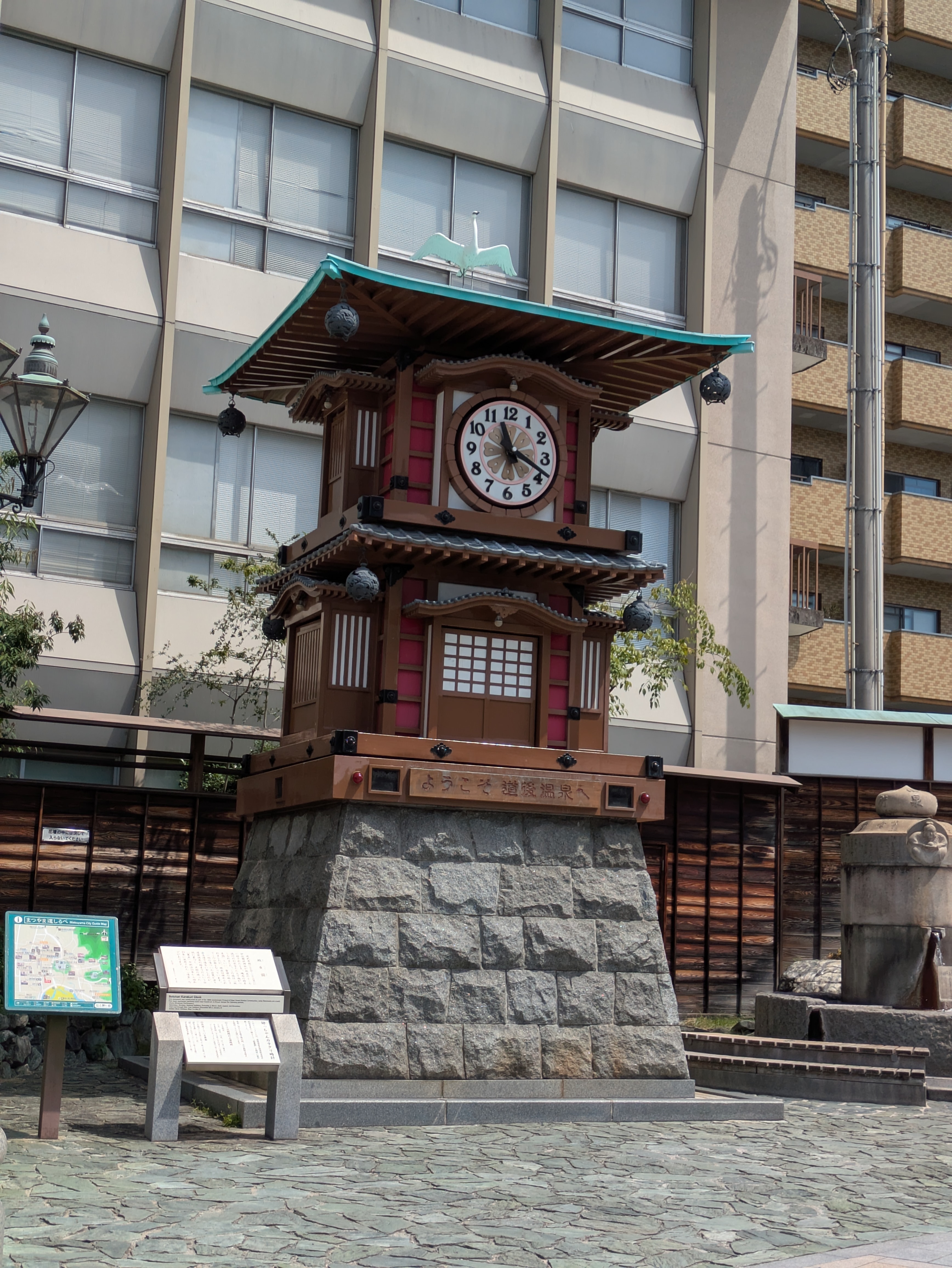
Botchan Karakuri Clock
A mechanical clock in Hojoen plaza in front of Dogo Onsen Station. Installed in 1994 to mark the 100th anniversary of the main building of Dogo Onsen, characters from the novel Botchan appear on the hour. A free foot bath sits beside it.
Joshin-ji Temple
A Tendai Buddhist temple in Iwaidani-higashi-machi, Matsuyama. One of the four temples associated with the Hisamatsu-Matsudaira family, it was relocated to its present site in 1635 (Kan'ei 12) by Matsudaira Sadayuki. The grounds contain the mausoleum of Matsudaira Sadayuki, a designated Ehime Prefecture historic site.
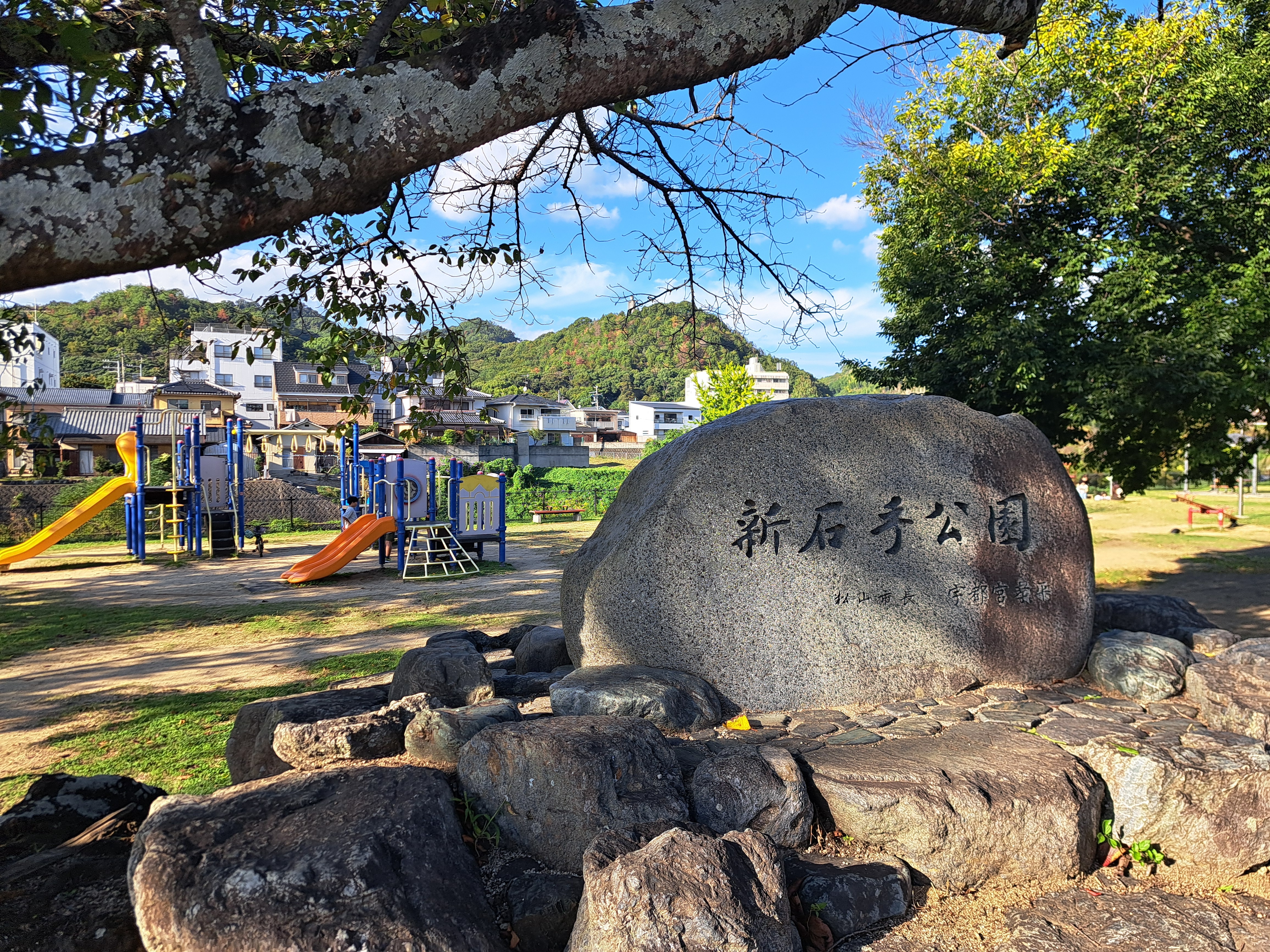
Shin-Ishite Park
A popular family park along the Ishite River. It has colorful combined playground equipment and a sandpit, and the restrooms are equipped with diaper-changing sheets.
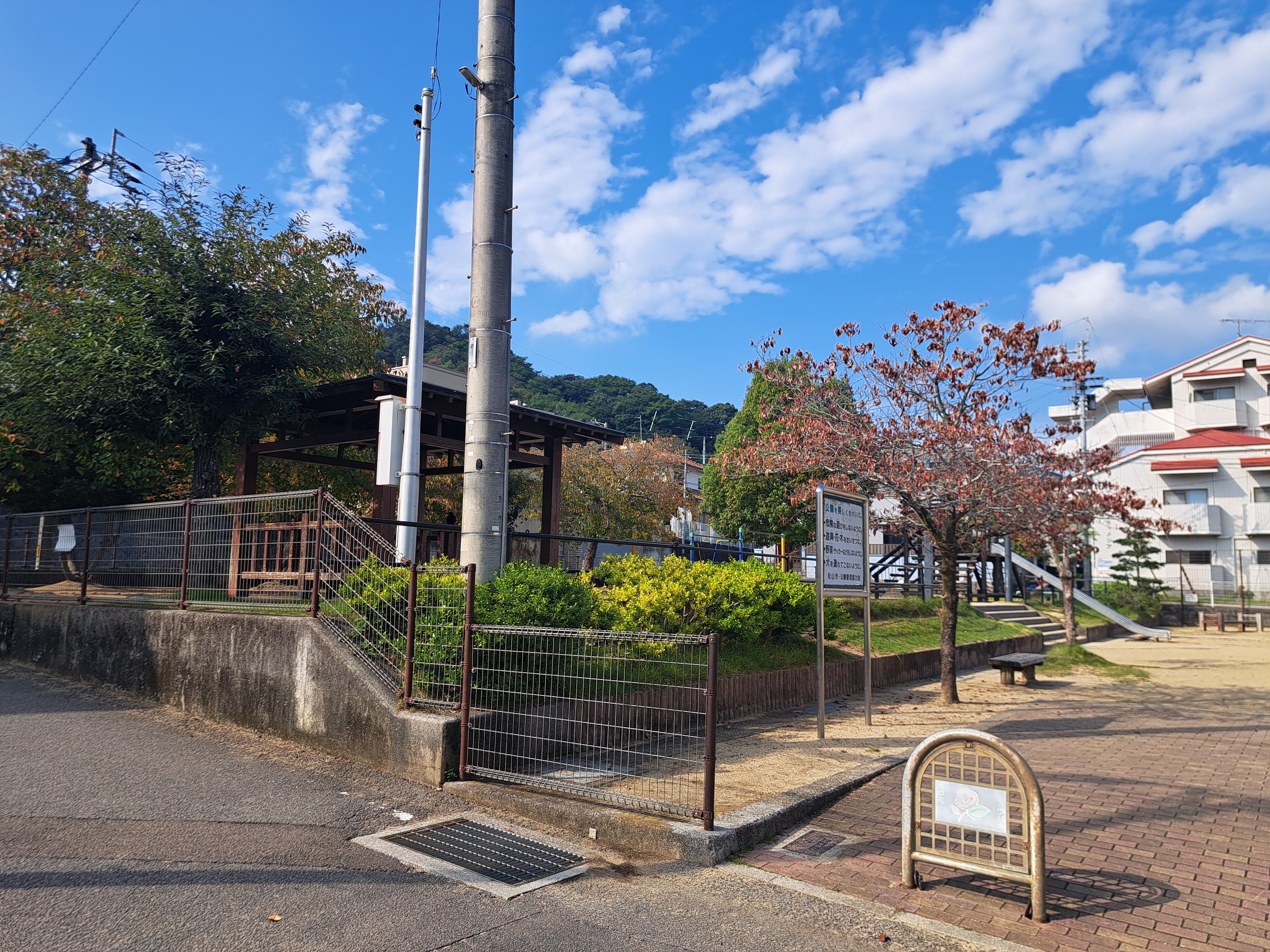
Iwaidani Park
A neighborhood park with fine views set within a residential area. The cherry blossoms are beautiful in spring, and it has a combined play structure with a swing, seesaw, and slide.
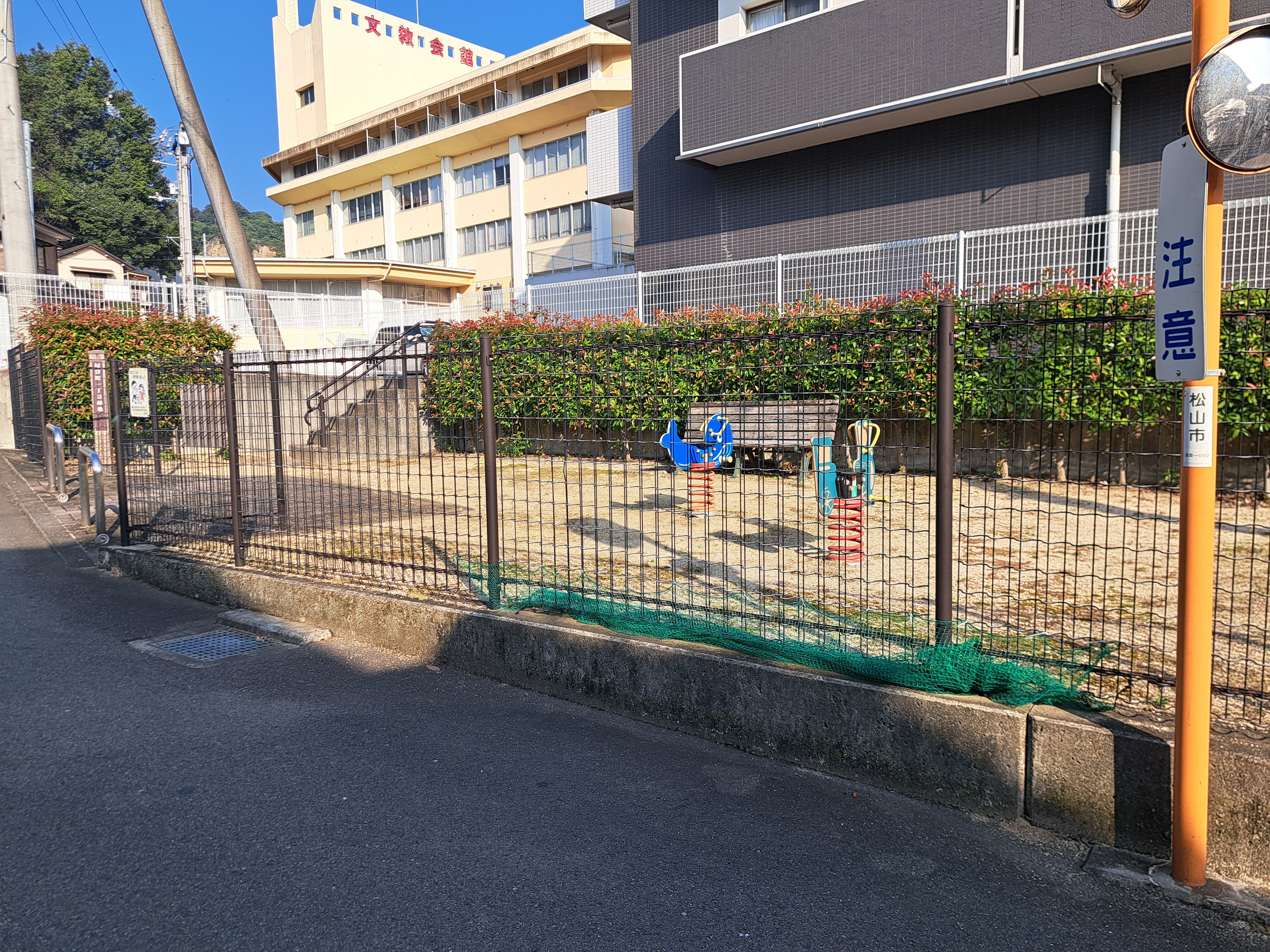
Iwaidani 1-chome Park
A small park ideal for a baby's or toddler's first park outing. It has a sandpit edged with urethane and spring-mounted playground rides shaped like a chick and a rabbit.
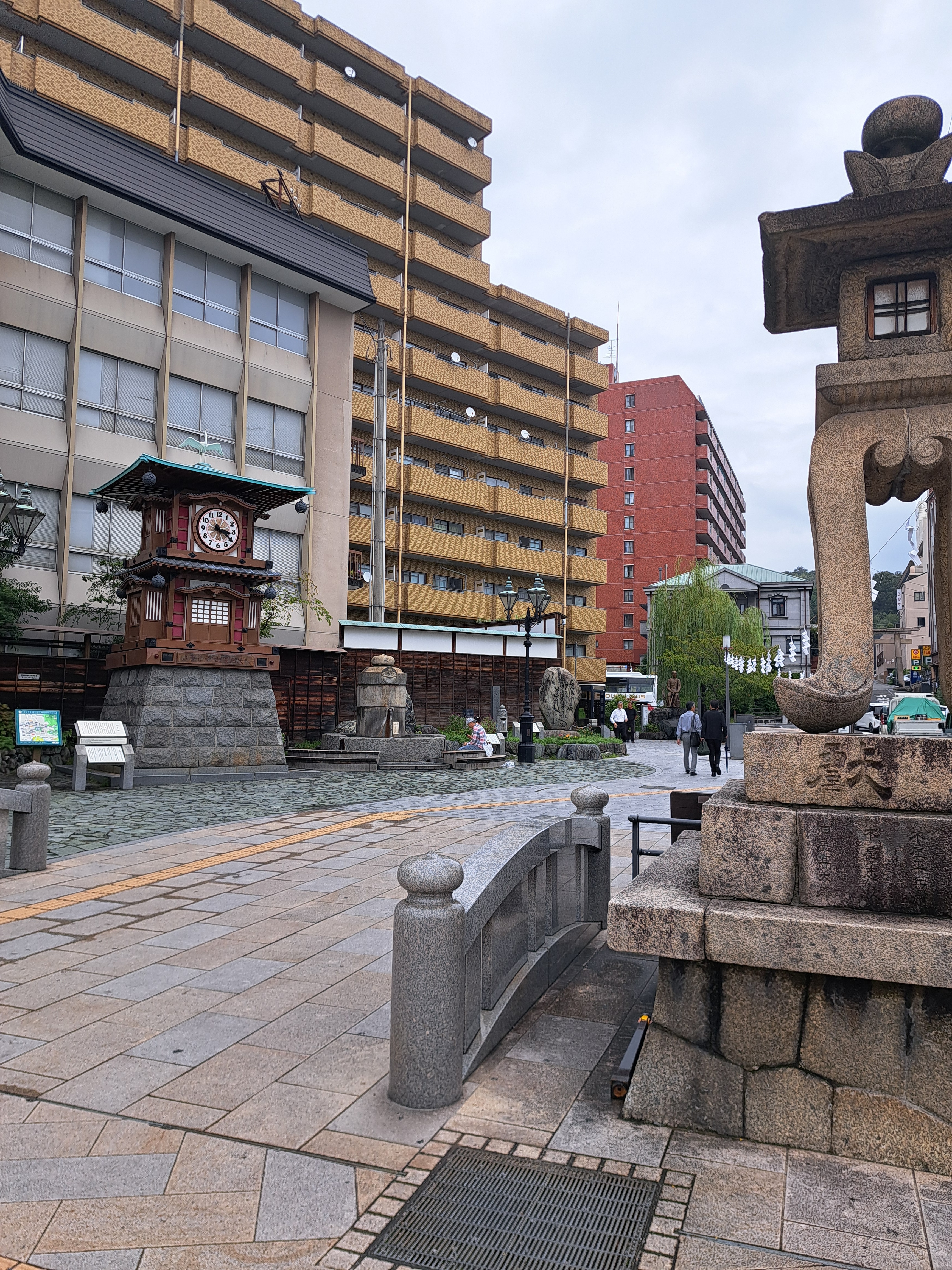
Hojoen
The plaza in front of Dogo Onsen Station. With the Botchan Karakuri Clock and a free foot bath that is easy to drop by, it is the starting point of a Dogo stroll.
Ishitegawa Green Space (Iwazeki Bridge Area)
An area defined by Iwazeki-bashi, a red suspension bridge completed in the Taisho era. You can enjoy strolling and photography with the murmur of the river as background.
Iwaidani Kita Park
A park for local residents in a quiet residential area. It has a combined play structure notable for its circular monkey bars, offering a calm, spacious place for children to play.