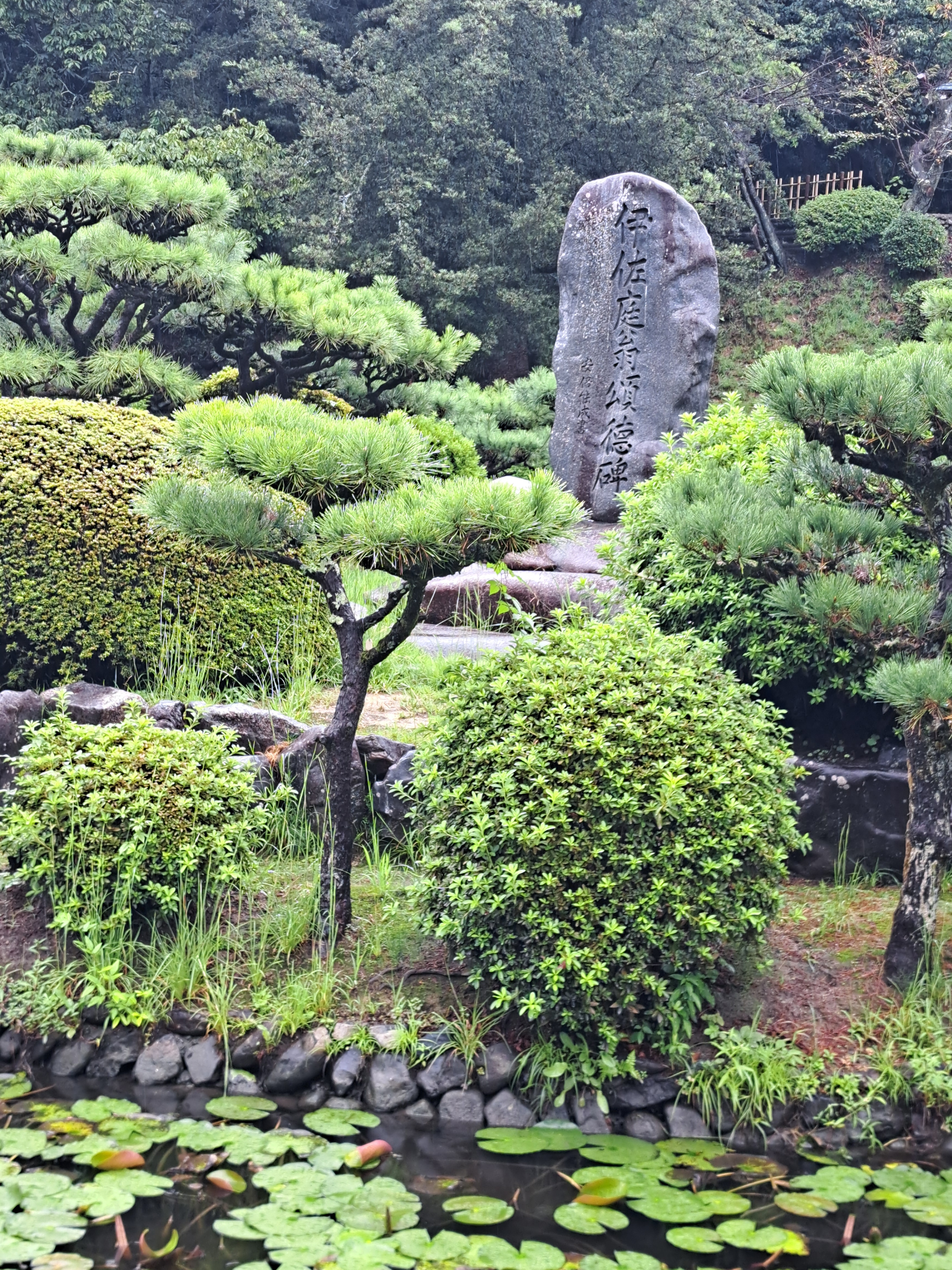
Monument to the Merits of Isaniwa
A monument in Dogo Park. It honours Isaniwa Yukiya, the first mayor of Dogo Yunomachi, who led the 1894 (Meiji 27) rebuilding of Dogo Onsen Honkan. The Honkan is a nationally designated Important Cultural Property.
The Isaniwa-o Shotoku-hi Monument is a memorial monument located in Dogo Park. It was built to honor the achievements of Yukiya Isaniwa, who led the reconstruction of the Dogo Onsen Honkan.
Yukiya Isaniwa and Dogo Onsen Honkan
Yukiya Isaniwa was the first town mayor of Dogo Yunomachi. In 1894, he led the reconstruction of the aging Dogo Onsen public bath into a building that future generations could be proud of. The three-story Dogo Onsen Honkan constructed at this time has remained the symbol of Dogo Onsen to this day.
Dogo Onsen Honkan is designated as a national Important Cultural Property. The monument conveys the achievements of Isaniwa, who preserved this main building for posterity.
Source: "Dogo Onsen Honkan" Wikipedia (CC BY-SA) Last confirmed date: July 2026
Articles that mention this place
More spots in Dogo Park & Isaniwa Shrine Area
See all in this area →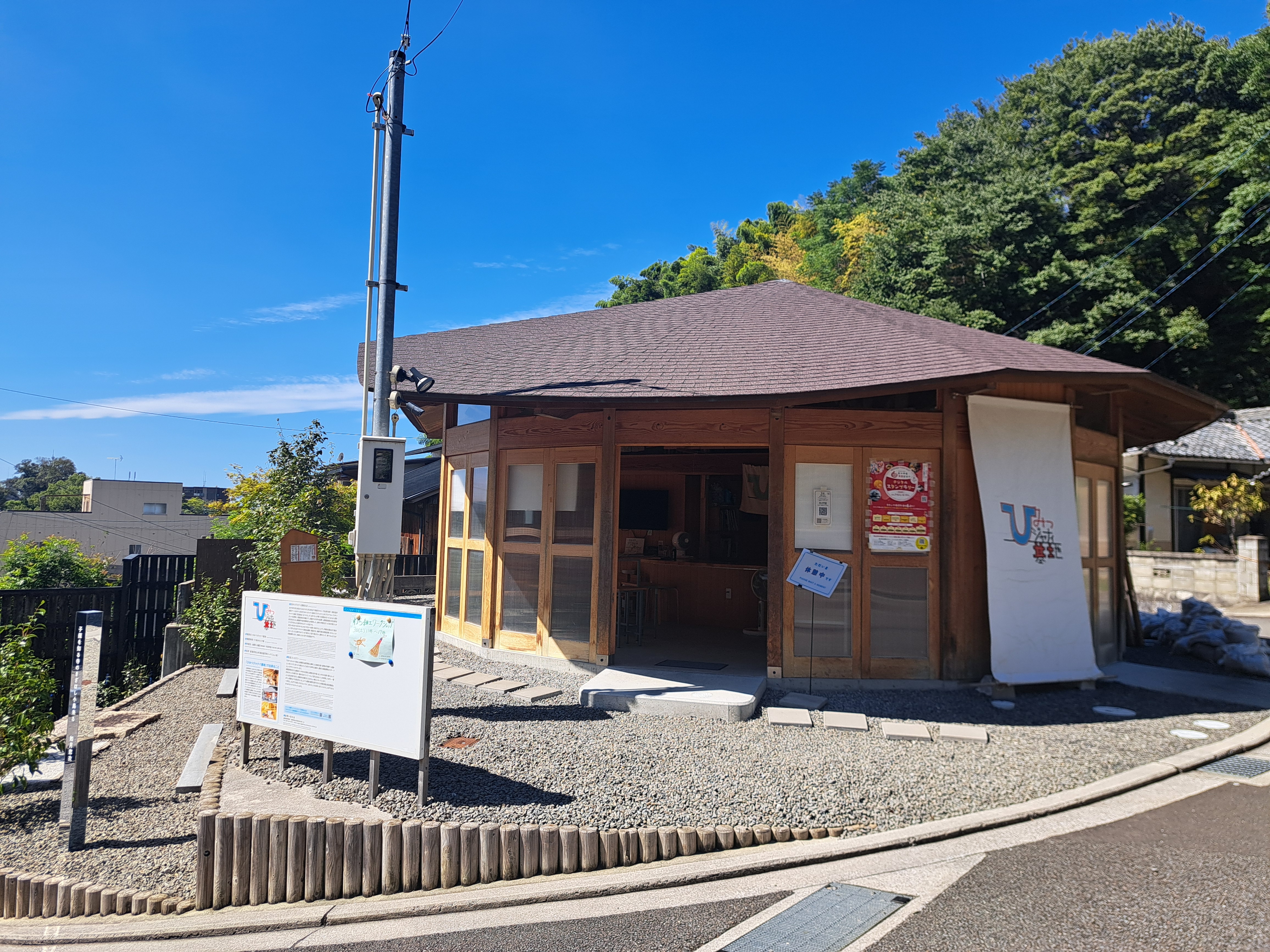
Himitsu Janai Kichi
An art spot was established in Dogo Yumotomachi as part of Dogo Onsen Art. It is open mainly on weekends and holidays.
Dogo Onsen Hospital
A regional core hospital specializing in rheumatology and rehabilitation.
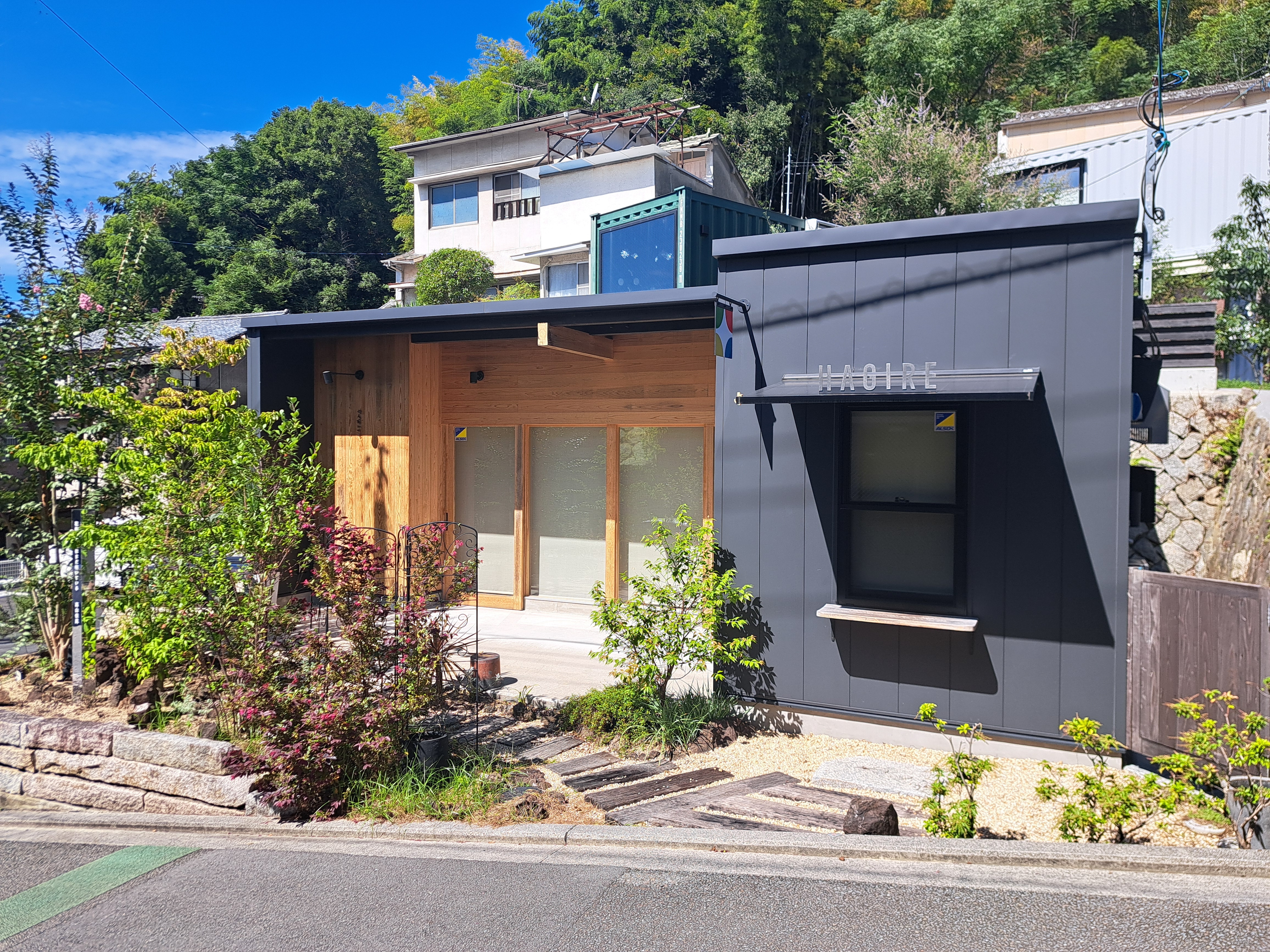
Shoninzaka Hanare
A dining space on Shoninzaka in "Ura Dogo". It works as a cafe by day and a reservation-only restaurant in the evening, serving Japanese and French dishes.
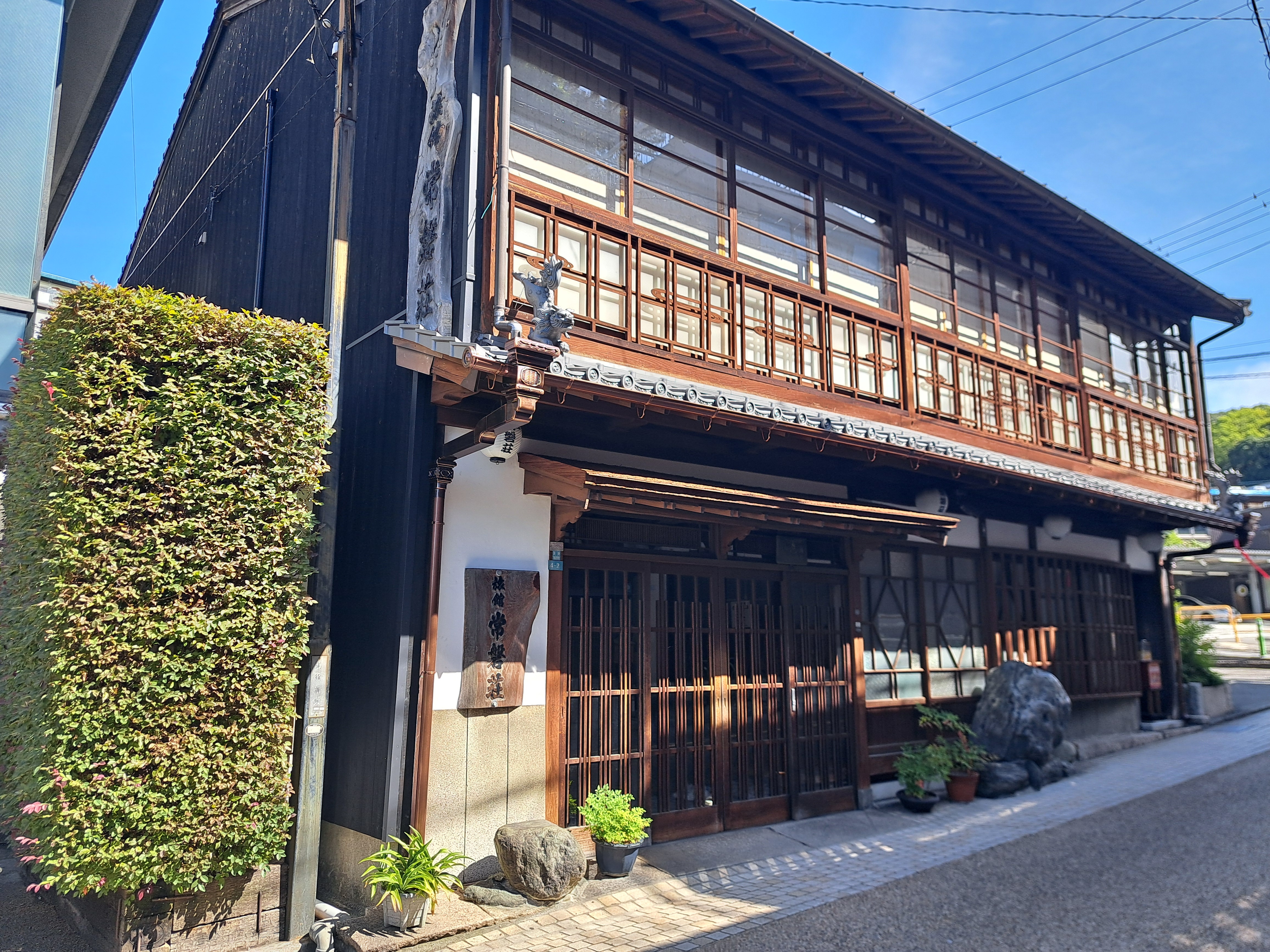
Tokiwaso
A wooden inn at 4-2 Dogoyuzuki-cho dating from the Taisho era. 4 Japanese-style rooms, capacity 10 guests, with a private-use hot spring.
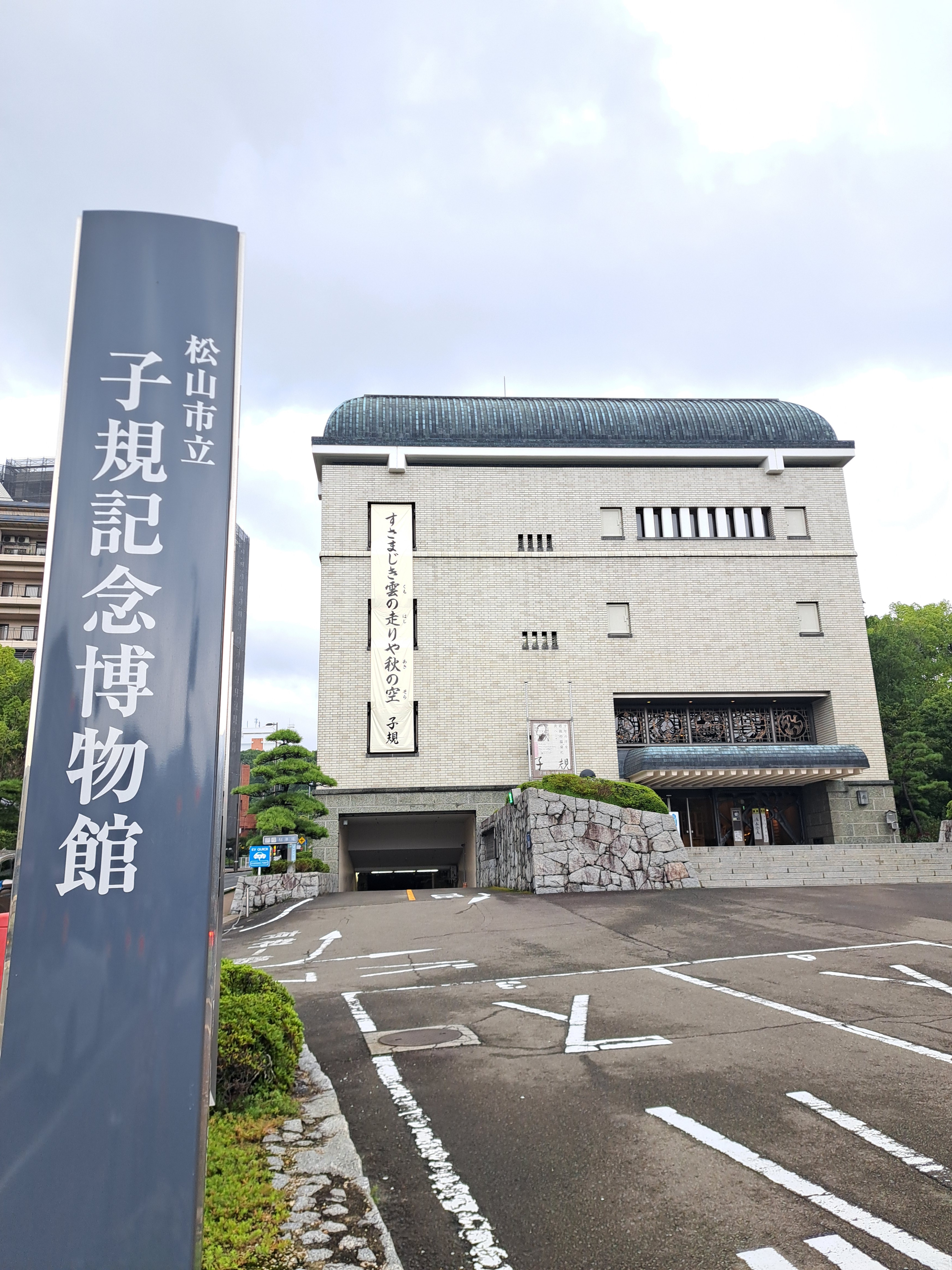
Matsuyama Municipal Shiki Memorial Museum
A museum on the life and work of Masaoka Shiki, the haiku poet born in Matsuyama, next to Dogo Park. Exhibits include a partial reconstruction of Gudabutsuan, the house where Shiki lived with the novelist Natsume Soseki, along with materials on Shiki, the Masaoka family and Matsuyama's literary history.
Matsuyama Kanko Rinji Parking
A temporary parking area with approximately 60 free spaces, open only on designated days during busy periods.
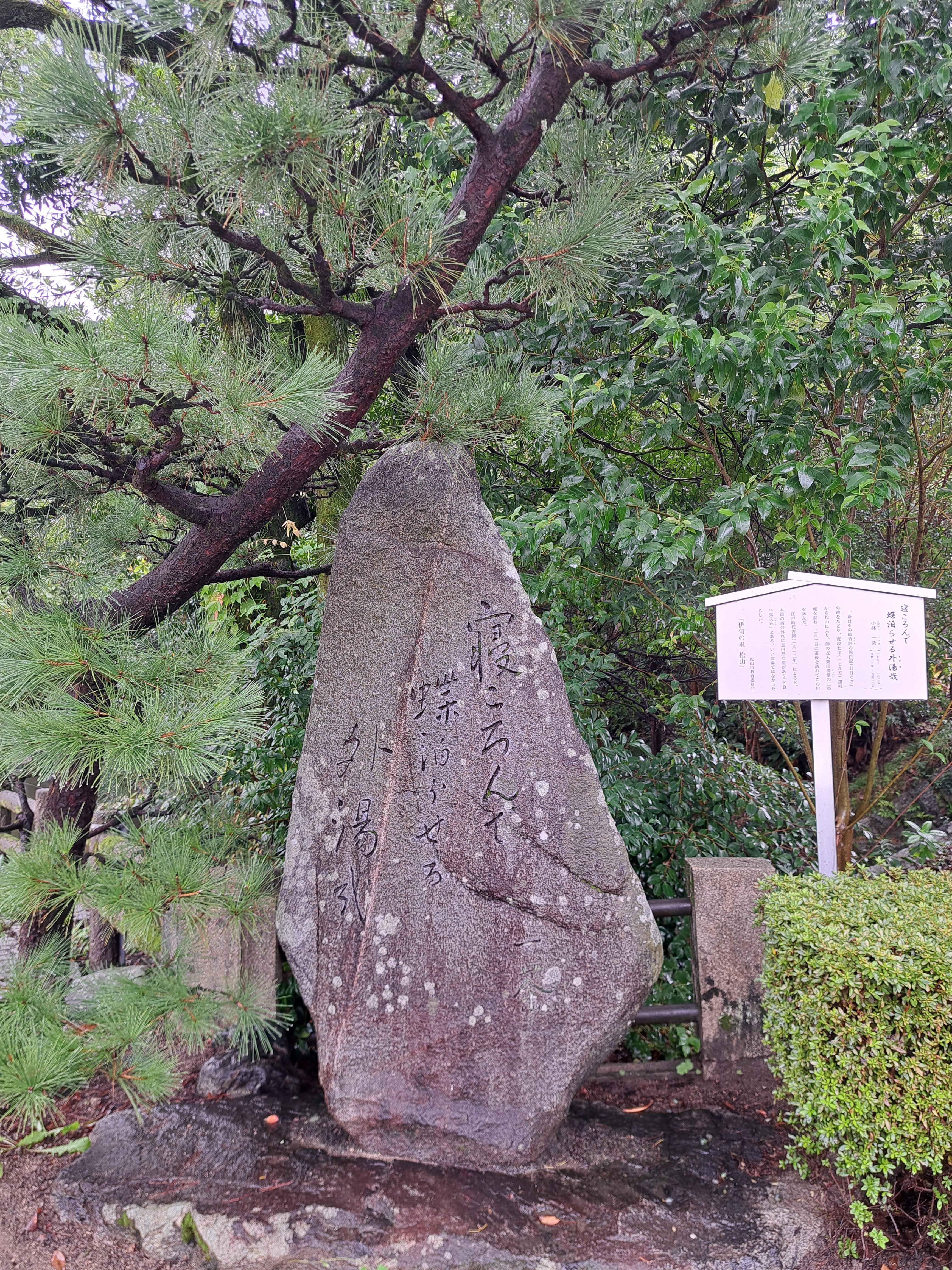
Kobayashi Issa Haiku Monument
A haiku monument for Kobayashi Issa at the north entrance of Dogo Park. It is inscribed with "Nekoronde cho tomaraseru sotoyu kana" and was erected in 1950 (Showa 25).
440 Kumo / 197 Oto
An antenna shop for Yusuhara in Kochi Prefecture and Ikata in Ehime Prefecture, on Shoninzaka in Dogo. It opened in 2024 and carries specialities and information from both towns.
More "Stone Monuments & Poem Steles" spots
See all in this category →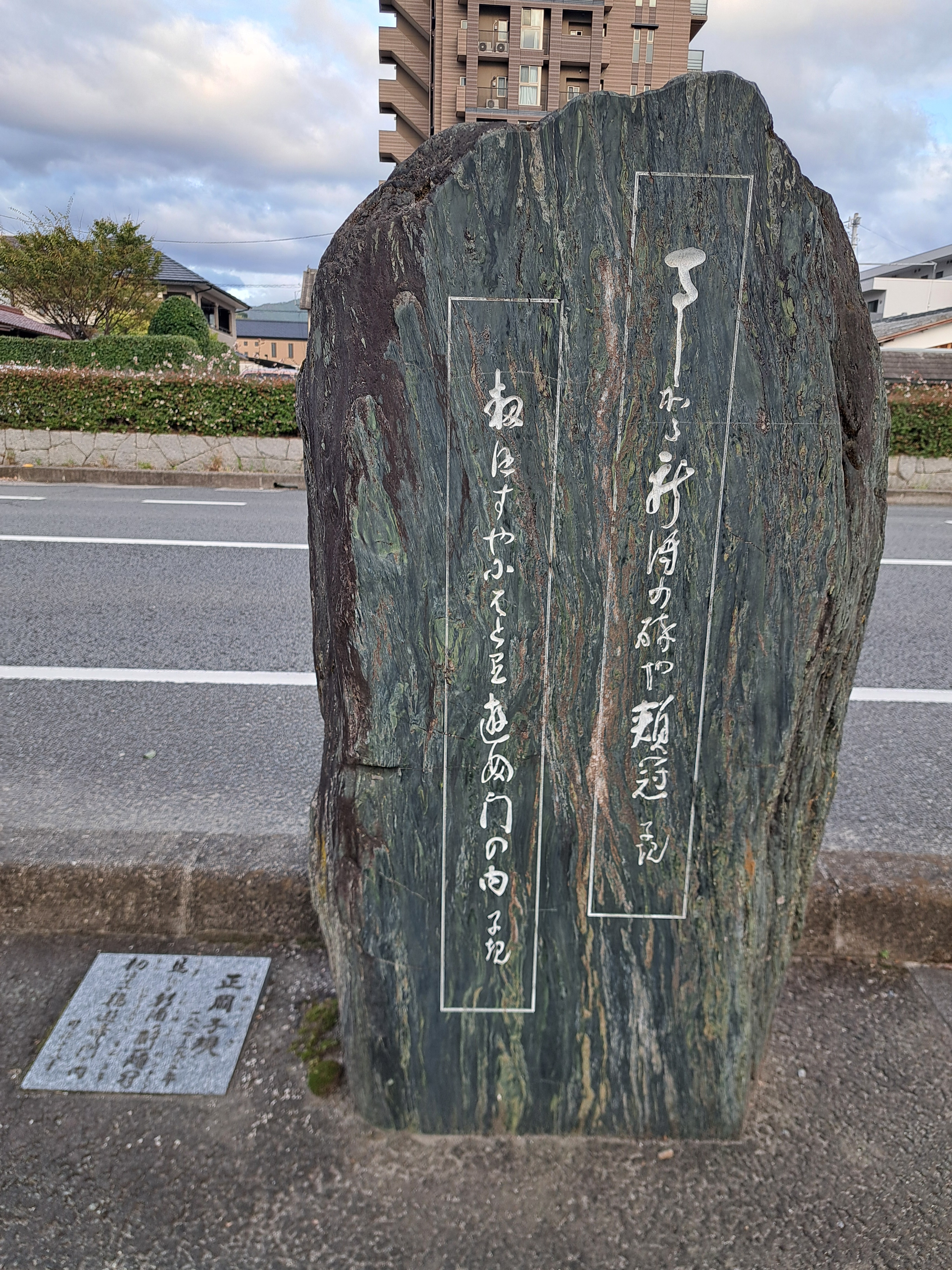
Masaoka Shiki Haiku Monument "Momi hosu ya" (Path of Haiku)
A haiku monument to Masaoka Shiki on the Dogo-machi 2-chome side of the "Path of Haiku" in Dogo (the street east of the Ehime Prefectural Culture Hall). It is inscribed with the haiku "籾ほすやにわとり遊ふ門の内".
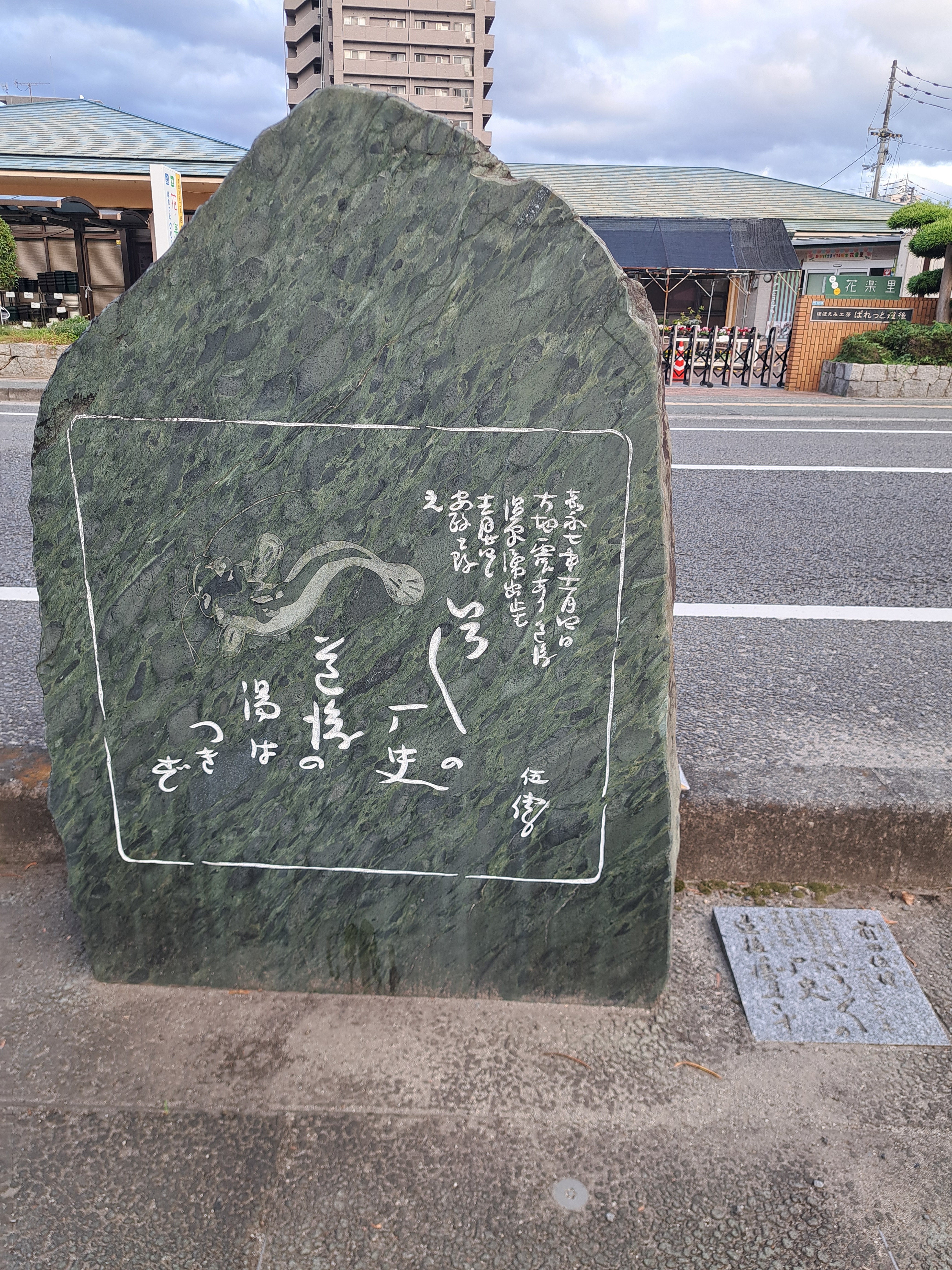
Maeda Goken Senryu Monument (Path of Haiku)
A senryu monument to Maeda Goken on the Dogo-machi 2-chome side of the "Path of Haiku" in Dogo (the street east of the Ehime Prefectural Culture Hall). It is inscribed with the senryu "いろいろの歴史道後の湯はつきず".
Sakai Mokuzen Haiku Monument (Iwazeki Amusement Park)
A haiku monument inscribed with a poem by Sakai Mokuzen, standing in the amusement park at Iwazeki in Ishite, Matsuyama. It can be seen while walking the area.
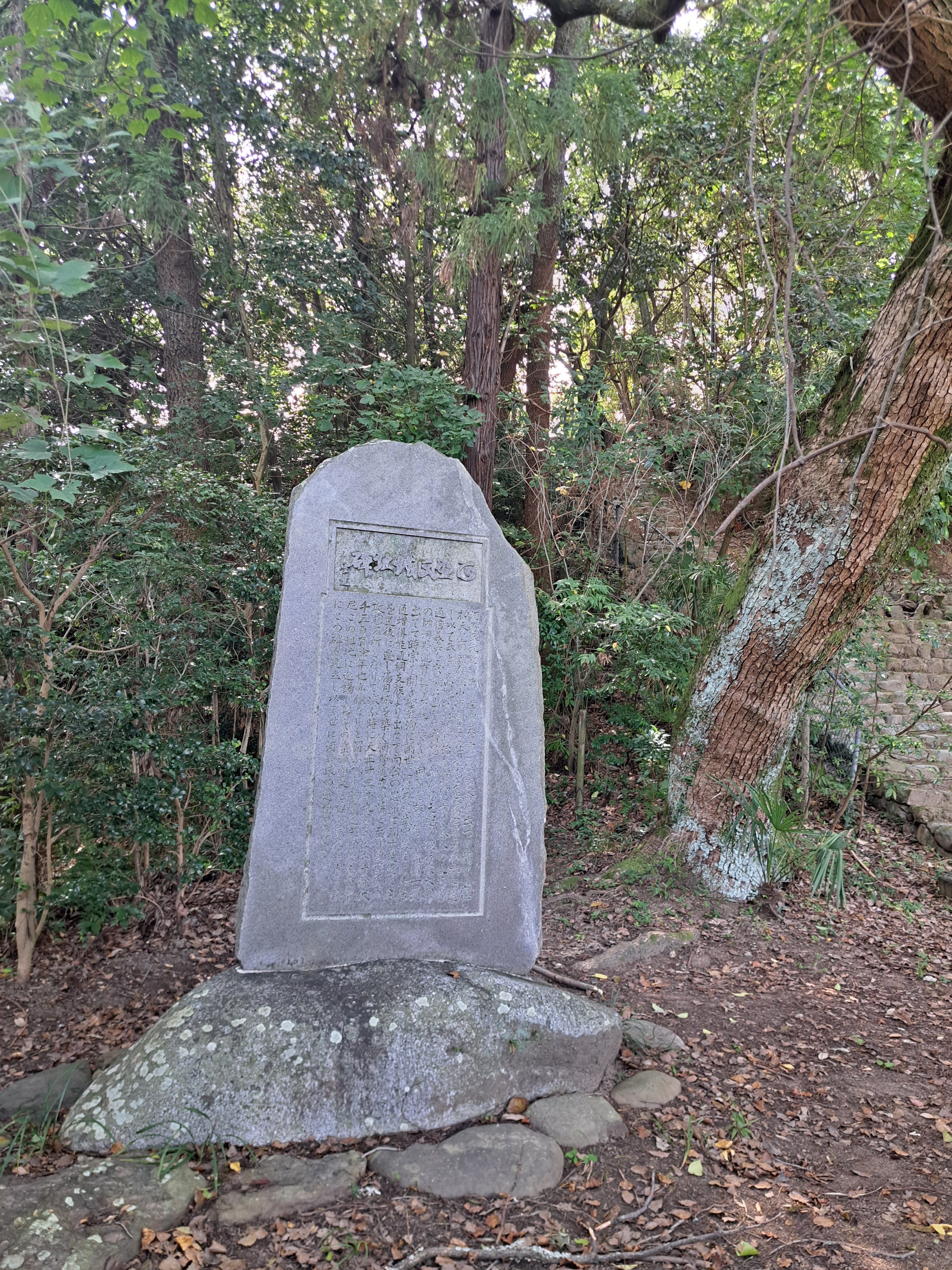
Kono Clan Castle Site Monument
The Kono clan castle site monument in Dogo Park (the site of Yuzuki Castle). It records the history of the Kono clan, who based themselves here in the medieval period, and was erected in 1941 (Showa 16). It is one of the stops on Dogo Park's haiku monument tour.
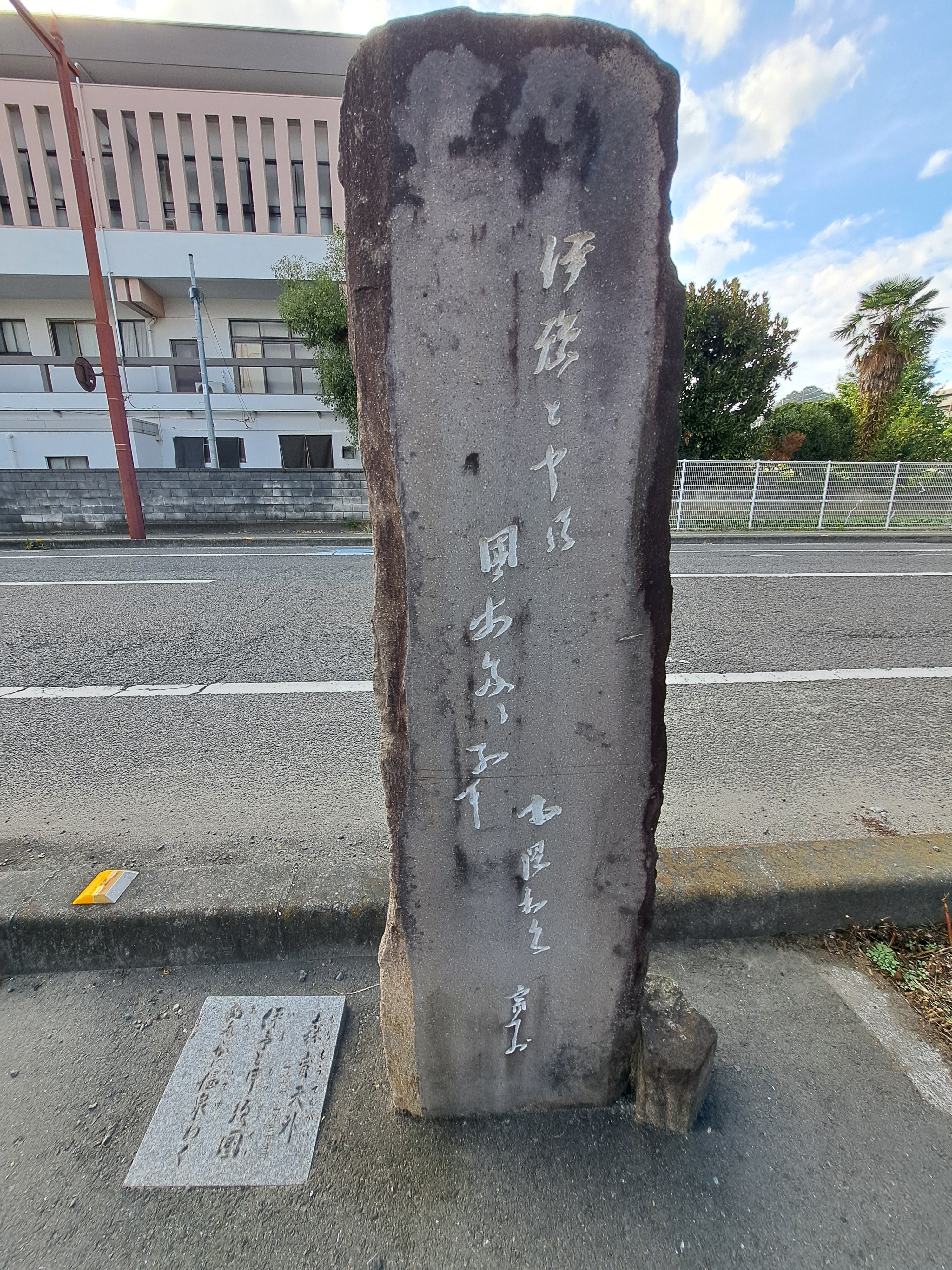
Mori Motengai Haiku Monument (Path of Haiku)
A haiku monument to Mori Motengai on the Dogo-Kitamachi side of the "Path of Haiku" in Dogo (the street east of the Ehime Prefectural Culture Hall). It is inscribed with the haiku "伊予と申す国あたゝかに温泉わく".
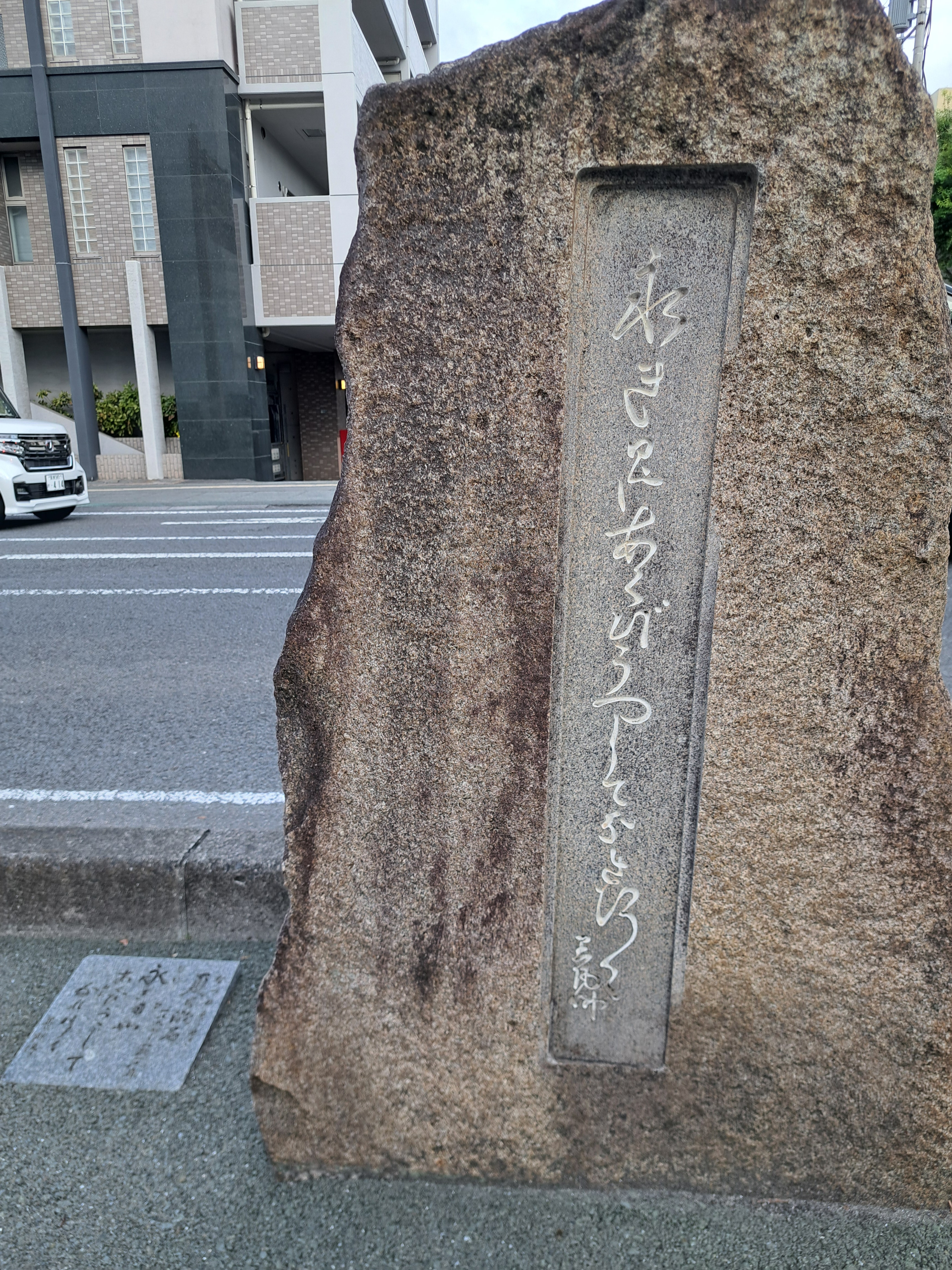
Natsume Soseki Haiku Monument (Path of Haiku)
A haiku monument to Natsume Soseki on the Dogo-machi 2-chome side of the "Path of Haiku" in Dogo (the street east of the Ehime Prefectural Culture Hall). It is inscribed with the haiku "永き日やあくびうつして分れ行く".
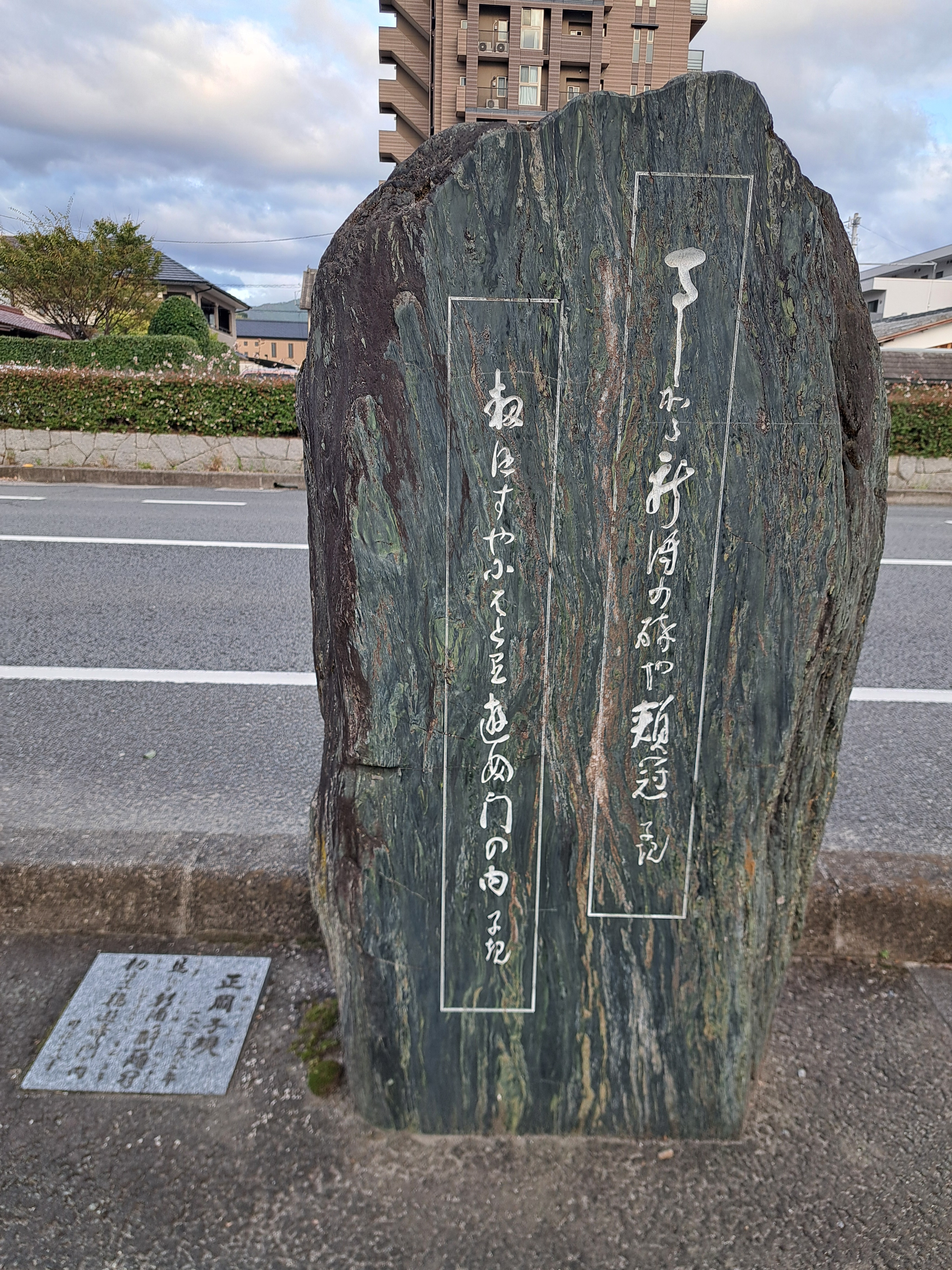
Masaoka Shiki Haiku Monument "Uma shikaru" (Path of Haiku)
A haiku monument to Masaoka Shiki on the Dogo-machi 2-chome side of the "Path of Haiku" in Dogo (the street east of the Ehime Prefectural Culture Hall). It is inscribed with the haiku "馬しかる新酒の酔や頬冠".
Path of Haiku (the street of haiku monuments east of the Ehime Prefectural Culture Hall)
The "Path of Haiku" is a street east of the Ehime Prefectural Culture Hall lined with 10 haiku and senryu monuments (11 verses) connected with Dogo Onsen. This page lists the verses by Soseki, Shiki, Santoka and others.