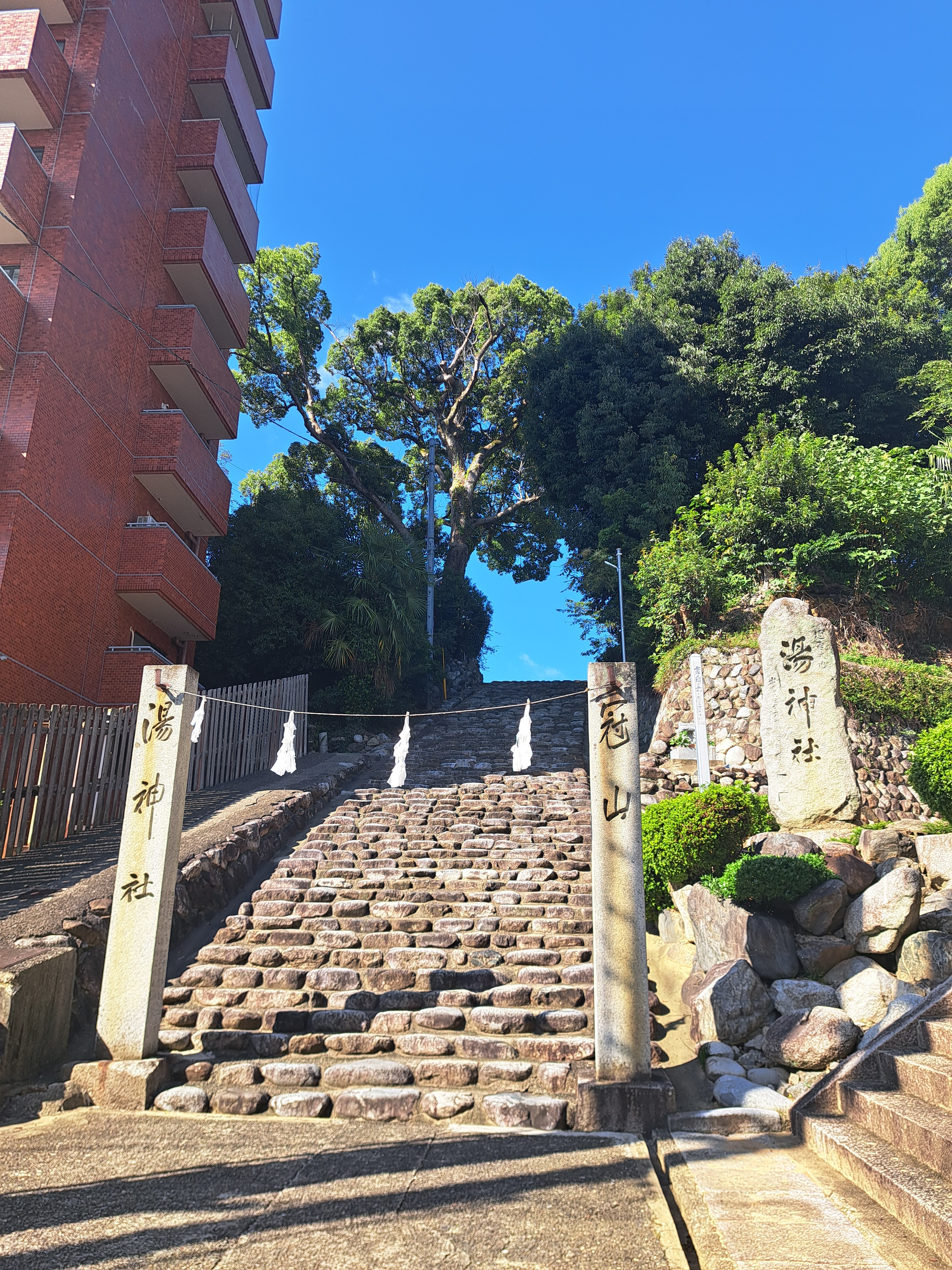
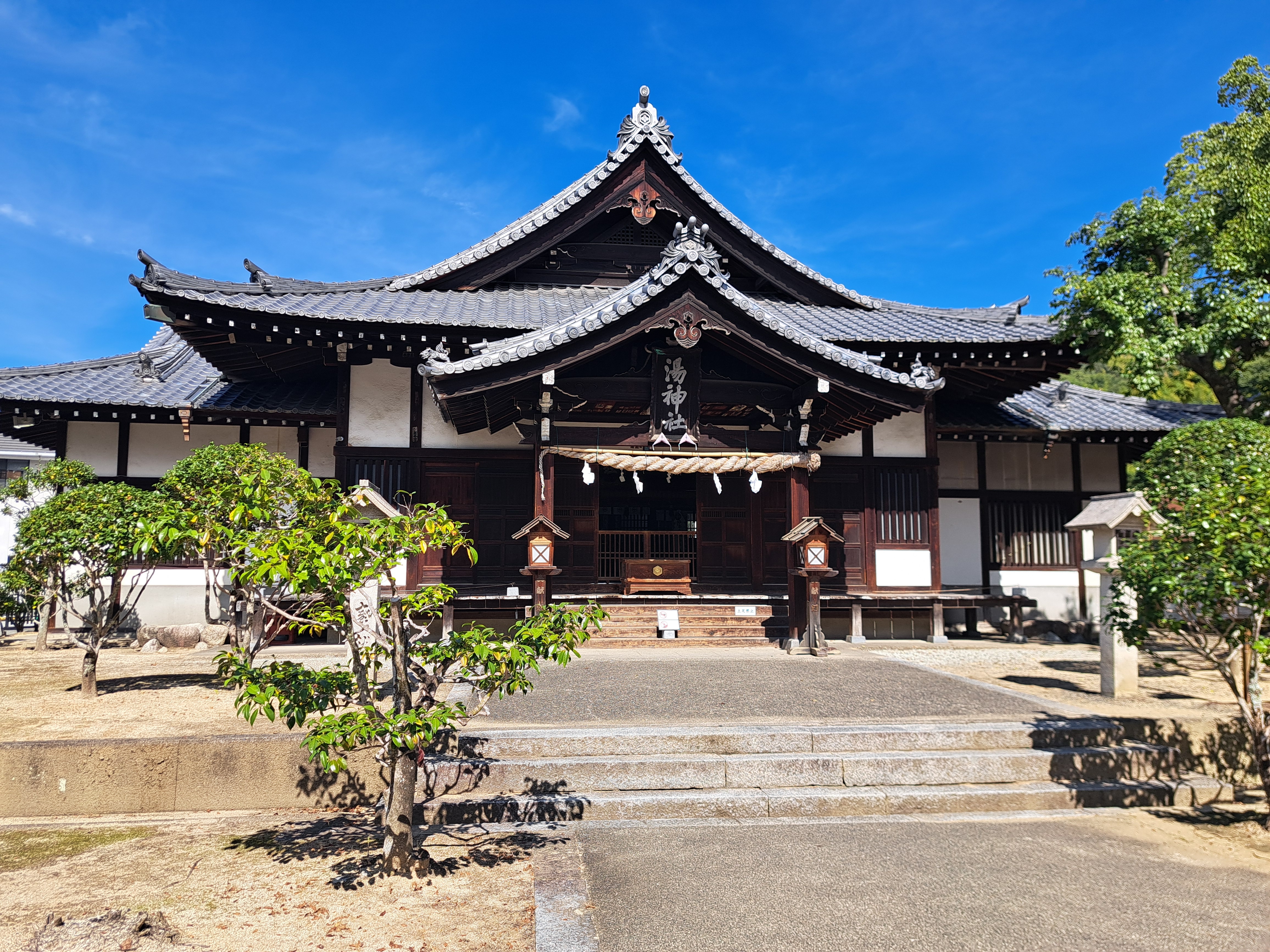
Yu Jinja Shrine
A shrine on Kanmuriyama hill, revered as the guardian deity of Dogo Onsen. Its principal deities are Onamuchi-no-Mikoto and Sukunahikona-no-Mikoto. A legend tells that hot water which had stopped after an earthquake began to flow again through prayer.
Yu Shrine is a shrine enshrined on Mount Kanmuri in Dogo, Matsuyama City, and has been worshipped since ancient times as the guardian deity of Dogo Onsen. The main enshrined deities are Onamuchi no Mikoto and Sukunahikona no Mikoto, and the joint shrine enshrines Susanoo no Mikoto and Inadahime no Mikoto of Izumooka Shrine. The shrine's name is derived from Dogo Onsen.
Origin
It is said to have been founded as a guardian deity of Dogo Onsen when Emperor Keiko visited the area with his empress. Originally enshrined in Sagidani, it later relocated to the current Mount Kanmuri.
Hot Springs and Yu Shrine
There is a legend that when the hot spring water of Dogo Onsen stopped flowing due to an earthquake in 1707, prayers were offered at Yu Shrine, and the hot spring water gushed out again. It has been popular as a shrine associated with the blessings of hot springs.
Festivals
The annual festival is on October 6. During the period of the Yu-kito-sai from March 19 to 21, the Matsuyama Spring Festival (Dogo Onsen Festival) is held.
Access
It is enshrined on Mount Kanmuri (the same hill as Sora no Sanpodo) near Dogo Onsen Honkan.
Source: "Yu Shrine" Wikipedia (CC BY-SA), etc. Please check the local and official information for the latest information.
Last confirmed date: July 2026
Articles that mention this place
歴史
A Complete History of Dogo Onsen: From the Hot Water of the Nihon Shoki to Botchan Yu
Tracing the history of Dogo Onsen, where imperial visits are recorded in the Nihon Shoki and the surviving fragments of the Iyo no Kuni Fudoki, alongside a chronological table from Prince Shotoku's visit in 596, the completion of the Honkan in 1894, and its Important Cultural Property designation in 1994, to the full reopening of the entire facility in 2024.
神社
Isaniwa Shrine, Guardian of Dogo: One of Three Hachiman-zukuri in Japan, and a Shrine of Sangaku
Isaniwa Shrine stands about 5 minutes on foot from Dogo Onsen Station, at the top of 135 stone steps. Visiting hours are 6:00–18:00 (longer in summer). The article covers the shrine's Hachiman-zukuri main hall (an Important Cultural Property), one of only three examples in Japan alongside Usa Jingu and Iwashimizu Hachimangu, its 22 sangaku tablets, and its annual events.
歴史
Yuzuki Castle and the Kono Clan: A Medieval Castle Sleeping in Dogo Park
The Yuzuki Castle ruins are Dogo Park itself; the park is open 24 hours for free, and the Yuzuki Castle Museum is open 9:00 to 17:00 with free admission (closed Mondays). This article summarizes the history from its construction as the base of the Kono clan ruling Iyo to its fall during Hideyoshi's Shikoku campaign, and the current castle ruins selected among Japan's Top 100 Castles.
More spots in Central Dogo Onsen Area
See all in this area →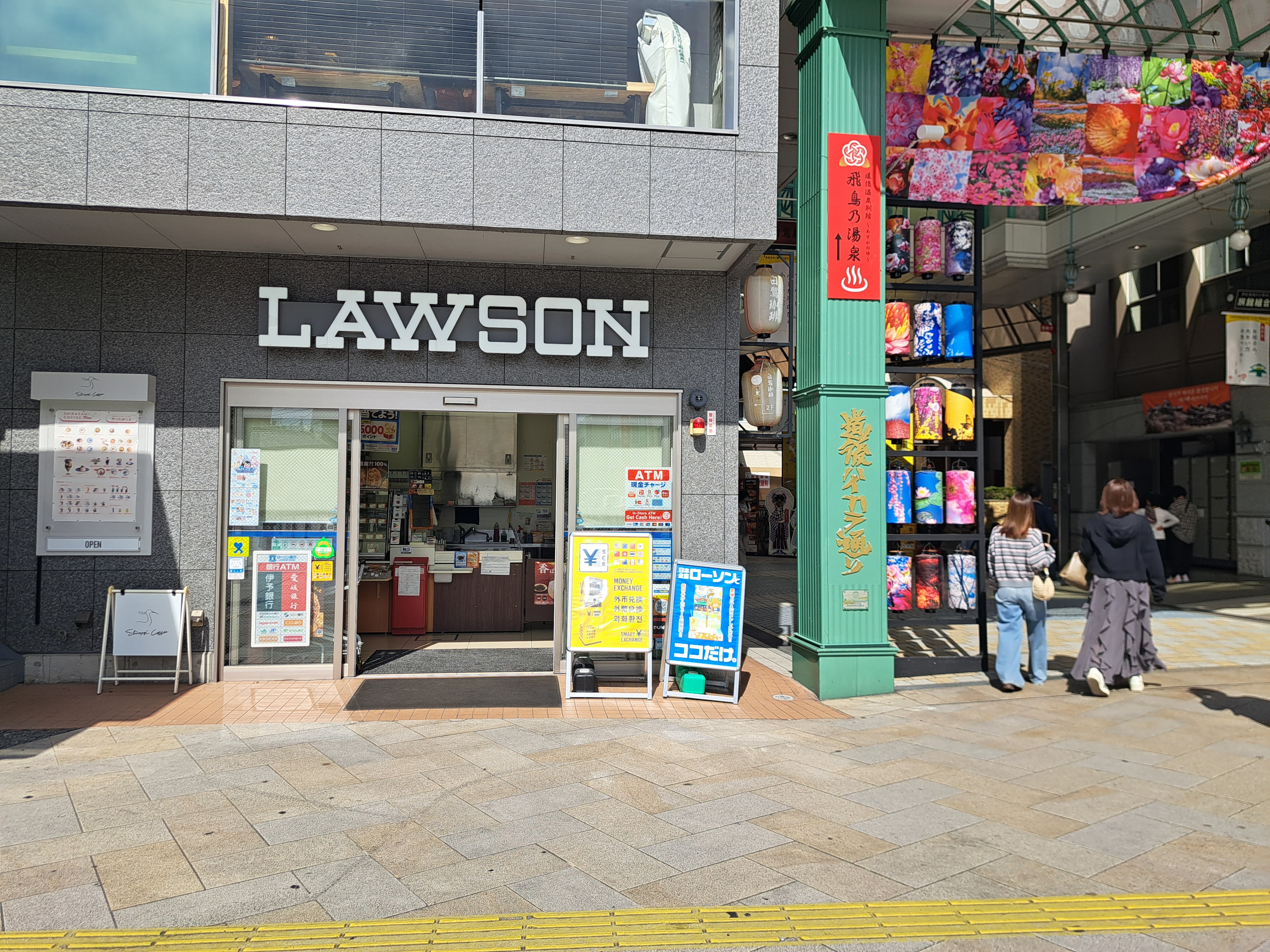
Lawson Matsuyama Dogo Ekimae
Lawson Matsuyama Dogo Ekimae is a convenience store located in front of Dogo Station. It is convenient for use while waiting for a train or before and after a walk.
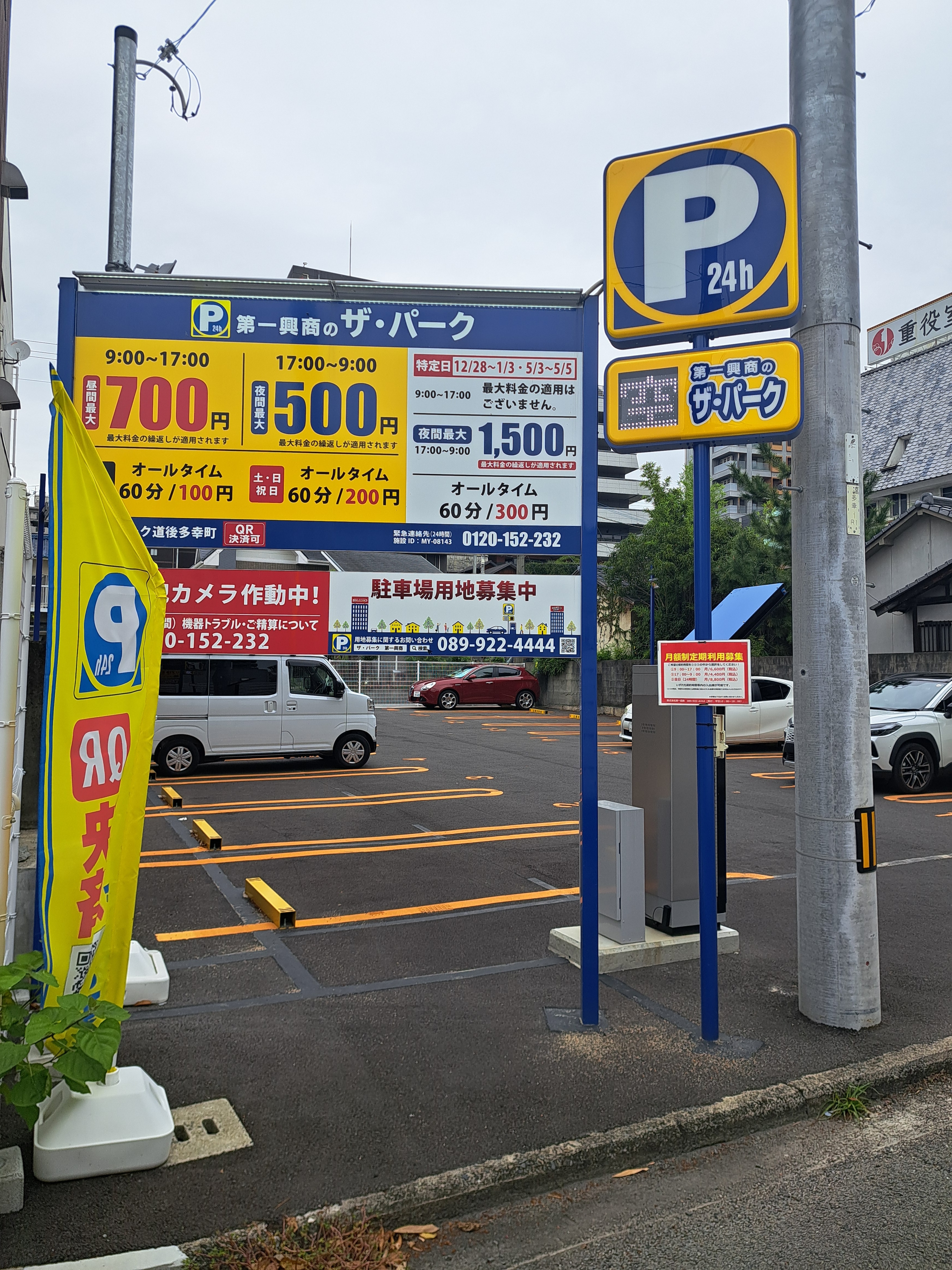
The Park Dogo-Takocho
A 24-hour coin parking lot at 1-17 Dogo-Takocho with 19 spaces (NAVITIME). Check the rates on the sign on site.
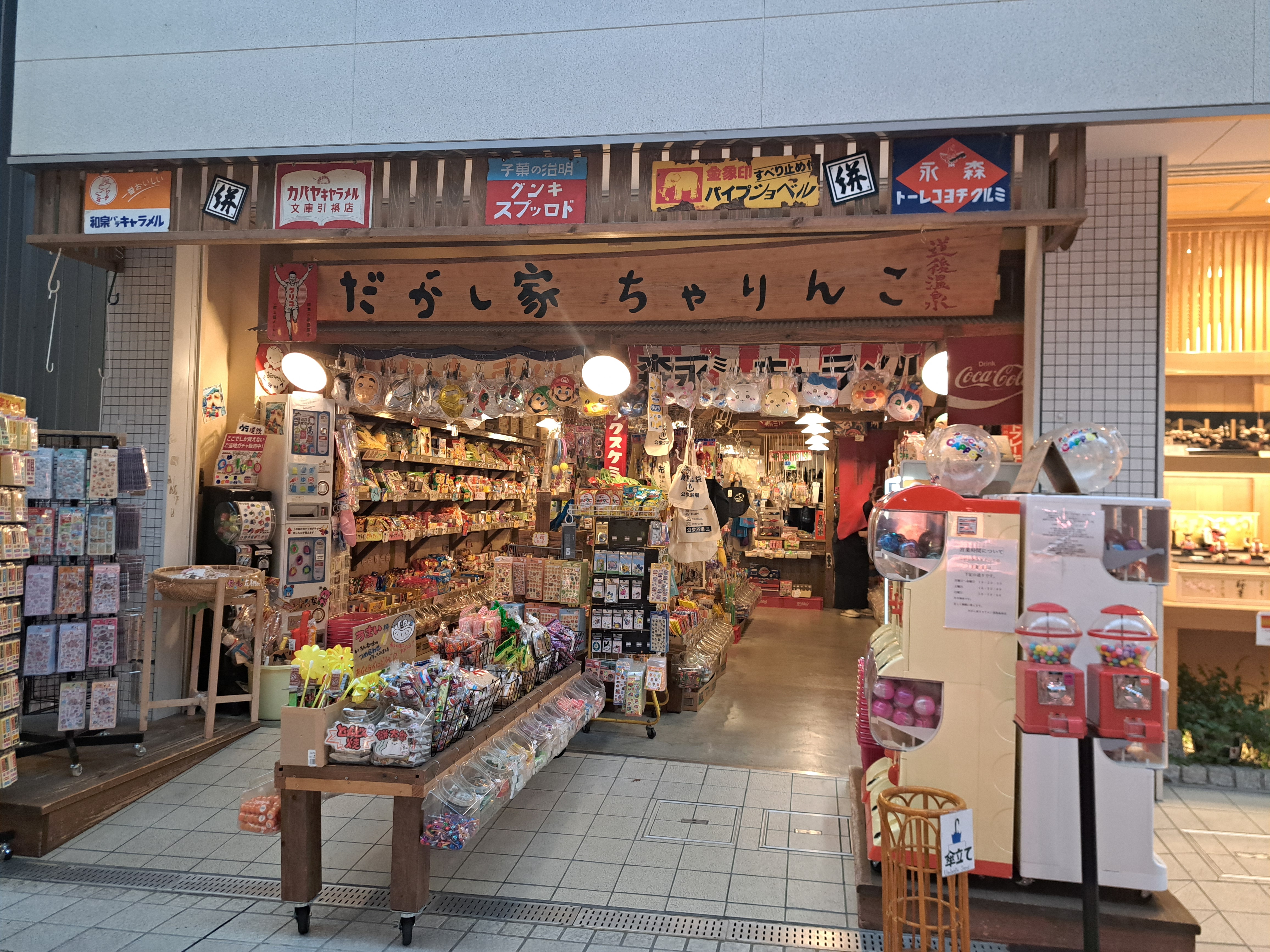
Dagashiya Charinko Dogo Onsen
A shop in the Dogo Onsen district specialising in dagashi, traditional inexpensive sweets. Its range, including sweets in appealing packaging, suits children and adults alike.
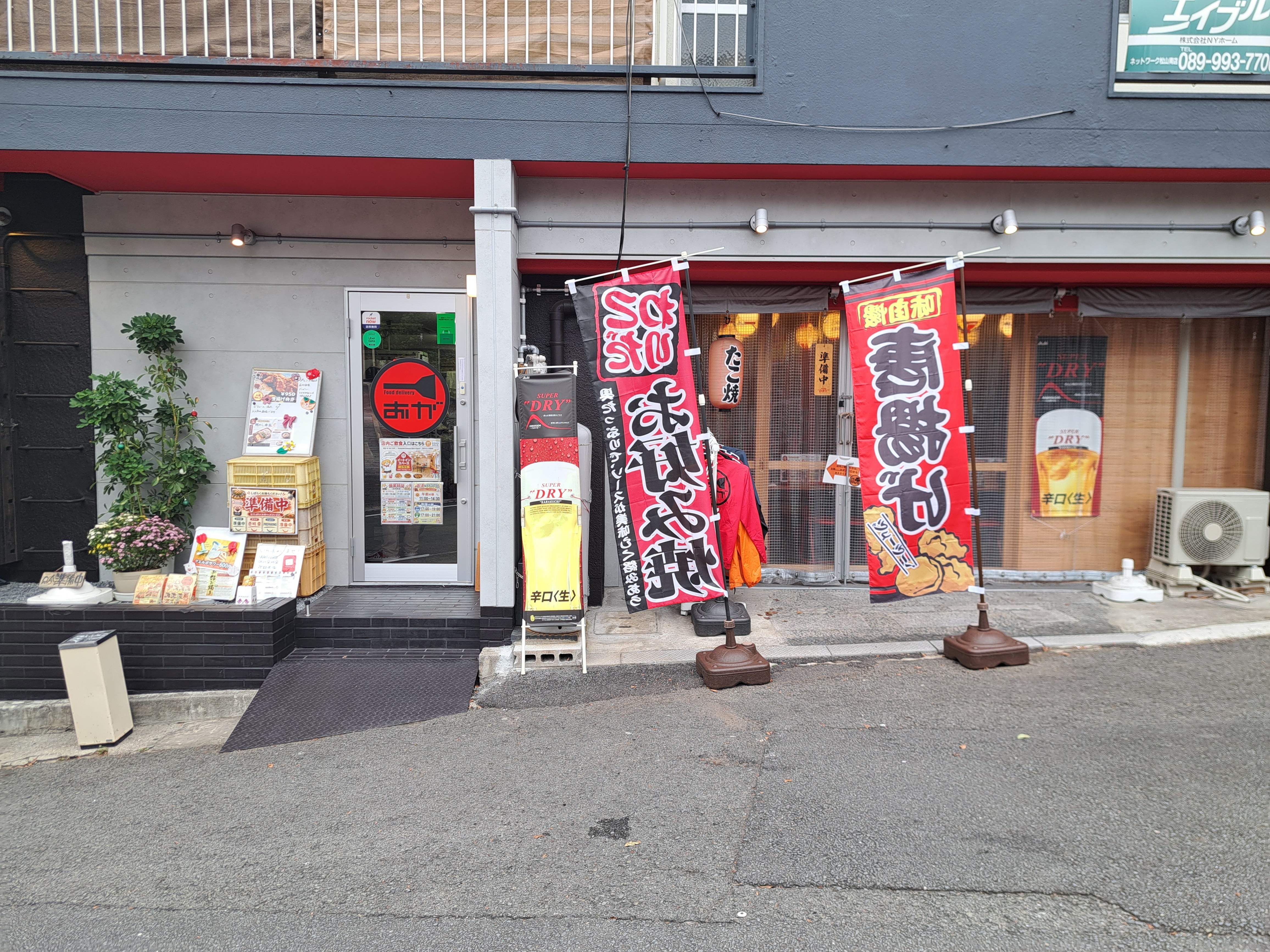
Food Delivery Oga
A takeout shop at 1-5-45 Iwaidani. Banners outside advertise okonomiyaki, karaage and takoyaki. Near the three-way junction in front of Dogo Onsen Yachiyo.
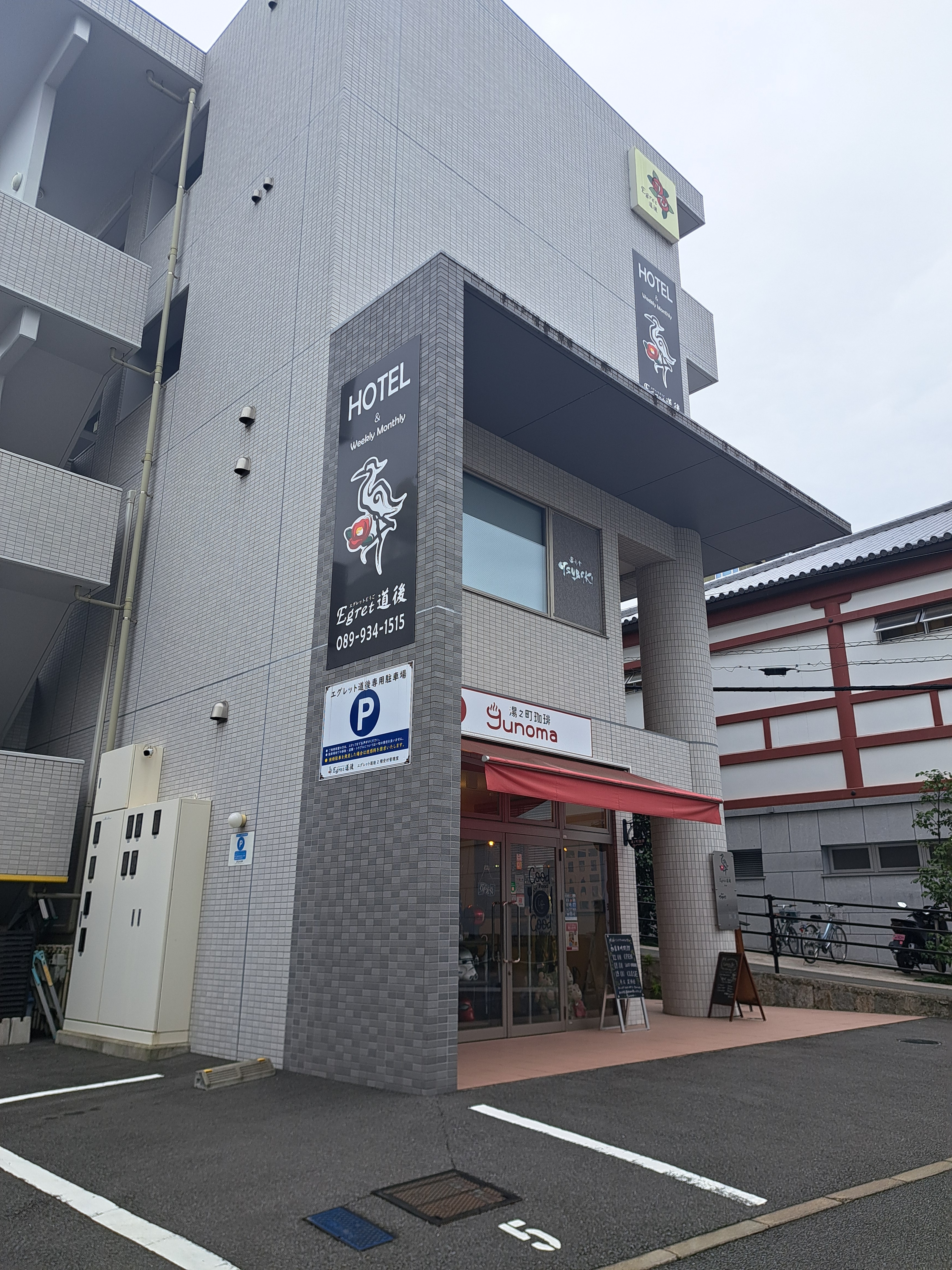
Egret Dogo
A hotel at 1-1 Dogo-Takocho, right west of Asuka-no-Yu. Check-in 15:00, check-out 11:00 (Jalan).
Hatoya
A souvenir shop located in Dogo Shotengai. It handles zori and geta, and displays a variety of products including sweets such as Usuzumi Yokan.
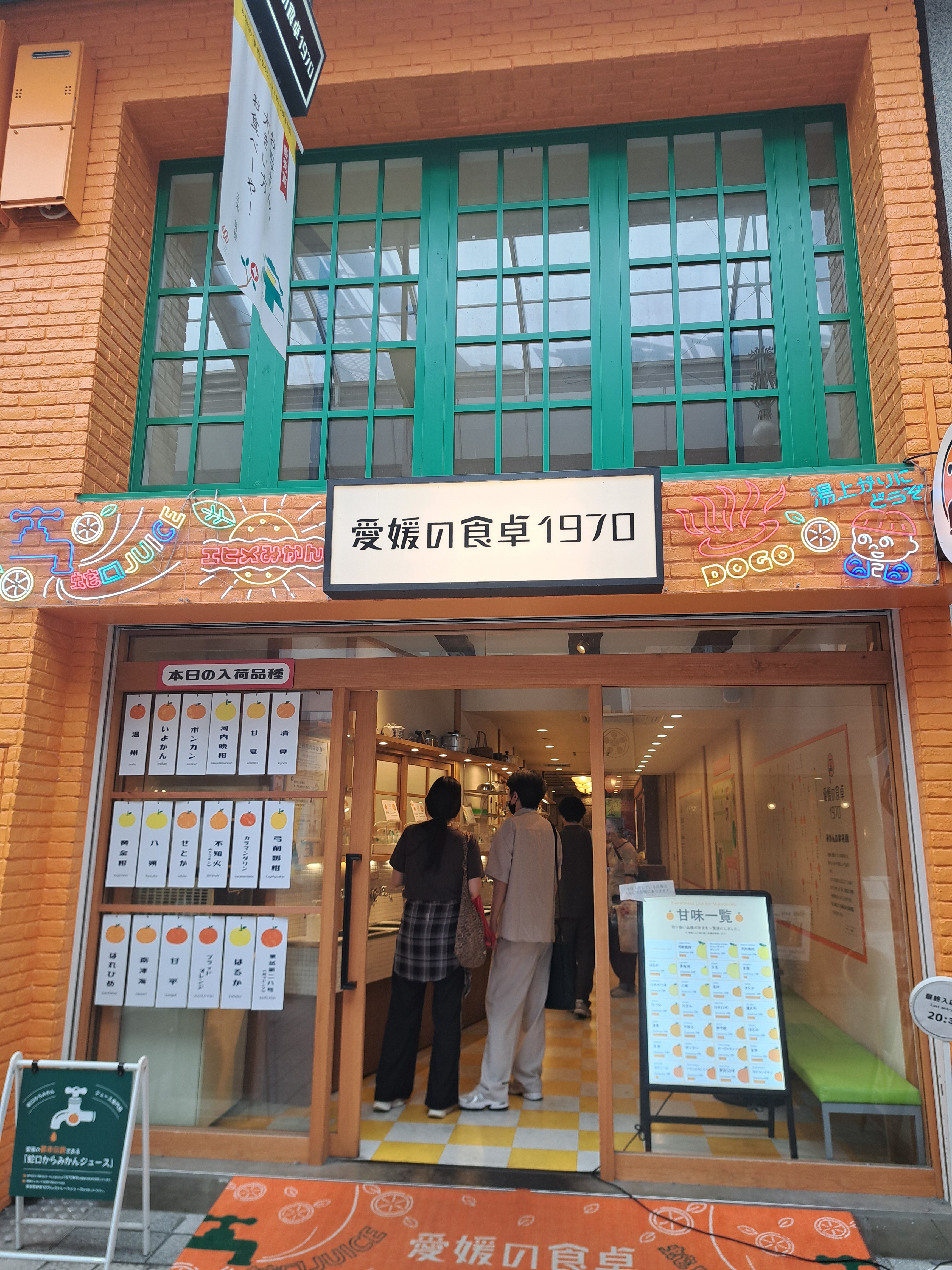
Ehime no Shokutaku 1970
A shop in Dogo where Ehime-grown citrus juice can be poured from a tap. It offers around 20 varieties of straight citrus juice.
Funaya
A long-established Dogo ryokan said to have been founded in the Kan'ei era. Natsume Soseki and Masaoka Shiki are said to have stayed here, and it is known for its seasonal garden.
More "Shrines" spots
See all in this category →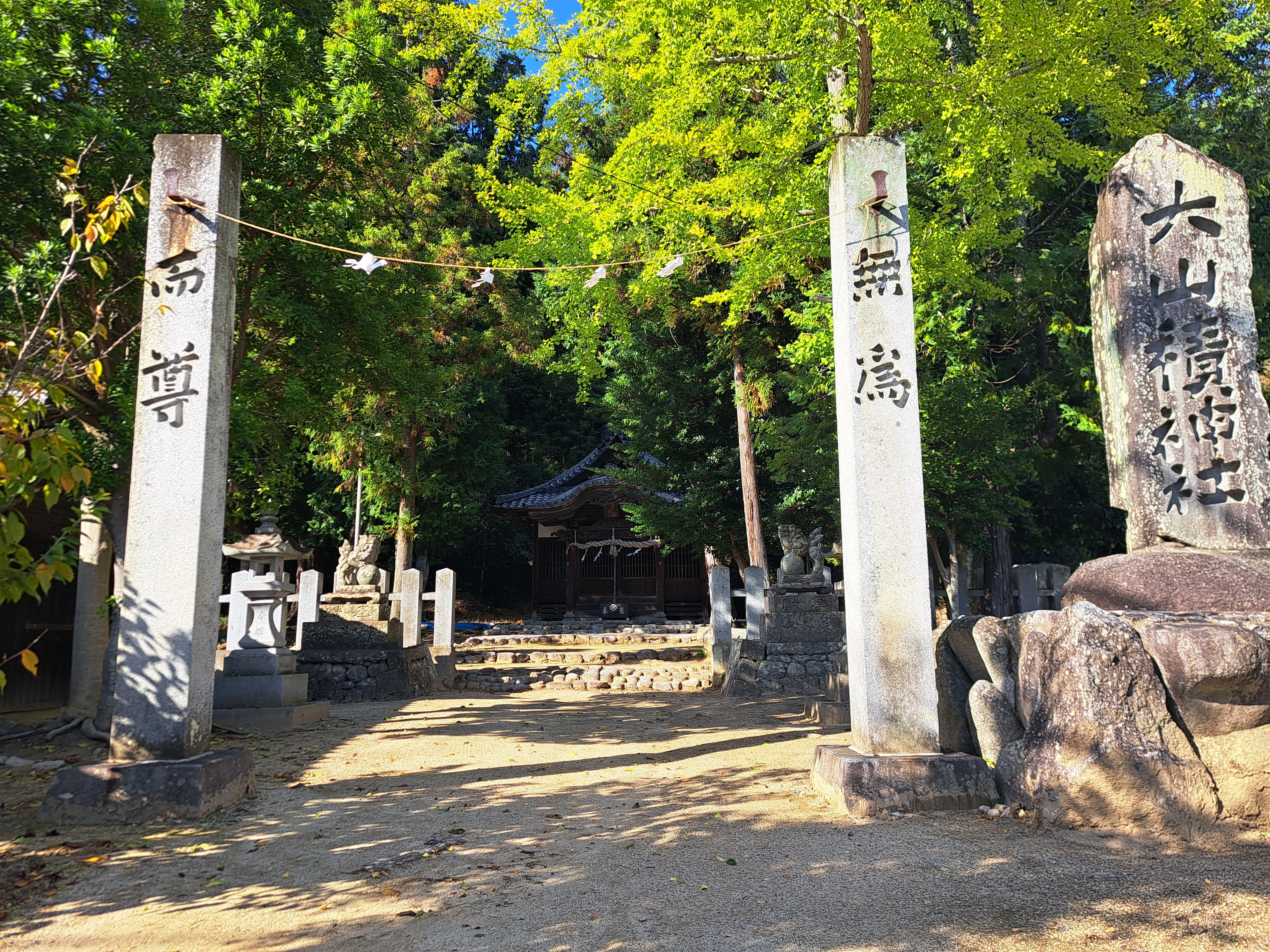
Oyamazumi Jinja Shrine (Ishite)
A shrine located in Ishite, Matsuyama City. It is said to have been founded in 1279 when Kono Michiari transferred the divided deity from Oyamazumi Shrine on Omishima.
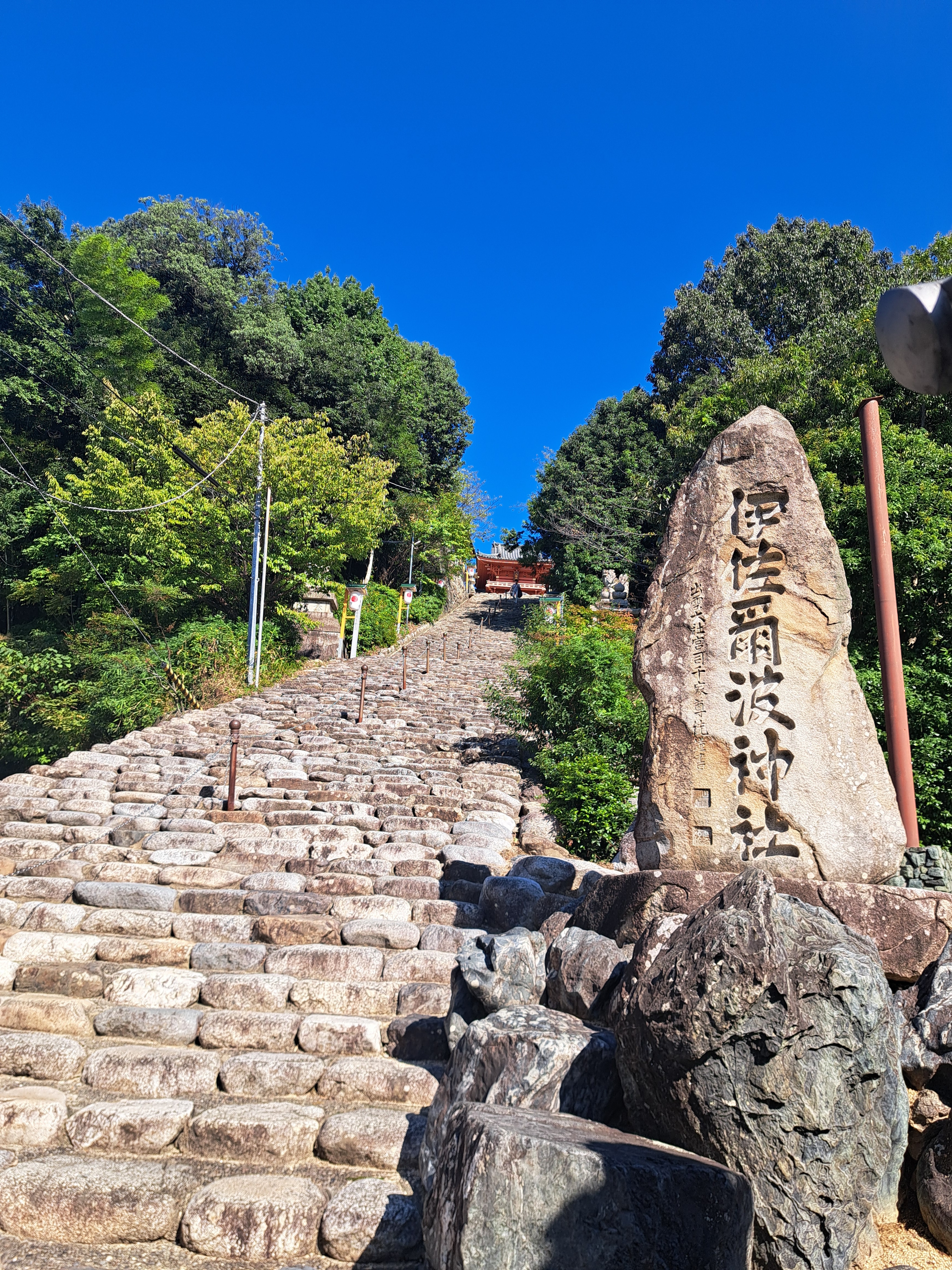
Isaniwa Jinja Shrine
A Hachiman-zukuri style shrine set on a hill in Dogo. The existing shrine buildings were constructed in 1667 (Kanbun 7) by Matsudaira Sadanaga, lord of the Matsuyama Domain, and the main hall and other structures are designated National Important Cultural Properties.
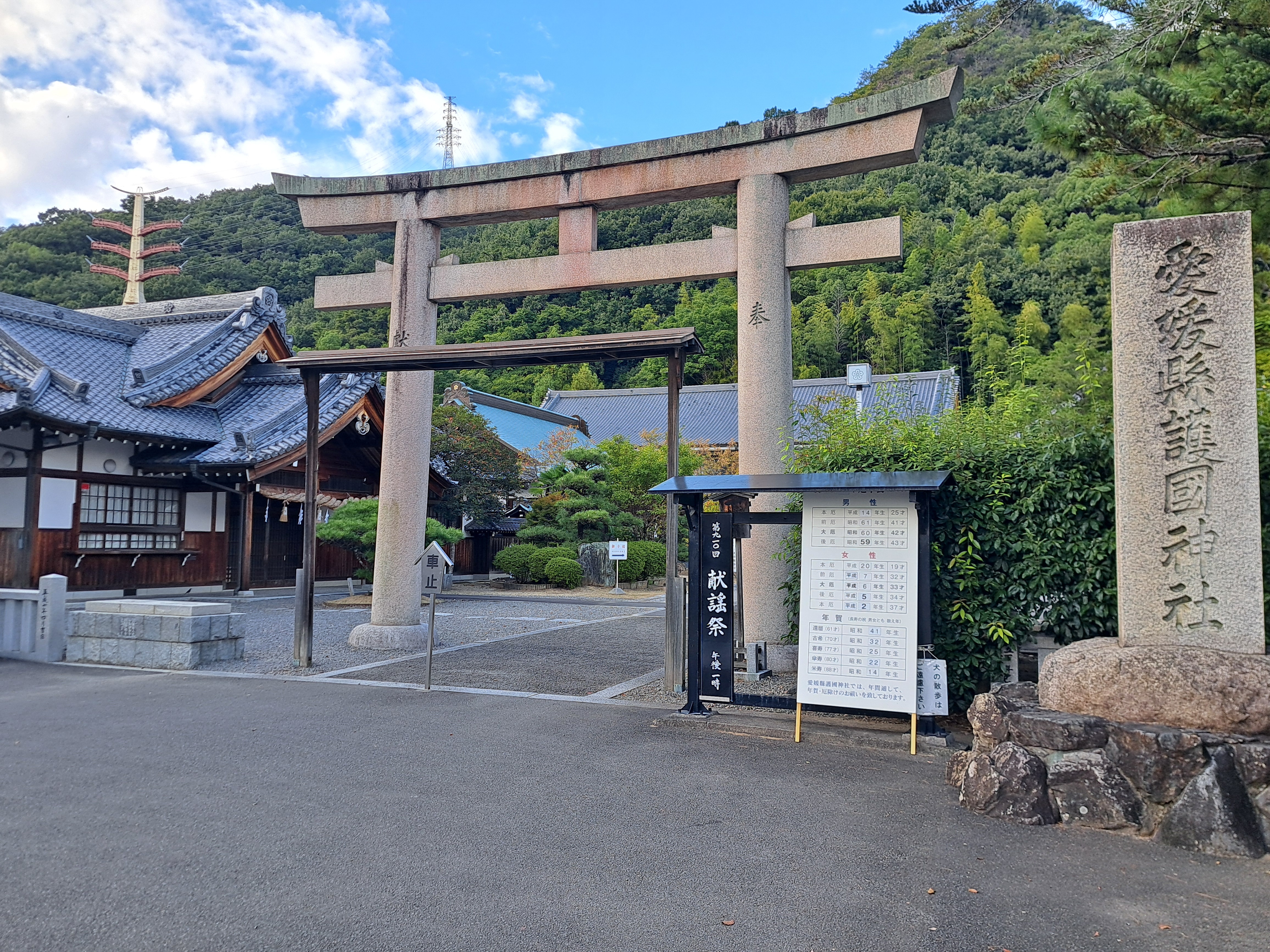
Ehime Gokoku Shrine
A shrine in Miyuki 1-chome. The area around the Nikitatsu poem monument in its grounds is the Ehime Manyoen, a garden of plants from the Man'yoshu.

Matsuyama Toshogu (formerly Matsuyama Shrine)
A shrine in Iwaidani-higashi-machi, Matsuyama, enshrining Tokugawa Ieyasu and Sugawara no Michizane. In 2025 (Reiwa 7) it was renamed from its former name, Matsuyama Shrine, to Matsuyama Toshogu. Its shrine buildings are designated Tangible Cultural Properties of Ehime Prefecture.
Ishite-ji Okunoin Atago-sha
Atago-sha, the inner sanctuary (okunoin) of Ishite-ji, the 51st temple of the Shikoku 88-temple pilgrimage. It is a quiet place of worship nestled in the hills.

Dogo Shusse Inari Jinja Shrine
An Inari shrine located in the Dogo Onsen town area (Dogo Yunomachi, Matsuyama City). The worship hall, which had been demolished due to aging, was rebuilt in 2018.