Dogo Onsen Honkan
The symbol of Dogo Onsen: a three-story wooden public bathhouse. Rebuilt in 1894 (Meiji 27), it is a National Important Cultural Property. Preservation and repair work was completed in December 2024, and the entire building is now open.
Dogo Onsen Honkan is a symbolic public bathhouse of Dogo Onsen, located in Dogo Yunomachi, Matsuyama City. It is the central facility of Dogo Onsen, which is said to convey a history of roughly 3,000 years, and the current building was reconstructed in 1894. Known for its imposing three-story wooden structure, in December 1994 it became the first public bathhouse to be designated as a national Important Cultural Property. It is also well-known as a location associated with Natsume Soseki's novel "Botchan," and celebrated the 130th anniversary of its reconstruction in 2024.
Architectural Highlights
- Shinrokaku: A rooftop tower perched on the Honkan roof featuring red giyaman (glass) windows and topped with a white heron statue, serving as the symbol of the Honkan.
- Tokidaiko: A drum beaten in the morning, noon, and evening from Shinrokaku, selected as one of the "100 Soundscapes of Japan."
- Yushinden: The only bathhouse dedicated exclusively to the Imperial Family in Japan, equipped with the Gyokuza-no-ma, Oima, and Oyudono. It can be viewed on the viewing tour.
Bathing and Viewing Plans and Fees
The Honkan offers multiple bathing and viewing plans, with fees and accessible areas varying by plan (as of July 2026, tax included).
| Plan | Adults | Children |
|---|---|---|
| Kami-no-yu First Floor | 700 yen | 350 yen |
| Kami-no-yu Second Floor | 1,300 yen | 650 yen |
| Tama-no-yu Second Floor | 2,000 yen | 1,000 yen |
| Tama-no-yu Third Floor Private Room | 2,500 yen | 1,250 yen |
| Tama-no-yu Third Floor Reserved Room Shirasagi-no-ma | 6,000 yen per group + 1,300 yen per adult | 6,000 yen per group + 650 yen per child |
| Tama-no-yu Third Floor Reserved Room Hisho-no-ma | 3,000 yen per group + 1,300 yen per adult | 3,000 yen per group + 650 yen per child |
| Yushinden Viewing (with guide) | 500 yen | 250 yen |
The reserved rooms (Shirasagi-no-ma and Hisho-no-ma) require reservations and are both limited to 5 groups per day. Start times are fixed: 6:30, 9:30, 12:30, 15:30, and 18:30 for Shirasagi-no-ma; and 8:00, 11:00, 14:00, 17:00, and 20:00 for Hisho-no-ma. There are no baths in the reserved rooms.
The duration of use for each plan is 60 minutes for Kami-no-yu First Floor, Kami-no-yu Second Floor, and Tama-no-yu Second Floor; 90 minutes for Tama-no-yu Third Floor Private Rooms and the two reserved rooms; and 30 minutes for Yushinden viewing. Kami-no-yu Second Floor includes a rental yukata, tea, and tea confectioneries, while Tama-no-yu Second Floor additionally includes a rental towel and rental bath towel.
There is the "Dogo Onsen 3-Bathhouse Circuit Ticket," which allows visitors to visit three Dogo Onsen facilities (Honkan Kami-no-yu First Floor, Tsubaki-no-yu, and Asuka-no-yu 1F Bath) at 20% off regular rates. The price is 1,440 yen for adults and 680 yen for children (revised on September 1, 2026; Source: Dogo Onsen Official "3-Bathhouse Circuit Ticket Price Revision" https://dogo.jp/news/4393.html), and it is valid for two days: the day of purchase and the following day.
Operating Hours
- Kami-no-yu First Floor: 6:00–23:00 (Ticket sales end 22:30)
- Kami-no-yu Second Floor and Tama-no-yu plans: 6:00–22:00 (Ticket sales end times vary by plan)
- Yushinden Viewing: 9:00–17:00 (Ticket sales end 16:30)
Ticket sales end (reception closes) at 22:30 for Kami-no-yu First Floor, 21:00 for Kami-no-yu Second Floor and Tama-no-yu Second Floor, and 20:30 for Tama-no-yu Third Floor Private Rooms.
About the Preservation and Repair Work
The preservation and repair work, which had been underway since January 2019, was completed on December 20, 2024, concluding roughly 6 years of work. Bathing operations continued during the construction period, and full-facility operations resumed in July 2024. It is currently operating across all buildings.
Source: Dogo Onsen Official Website (dogo.jp), Matsuyama City Official Website, "Dogo Onsen Honkan" Wikipedia (CC BY-SA). Rates, operating hours, and construction information were confirmed on August 6, 2026, on the Dogo Onsen official website (https://dogo.jp/onsen/honkan). Please check the official website for the latest wait times and operating status.
Last verified: August 6, 2026
Articles that mention this place
歴史
A Complete History of Dogo Onsen: From the Hot Water of the Nihon Shoki to Botchan Yu
Tracing the history of Dogo Onsen, where imperial visits are recorded in the Nihon Shoki and the surviving fragments of the Iyo no Kuni Fudoki, alongside a chronological table from Prince Shotoku's visit in 596, the completion of the Honkan in 1894, and its Important Cultural Property designation in 1994, to the full reopening of the entire facility in 2024.
文学
Waters of Literature: The Dogo Walked by Masaoka Shiki and Natsume Soseki
Masaoka Shiki (1867–1902) and Natsume Soseki, who took a post at Matsuyama Middle School in 1895. This article covers Gudabutsu-an, the lodgings where the two lived together for 52 days (rebuilt in 2026/7), admission fees and opening hours at the Shiki Memorial Museum, and Isaniwa Yukiya, who rebuilt Dogo Onsen Honkan.
建築
The Architecture of Dogo Onsen Honkan, an Important Cultural Property: Four Wings and Conservation Repair While Open
Dogo Onsen Honkan is a connected building made up of four wings, from the Kami-no-Yu Honkan wing of 1894 (Meiji 27) to the South and Entrance wings of 1924 (Taisho 13). In 1994 it became the first public bath to be designated a national Important Cultural Property. This article covers the people who built it, the time drum at Shinrokaku, tours of Yushinden (500 yen for adults), and the conservation repair completed in 2024.
温泉文化
Dogo's three public baths and their water quality: Honkan, Tsubaki no Yu, and Asuka no Yu
Dogo's public baths are Dogo Onsen Honkan, Tsubaki no Yu, and Dogo Onsen Annex Asuka no Yu (also called Asuka no Yu). This article covers differences in prices, time limits, and amenities, access conditions for people who want to avoid steps and those traveling with young children, the water quality (alkaline simple hot spring), how water is distributed from the sources, and day-use bathing at lodgings.
伝説
The White Heron Legend and the Tama-no-Ishi: Two Origin Stories of Dogo Onsen
This article introduces the two stories told as the origins of Dogo Onsen: the White Heron legend and Tama-no-Ishi. Tama-no-Ishi is on the north side of the Honkan (to the left when facing the front). It is said that pouring hot water over it with a ladle and praying will grant a wish. The article also covers the Heron Stone at Hojoen and the Honkan private rooms named after the white heron.
寺社
Ishiteji Temple: Shikoku Pilgrimage Temple No. 51, a National Treasure Niomon Gate, and the Legend of Emon Saburo
Ishiteji Temple, Temple No. 51 of the Shikoku 88-temple pilgrimage, is about a 20-minute walk from Dogo Onsen. This article introduces how to get there on foot or via Iyotetsu Bus Route 8, the hours of the Nokyosho (temple stamp office) and treasure house, the National Treasure Niomon Gate, and the legend of Emon Saburo, based on official information from the temple and the pilgrimage association.
まちの記憶
Dogo Onsen Station and Hojoen: The Gateway to the Hot-Spring Town, and the Mechanical Clock
The Botchan Karakuri Clock operates every hour from 8:00 to 22:00 (every 30 minutes on weekends, holidays, and throughout March, April, August, and November), and the Hojoen foot bath is open 6:00 to 23:00 for free. This article summarizes Dogo Onsen Station opened in 1895, the station building recreated in 1986, and features in Hojoen in front of the station.
温泉文化
Where Does Dogo Onsen's Water Come From? 19 Hot Springs and Four Distribution Stations
Twenty-nine hot-spring sources have been developed at Dogo Onsen, and 19 are registered with Ehime Prefecture. This article introduces the four distribution stations that blend the water to adjust its temperature, and the Fourth Distribution Station, where you can see the piping and a hand bath. It also covers its location from the station and what the viewing room offers.
実用
Parking Guide for Dogo Onsen: Free Parking and the Conditions for “1 Hour Free,” Plus Fees at the City Lots and Dogo Park
Dogo Onsen Honkan has no dedicated parking lot. Of the 2 city lots, the Iwaiya Higashimachi Parking Lot gives you the first hour free even if you do not use a facility. The Dogo Onsen Parking Lot gives you the first hour free if you use one of the public baths. The only places that are free all day are the Matsuyama Kanko Temporary Parking Lot (22-1 Dogo Himezuka, Matsuyama), which is open only on designated days, and bicycle parking.
Practical
Dogo Onsen Bathing Etiquette and Procedure Guide for International Travelers
This guide explains the procedures and basic etiquette when using the public bathhouses of Dogo Onsen (Honkan, Asuka-no-Yu, and Tsubaki-no-Yu). It provides step-by-step explanations covering everything from handling shoes and using ticket machines to precautions in the bathing area, as well as rules regarding towels and tattoos.
街歩き
How to Enjoy Dogo Onsen Honkan and the Surrounding Area Without Taking a Bath
Even without bathing, you can enjoy the guided tour of Yushinden (500 yen for adults, reservation required), the free footbaths at Sora no Sanpomichi and Hojoen, and the DOGO ART light-up. If you are waiting for companions who are bathing, decide on a landmark such as Hojoen in advance to make meeting up easier.
温泉文化
Comparison of Public Baths (Sotoyu) and Lodging Facility Large Baths (Uchiyu) in Dogo Onsen
This article explains and compares the characteristics of public baths (sotoyu) and large baths in lodging facilities (uchiyu) in Dogo Onsen. It summarizes the hot spring water supply through a shared distribution system, differences in historical architecture and facilities, as well as differences in usage formats and amenities.
実用
A sample route with walking distances and rest breaks for Dogo Onsen's three public baths
Dogo's three public baths (Dogo Onsen Honkan, Asuka no Yu, and Tsubaki no Yu) can each be entered 1 time with the 3-Bath Circuit Ticket (1,440 yen for adults, valid for 2 days: the day of purchase and the following day). The time limits are 60 minutes at the Honkan, 90 minutes at Asuka no Yu, and up to 1 hour at Tsubaki no Yu. This article covers the layout of the baths, suggested bathing times and rest breaks to prevent dizziness, and foot baths you can use between visits.
実用
Etiquette for Wearing Yukata and Using Yu-kago Baskets in the Dogo Onsen Town
This article clearly explains an example of the basic rules for collar wrapping (migimae / left over right) when strolling in a yukata at Dogo Onsen, the role and carrying methods of the "yu-kago" basket used to hold personal belongings, how to walk in geta clogs, seasonal temperature adjustment measures, and etiquette.
Getting around
Do You Need a Rental Car for Dogo Onsen Sightseeing? A Guide to Exploring by Train and Bus Alone
How to get around Dogo Onsen and Matsuyama by streetcar, bus, and on foot, and the kinds of itineraries where a rental car is worth considering.
Practical
Steps and Precautions for Visiting the Dogo Onsen Area When Using the ALL SHIKOKU Rail Pass Steps and Precautions for Visiting the Dogo Onsen Area When Using the ALL SHIKOKU Rail Pass
This article explains the transfer steps from JR Matsuyama Station to the Dogo Onsen area when traveling using the ALL SHIKOKU Rail Pass and precautions regarding the pass coverage on streetcars.
Walking the town
An Example of a Model Walking Course Around Dogo Onsen Station with a 2-Hour Stay An Example of a Model Walking Course Around Dogo Onsen Station with a 2-Hour Stay
This guide outlines an example of a short walking route starting from Dogo Onsen Station and visiting the shopping street, the exterior of public bathhouses, and surrounding temples and shrines when the stay in the Dogo Onsen area is approximately 2 hours.
まちあるき
An Example of a Walking Model Course for a Day Trip Exploring Dogo Onsen and Dogo Park on Foot
For travelers visiting on a day trip from central Matsuyama City, this article explains an example of walking steps and precautions for efficiently touring the three public baths of Dogo Onsen and the area around Dogo Park on foot.
Walking the town
An Example of a Dogo Photo Spot Walking Route Targeting Early Morning and Sunset Hours An Example of a Dogo Photo Spot Walking Route Targeting Early Morning and Sunset Hours
For travelers who wish to take photos of historical buildings and streetscapes while avoiding crowds, this guide presents an example of a walking route to enjoy the light conditions and quiet atmosphere during the early morning and sunset hours.
まちあるき
A sample schedule for walking Dogo Haikara Dori and nearby spots in yukata
Dogo Onsen Station, Dogo Onsen Honkan, Asuka no Yu, Dogo Haikara Dori, and Enman-ji Temple are all within walking distance, so you can walk around town in a yukata. Borrow a yukata at the lodging where you stay. From August 3, 2026, to February 28, 2027, Mika Ninagawa-supervised yukata are also available at 11 participating lodgings, only for guests. Sunset in Matsuyama is around 19:20 in early July and after 17:30 in mid-October.
Practical
Dogo Onsen Honkan: Floors, Bathing Ticket Types by Course, and Differences in Included Amenities
At Dogo Onsen Honkan, rental towels are included only with the Rei no Yu courses. At Kami no Yu ground floor and 2nd-floor seating, bring your own towel or rent one at the 1st-floor shop (rental towel 110 yen). Shampoo, conditioner, body soap and hairdryers are available with all courses.
実用
Getting a Numbered Ticket and Finding Places to Wait at Dogo Onsen Honkan and Asuka no Yu When They Are Crowded
Numbered tickets for Dogo Onsen's public baths are issued only when the bathhouse is crowded. Your ticket becomes invalid if you do not arrive within 15 minutes of the call. The official crowd display is updated every 10 minutes. While you wait, you can visit Sora no Sanpomichi, the Hojoen footbath or the Karakuri Clock.
Onsen culture
Differences Between Japanese "Onsen" (Hot Springs) and "Sento" (Public Baths) and the Spring Quality/Form of Dogo Onsen
This article clarifies the institutional differences between onsen and sento in Japan, and explains Dogo Onsen's non-heated and non-diluted hot spring source supply system, procedures for using it as a public bath, and basic bathing etiquette.
Practical
How to Search for "Dogo Onsen" in Matsuyama City, Ehime Prefecture, and Distinction from the Homonymous Place Name in South Korea
This article explains the designated keywords and geographical verification procedures to prevent confusion with another region of the same name when searching for "Dogo Onsen" in Korean or other languages.
Getting around
Geographical Location and Overview of Wide-Area Access for Matsuyama and Dogo Onsen in Shikoku
For travelers heading to Dogo Onsen from a wide area, this section explains the geographical relationship of Matsuyama City, Ehime Prefecture, the access routes from airports and ports, and the distinction from castles sharing the same name.
Practical
Free foot baths in the Dogo Onsen area: locations and what to prepare
There are 2 free foot baths in Dogo: Hojoen in front of Dogo Onsen Station (6:00–23:00) and Sora no Sanpomichi on the high ground south of the Honkan (6:00–21:00). This guide also covers the hand bath at the 4th Distribution Station (24 hours), free foot baths and hand baths at lodgings, and where to get a towel if you forget one.
Walking the town
A sample 1-night, 2-day Dogo Onsen itinerary: timetable and how to visit the public baths
Dogo Onsen Station, Dogo Haikara Dori, Dogo Onsen Honkan, Enman-ji Temple, and Dogo Park are all within walking distance. Seeing only the exteriors and walking around town takes 2 hours; adding one public bath takes about 4 hours in the afternoon. There are 5 patterns, from a 4-hour airport layover to a 1-night, 2-day stay, and the time needed depends on whether you only see the exteriors or also bathe at a public bath.
実用情報
What to Bring to Dogo Onsen's Public Baths, and Whether You Can Go Empty-Handed (Towels and Amenities)
At Dogo Onsen Honkan and Asuka no Yu, towels are included with Rei no Yu courses and the 2nd-floor special bathroom, while at the Kami no Yu ground floor and other courses you bring your own or rent them at the shop. Tsubaki no Yu has neither shampoo nor towels, so you need to bring them. All 3 baths allow you to bring your own towels and body soap; anything you forget can be rented or bought at the shop.
温泉
Day-use hot springs at ryokan and hotels in the Dogo Onsen area
Several ryokan and hotels in the Dogo Onsen area open their large communal baths and other hot-spring facilities to visi
散策
An Afternoon Walk Through Dogo Onsen and Its Surroundings After Arriving in Matsuyama
This is a sample itinerary for spending several hours in Dogo Onsen after arriving in Matsuyama and checking in at your
温泉
Rental Service and Usage of "Yukago" Brought from Ryokan Rooms to Public Baths
Regarding the yukago used for touring the public baths in Dogo Onsen, this article introduces rentals at accommodations, what to bring, and returning them after bathing, based on official information. It also outlines preparations for walking from accommodations to public baths.
More spots in Central Dogo Onsen Area
See all in this area →Iyo no Kyodo Ryori Dogo Uotake
A restaurant in the Dogo Onsen district. It offers dishes using Ehime ingredients, such as Setouchi seafood and Iyo local vegetables.
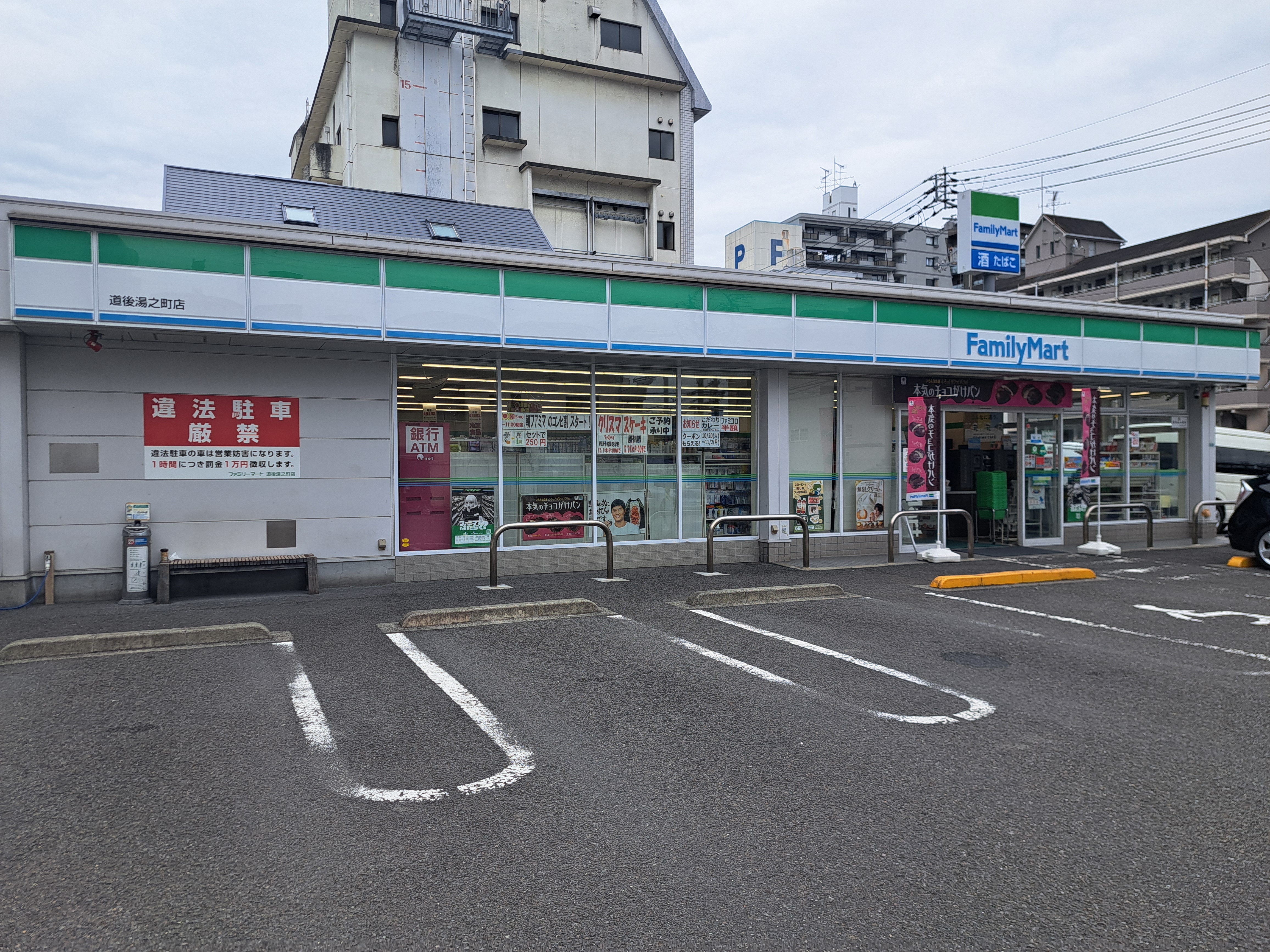
Familymart Dogo Yunomachi
Familymart Dogo Yunomachi, a convenience store in Dogo Yunomachi. Convenient for food and drink and ATM use in the onsen district.
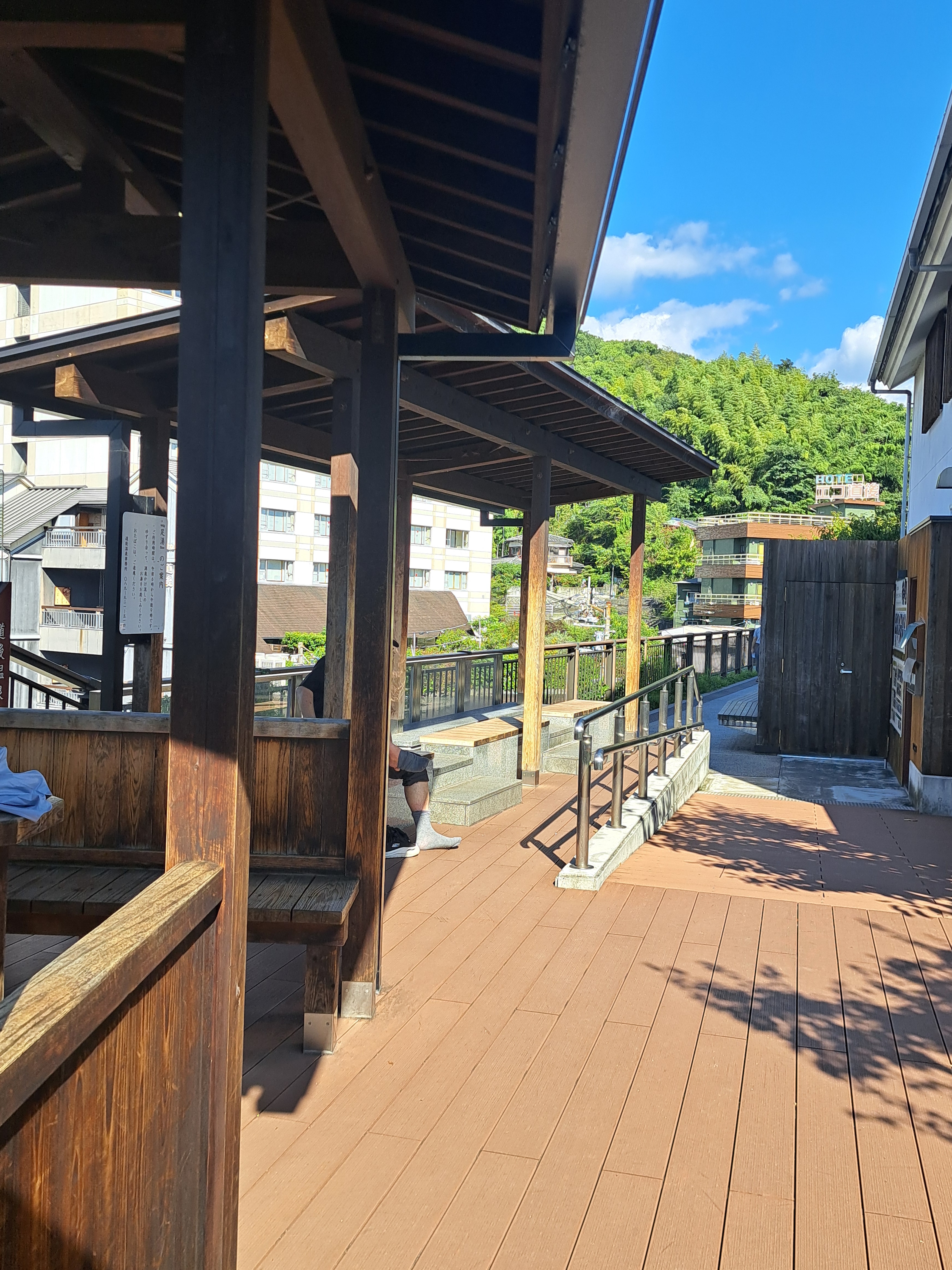
Sora no Sanpomichi
A scenic promenade on Kanmuriyama overlooking Dogo Onsen Honkan. It has a free foot bath fed directly from the source, with views over the Dogo townscape and seasonal flowering trees.
Hotel Dogo Yaya
Hotel Dogo Yaya in Dogo Takocho. A design-led hotel close to Dogo Onsen Station, convenient for sightseeing.
Yamatoya Besso
A traditional Japanese-style inn located in Dogo Sagidanicho. It features a granite public bath and a stone-built open-air bath, and serves the flavors of Setouchi through kaiseki cuisine. The capacity is 74 people.
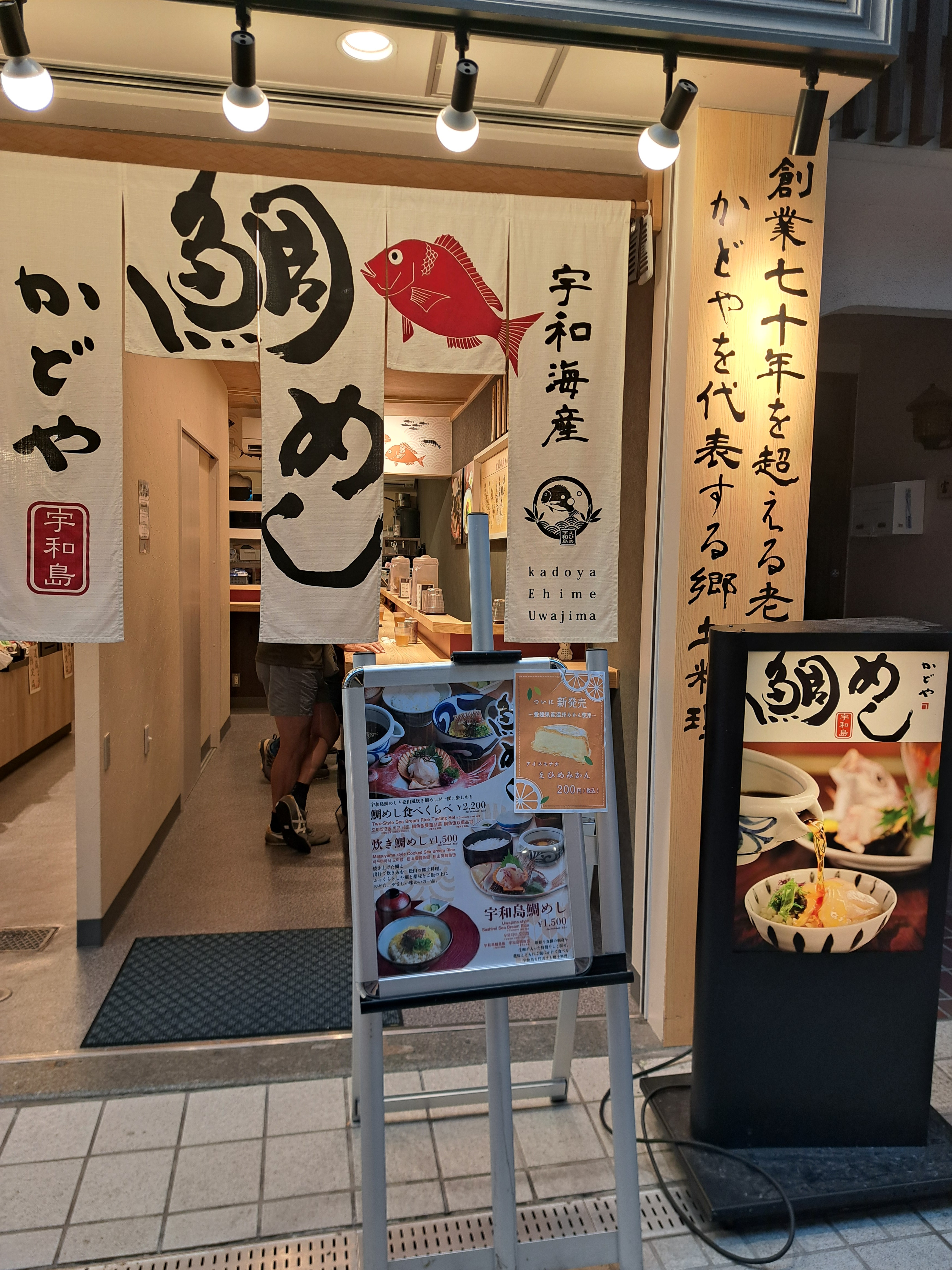
Taimeshi Stand Kadoya Dogo
A taimeshi restaurant located in Dogo Shotengai. Opened on April 29, 2026. It is one of the business formats of Kadoya that offers Matsuyama taimeshi, Uwajima taimeshi, and a comparison of the two.
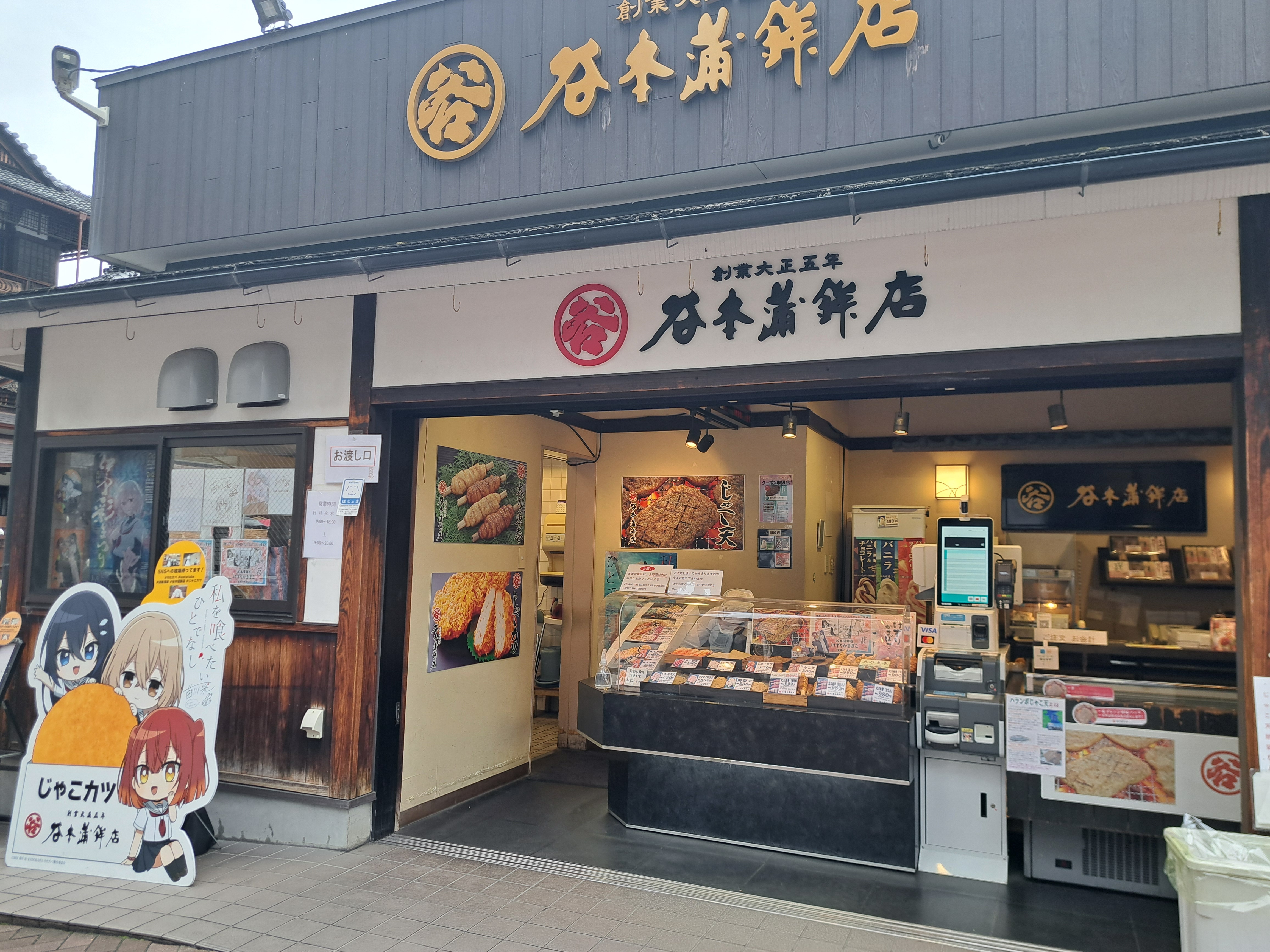
Tanimoto Kamaboko-ten Dogo
The Dogo branch of Tanimoto Kamaboko-ten, which handles Ehime fish paste products such as jakoten. It centres on kamaboko products.
Minutepark Dogo Yunomachi Dai1
A small coin parking lot (Minutepark) near the shopping street.
More "Public Bathhouses" spots
See all in this category →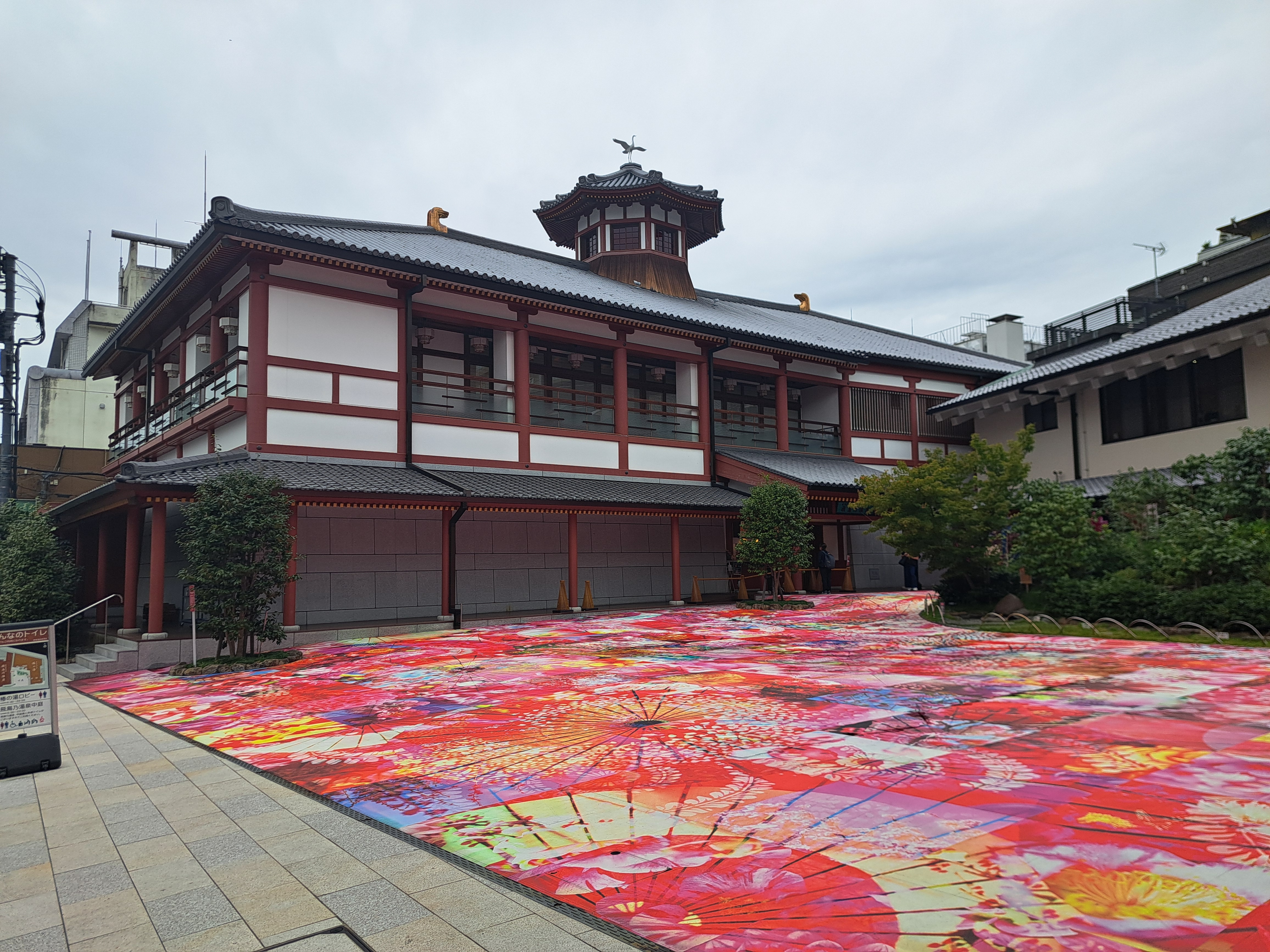
Dogo Onsen Annex Asuka-no-Yu
An annex of Dogo Onsen opened in 2017. A bathhouse incorporating the architectural style of the Asuka period, it features an open-air bath, a grand hall, and special bathrooms that recreate the Yushinden imperial bath chamber.
Tsubaki-no-Yu
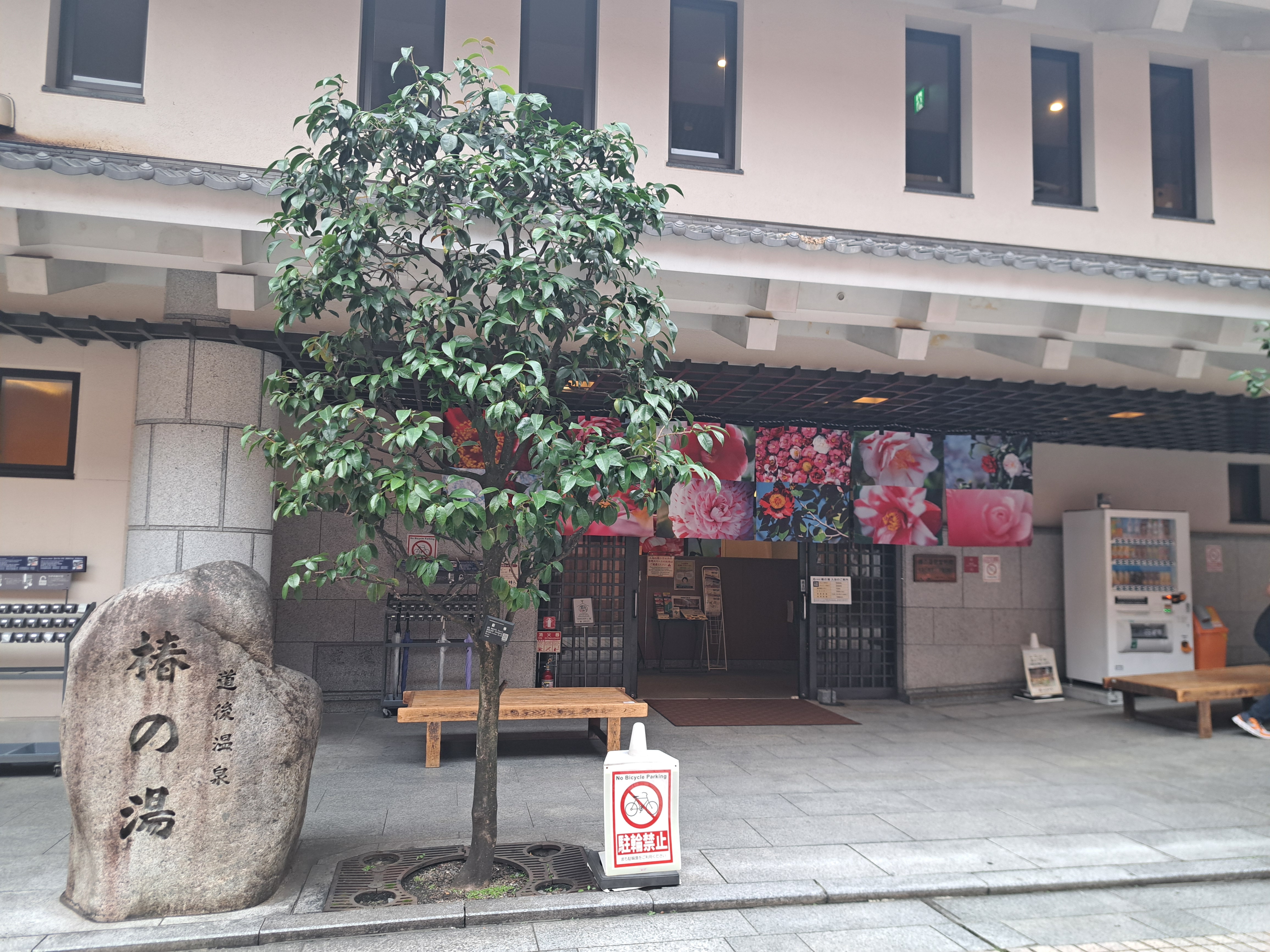
One of the external bathhouses of Dogo Onsen. A public bath cherished by locals, where you can enjoy the natural hot spring water along with Dogo Onsen Honkan and Asuka-no-Yu.